- Animals
- ›Chordates
- ›Vertebrates
- ›Birds
- ›Perching Birds
- ›Ovenbirds and Woodcreepers
- ›Typical Ovenbirds
- ›Cinclodes
On eBird ↗
Royal Cinclodes
Live sightings near you, the range map, bar charts of when it is seen, and Macaulay Library photos and recordings.
Royal Cinclodes
Cinclodes aricomae
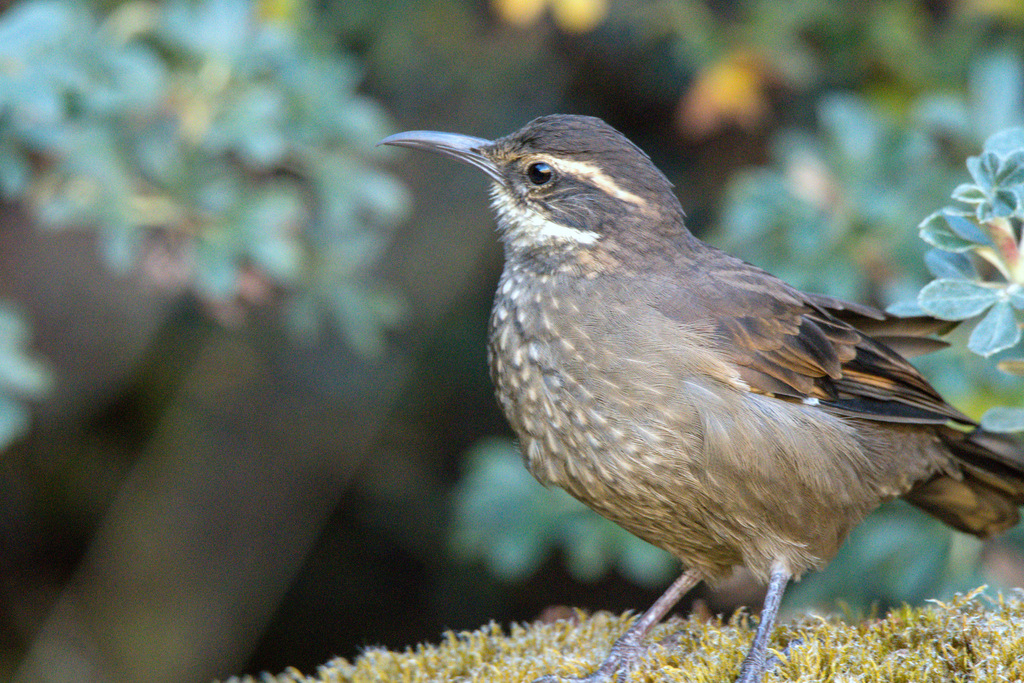
The royal cinclodes (Cinclodes aricomae) is a passerine bird which breeds in the Andes of south-east Peru and adjacent Bolivia. It was formerly considered to be a subspecies of the stout-billed cinclodes C. excelsior. It is 20 cm long and weighs 50 g with a heavy bill and dark chocolate-brown on the body, face and crown with whitish mottling and streaking on the breast.
From the article Royal cinclodes on Wikipedia (CC BY-SA), quoted section by section
Description
The royal cinclodes is 20 to 21 cm (7.9 to 8.3 in) long and weighs about 50 g (1.8 oz). It is a large cinclodes with a decurved, thick-based, bill. The sexes have the same plumage. Adults have a pale buffish supercilium that extends to the nape, a whitish malar area with thin dark bars, and an otherwise dark brown face. Their crown and upperparts are dark brown. Their wings are also dark brown, with black-edged rufous across the base of the flight feathers. Their tail is blackish. Their throat is whitish with thin dark bars and their underparts are dark brown with wide white streaks on the breast. Their iris is dark brown to brown, their bill black, and their legs and feet dark pinkish gray to black.
Range & habitat
The royal cinclodes is found very locally from south-central Peru's Department of Junín through the departments of Apurímac, Cuzco, and Puno into Bolivia's La Paz Department. It inhabits humid Polylepis-Gynoxys woodlands, where it favors boggy areas at the base of steep rocky slopes. In elevation it ranges from 3,500 to 4,600 m (11,500 to 15,100 ft).
Wikipedia: “Distribution and habitat”
What it does
The royal cinclodes mostly feeds on invertebrates but also occasionally includes seeds and small vertebrates like frogs in its diet. It forages singly or in pairs, probing and digging for prey in among mossy rocks, in decaying wood, and in boggy areas. It occasionally also gleans its prey from surfaces.
Wikipedia: “Feeding”
Listen
Looking for field recordings…
Where it lives
Recorded sightings
—
geo-referenced records in GBIF, from museums, herbaria and field observers.
Drag the globe to turn it. Dots are where records exist, not a range map; darker means more records.
In the stacks
Searching the stacks…
Every page naming Cinclodes aricomae in the Biodiversity Heritage Library →
This page is assembled live from iNaturalist, GBIF, Wikipedia, the Source Library and the Internet Archive. It is not yet part of the hand-edited codex. iNaturalist taxon 11378.