- Animals
- ›Chordates
- ›Vertebrates
- ›Ray-finned Fishes
- ›Carps, Characins, Catfishes and Allies
- ›Minnows, Suckers, Carps, and Loaches
- ›Carps and Minnows
- ›True Minnows
- ›North American Minnows
- ›Luxilus
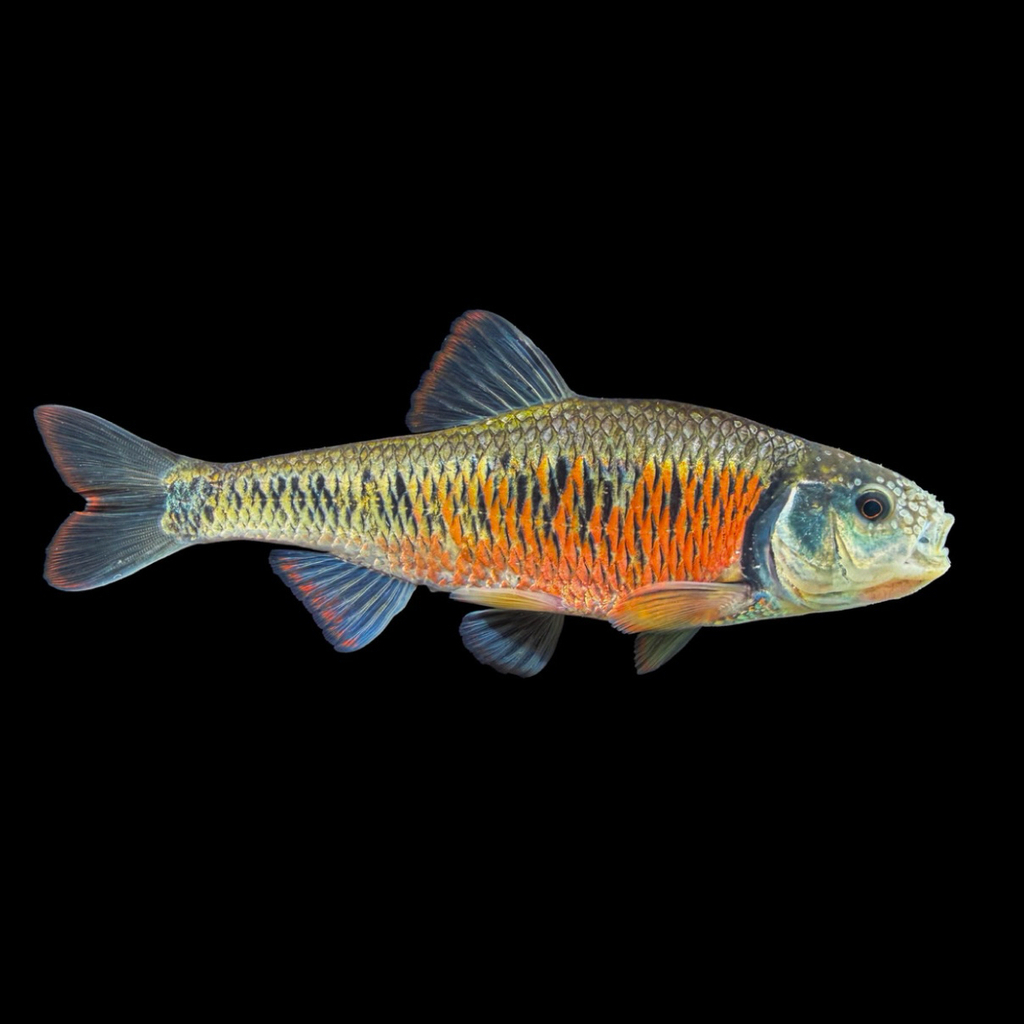
Striped Shiner
Luxilus chrysocephalus
The striped shiner (Luxilus chrysocephalus) is a member of the family Cyprinidae. It a silvery fish with three to four dorsolateral stripes and dark crescents on the sides. The scales and sensory pores on the snout can be outlined in black. Fins are milky to clear in color while the caudal fins have a milky base with a black or gray spot. Males can have pink snouts with areas of red or pink on the rest...
From the article Striped shiner on Wikipedia (CC BY-SA), quoted section by section
Description
The striped shiner is a silvery fish with three to four dorsolateral stripes and dark crescents on the sides. The scales and sensory pores on the snout can be outlined in black. Fins are milky to clear in color while the caudal fins have a milky base with a black or gray spot. Males can have pink snouts with areas of red or pink on the rest of the body. Striped shiners have large, terminal mouths and may grow up to 9 inches (23 cm) in length.
Range & habitat
These shiners can be found in the mid to upper regions of streams and rivers. They can also be found in rocky pools in clear and turbid creeks.
Wikipedia: “Habitat”
What it does
Striped shiners eat on a wide range of items. Mostly they feed up in the water column on a range of insects including: termites, mayflies, dragonflies, caddisflies, beetles and terrestrial midges. They also feed on the bottom materials like algae. They feed continuously day and night but feed more on the bottom at night.
Wikipedia: “Diet”
In human culture
Luxilus is derived from lux meaning "light" and illus meaning "little" while chrysocephalus means "golden head".
== References ==
Wikipedia: “Etymology”
Where it lives
Recorded sightings
—
geo-referenced records in GBIF, from museums, herbaria and field observers.
Drag the globe to turn it. Dots are where records exist, not a range map; darker means more records.
In the stacks
Searching the stacks…
Every page naming Luxilus chrysocephalus in the Biodiversity Heritage Library →
This page is assembled live from iNaturalist, GBIF, Wikipedia, the Source Library and the Internet Archive. It is not yet part of the hand-edited codex. iNaturalist taxon 104867.