- Animals
- ›Chordates
- ›Vertebrates
- ›Reptiles
- ›Snakes and Lizards
- ›Lizards
- ›Iguanas and Allies
- ›Dragons and Chameleons
- ›Dragons
- ›Butterfly Lizards
- ›Leiolepis
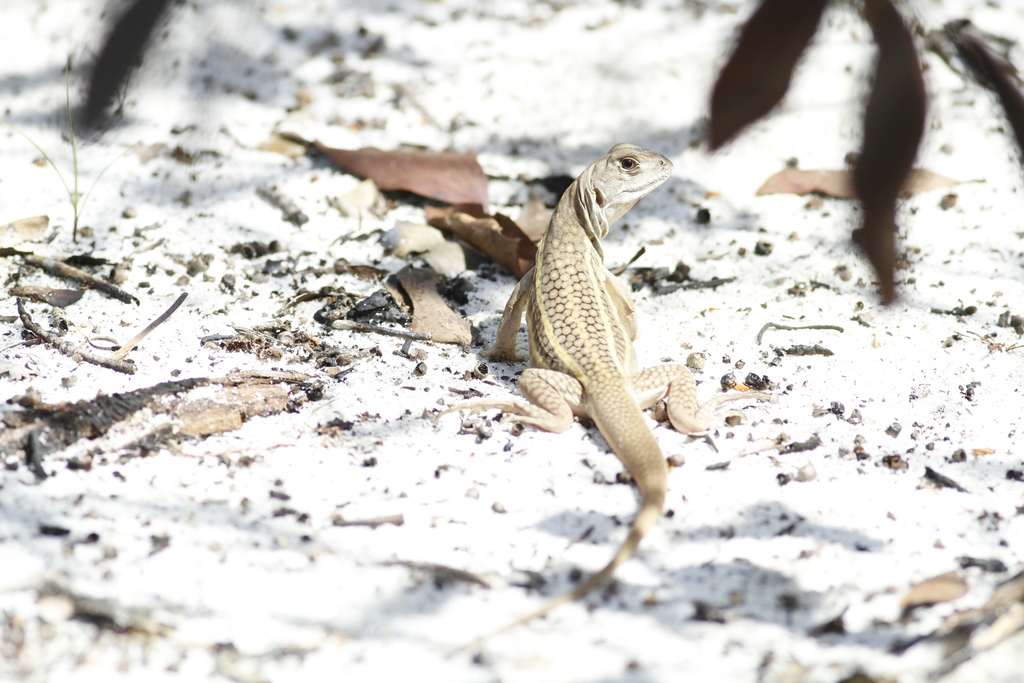
Ngo Van Tri’s Lady Butterfly Lizard
Leiolepis ngovantrii
Leiolepis ngovantrii (Vietnamese: Nhông cát trinh sản, meaning "parthenogenic sand iguana") is a species of lizard in the family Agamidae. The species is all-female, reproducing clonally. The species is named after Vietnamese herpetologist Ngo Van Tri (born 1969) of the Vietnam Academy of Science and Technology, and is believed to be closely related to two other Vietnamese lizard species, Leiolepis guttata and Leiolepis guentherpetersi. This species is one of four unisexual Leiolepis species. However, the genus Leiolepis also has five bisexual species. This unisexuality is possibly due to mutation and hybridization.
From the article Leiolepis ngovantrii on Wikipedia (CC BY-SA), quoted section by section
Description
Specimens of Leiolepis ngovantrii in the type series measure 95–127 mm (3.7–5.0 in) in snout-to-vent length (SVL) The lizard's back is covered with brown spots, with pairs of yellow stripes running along her sides. Her coloring provides adequate camouflage in coastal sandy soil, as well as in the mangrove forests during the dry season when grasses and leaves turn pale yellow.
Range & habitat
The preferred natural habitat of Leiolepis ngovantrii is coastal dunes, at elevations from sea level to 30 m (98 ft).
Wikipedia: “Habitat”
Where it lives
Recorded sightings
—
geo-referenced records in GBIF, from museums, herbaria and field observers.
Drag the globe to turn it. Dots are where records exist, not a range map; darker means more records.
In the stacks
Searching the stacks…
Every page naming Leiolepis ngovantrii in the Biodiversity Heritage Library →
This page is assembled live from iNaturalist, GBIF, Wikipedia, the Source Library and the Internet Archive. It is not yet part of the hand-edited codex. iNaturalist taxon 104130.