- Animals
- ›Chordates
- ›Vertebrates
- ›Ray-finned Fishes
- ›Carps, Characins, Catfishes and Allies
- ›Minnows, Suckers, Carps, and Loaches
- ›Carps and Minnows
- ›Cyprinids
- ›Labeonines
- ›Labeo
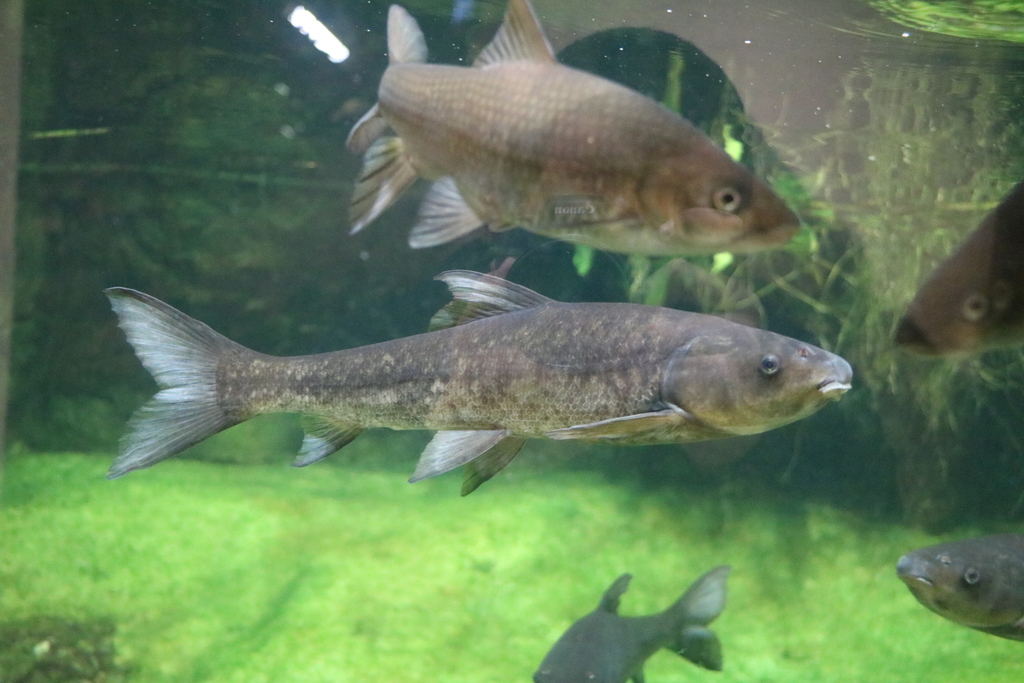
Moggel
Labeo umbratus
Moggel (Labeo umbratus) is a freshwater African fish in genus Labeo. It occurs within the drainage basin of the Orange River. The species has been recorded in the Vaal River, Olifants River in Mpumalanga and Limpopo, introduced there by anglers.
This species is similar to L. capensis in colour and in its pronounced anterior barbels. It can withstand temperatures below 10 °C (50 °F) and is mainly found in stagnant water, muddy dams and in large impoundments. Juveniles of the species prey on invertebrates while adults subsist on detritus and mud. It is an important food source and is considered a useful species in wastewater aquaculture when combined with other aquatic organisms.
From the article Moggel on Wikipedia (CC BY-SA), quoted section by section
Range & habitat
Africa: within the drainage basin of the Orange river and in southern watersheds of the Cape region. There are records of Labeo umbratus from the Olifant's river (Limpopo system) where it has been introduced by anglers. Has also been translocated in the Olifants-Limpopo system.
Wikipedia: “Distribution”
What it does
Found mainly in standing waters, shallow dams and muddy shallow areas such as in large impoundments. Juveniles feed on small invertebrates while adults feed on detritus and mud soft sediments.
Wikipedia: “Behavior”
At the table
Valued as an important, nutritious food source and is recommended for use in wastewater aquaculture in combination with other aquatic organisms. Occasionally caught by anglers using bait or flies whilst targeting other species, is known for its strong fighting ability. It is often regarded as an 'easter egg' fish when caught as they are nearly impossible to target specifically, catches are usually by chance. Important in commercial and subsistence fisheries and also used in aquaculture and physiological research.
== References ==
Wikipedia: “Uses”
Where it lives
Recorded sightings
—
geo-referenced records in GBIF, from museums, herbaria and field observers.
Drag the globe to turn it. Dots are where records exist, not a range map; darker means more records.
In the stacks
Searching the stacks…
Every page naming Labeo umbratus in the Biodiversity Heritage Library →
This page is assembled live from iNaturalist, GBIF, Wikipedia, the Source Library and the Internet Archive. It is not yet part of the hand-edited codex. iNaturalist taxon 103825.