On eBird ↗
Ochre-breasted Brushfinch
Live sightings near you, the range map, bar charts of when it is seen, and Macaulay Library photos and recordings.
Ochre-breasted Brushfinch
Atlapetes semirufus
The ochre-breasted brushfinch (Atlapetes semirufus) is a species of bird in the family Passerellidae. It is endemic to the northern Andes, occurring in Colombia and Venezuela. In Colombia, it inhabits elevations of 1,600–3,500 meters, while in Venezuela it is found between 600–2,700 meters. The species is present in several national parks and is not currently considered to face immediate conservation threats. Although relatively common, its breeding biology and life history remain poorly understood, and the population is believed to be in decline.
From the article Ochre-breasted brushfinch on Wikipedia (CC BY-SA), quoted section by section
Description
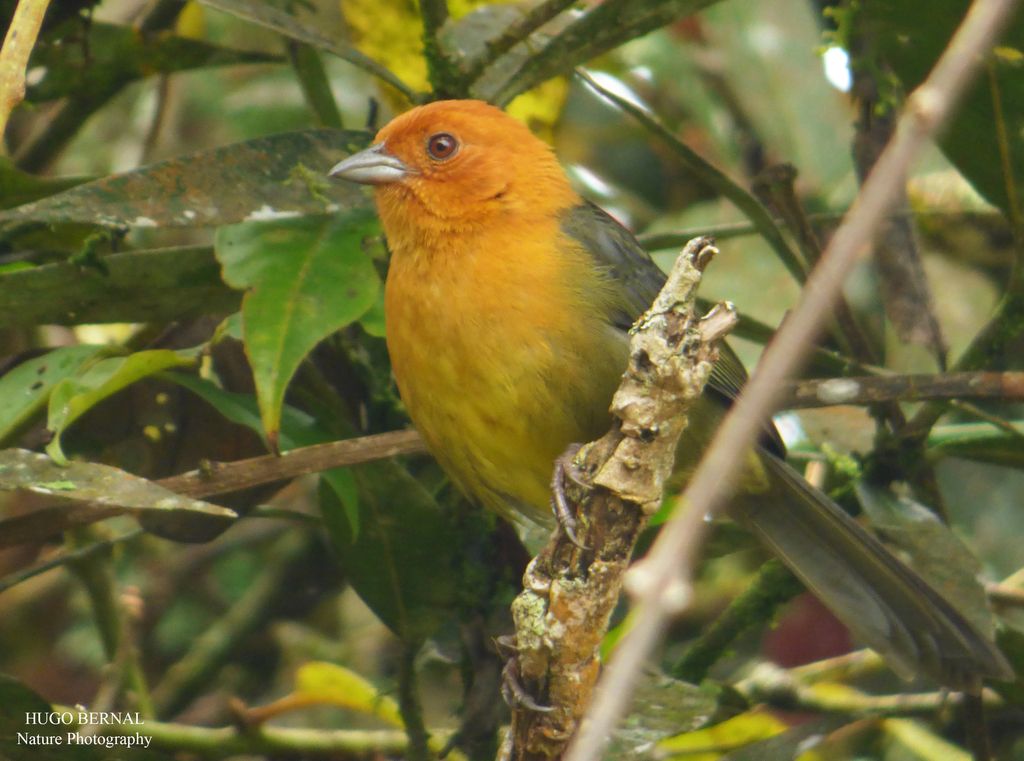
The ochre-breasted brushfinch measures approximately 18 cm in length and weighs between 29–33 g. It is a slim brushfinch with a finely tipped, pointed bill. Adults display a plain tawny-orange coloration from the head to the breast, olive upperparts including wings and tail, and yellowish underparts with a greenish wash on the flanks. The iris is chestnut, the bill is grey, and the legs range from pinkish to dusky grey. Both sexes appear similar. Juveniles are brownish-olive above, including the head, and dull yellowish below, with olive-toned chests and narrow dark streaking from the breast to the undertail coverts. They often show a darker malar stripe. Older immatures exhibit intermediate plumage, with patchy tawny on the face and a fully tawny breast developing early.
What it does
The species is typically observed in pairs. Its song is heard primarily in the early morning during the onset of the rainy season. Vocalizations include rapid sequences such as “wheet-wheet, tsu-tsu-tsu” or “pi-pit, chew chew chew!”
Wikipedia: “Vocalization and Behavior”
Listen
Looking for field recordings…
Where it lives
Recorded sightings
—
geo-referenced records in GBIF, from museums, herbaria and field observers.
Drag the globe to turn it. Dots are where records exist, not a range map; darker means more records.
In the stacks
Searching the stacks…
Every page naming Atlapetes semirufus in the Biodiversity Heritage Library →
This page is assembled live from iNaturalist, GBIF, Wikipedia, the Source Library and the Internet Archive. It is not yet part of the hand-edited codex. iNaturalist taxon 10330.