On eBird ↗
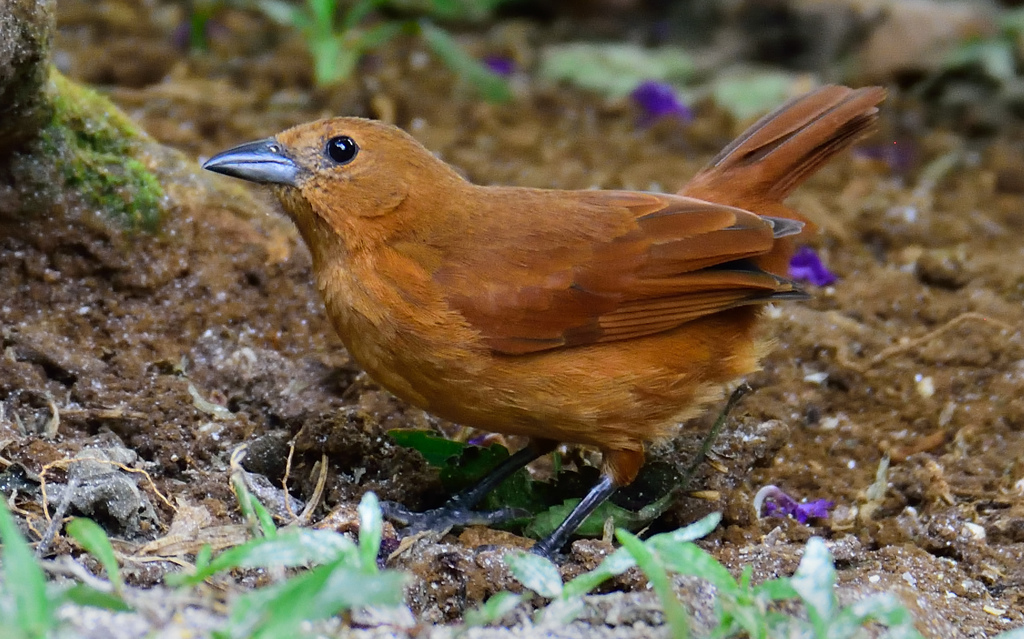
White-lined Tanager
Live sightings near you, the range map, bar charts of when it is seen, and Macaulay Library photos and recordings.
White-lined Tanager
Tachyphonus rufus
The white-lined tanager (Tachyphonus rufus) is a medium-sized passerine bird in the tanager family Thraupidae. It is a resident breeder from Costa Rica south to northern Argentina, and on the islands of Trinidad and Tobago.
From the article White-lined tanager on Wikipedia (CC BY-SA), quoted section by section
Description
The adult white-lined tanager is 18.5 cm (7.3 in) long and weighs 33 g (1.2 oz). It has a long tail and a mostly black stout pointed bill. The adult male is glossy black, apart from white underwing coverts and a small white patch on the upperwing. These white areas are conspicuous in flight but otherwise rarely visible. Females and immatures are entirely rufous in plumage, somewhat paler below.
What it does
These are restless but unwary birds which eat a wide variety of fruit, especially epiphytes. They also take some nectar and insects, including beetles, ants, and grasshoppers. Local names in Trinidad and Tobago include 'Parson' (for the male) and 'Singing Angel'; on these islands, the species is highly valued for its whistling ability.
Wikipedia: “Food and feeding”
Listen
Looking for field recordings…
Where it lives
Recorded sightings
—
geo-referenced records in GBIF, from museums, herbaria and field observers.
Drag the globe to turn it. Dots are where records exist, not a range map; darker means more records.
In the stacks
Searching the stacks…
Every page naming Tachyphonus rufus in the Biodiversity Heritage Library →
This page is assembled live from iNaturalist, GBIF, Wikipedia, the Source Library and the Internet Archive. It is not yet part of the hand-edited codex. iNaturalist taxon 10080.