 NL·0768
Herbarium of the Nature Library
- Name
- Turdus migratorius
- Family
- Turdidae
- Native to
- Breeds from Alaska and Canada to southern Mexico; northern birds winter south to the Gulf coast, Mexico and Guatemala
- Habitat
- Woodland, Gardens, Farmland, Boreal forest, Tundra edge
On eBird ↗
American Robin
Live sightings near you, the range map, bar charts of when it is seen, and Macaulay Library photos and recordings.
American robin
Turdus migratorius
Also calledZorzal petirrojo (Spanish) · Merle d'Amérique (French) · Opichi (Ojibwe)
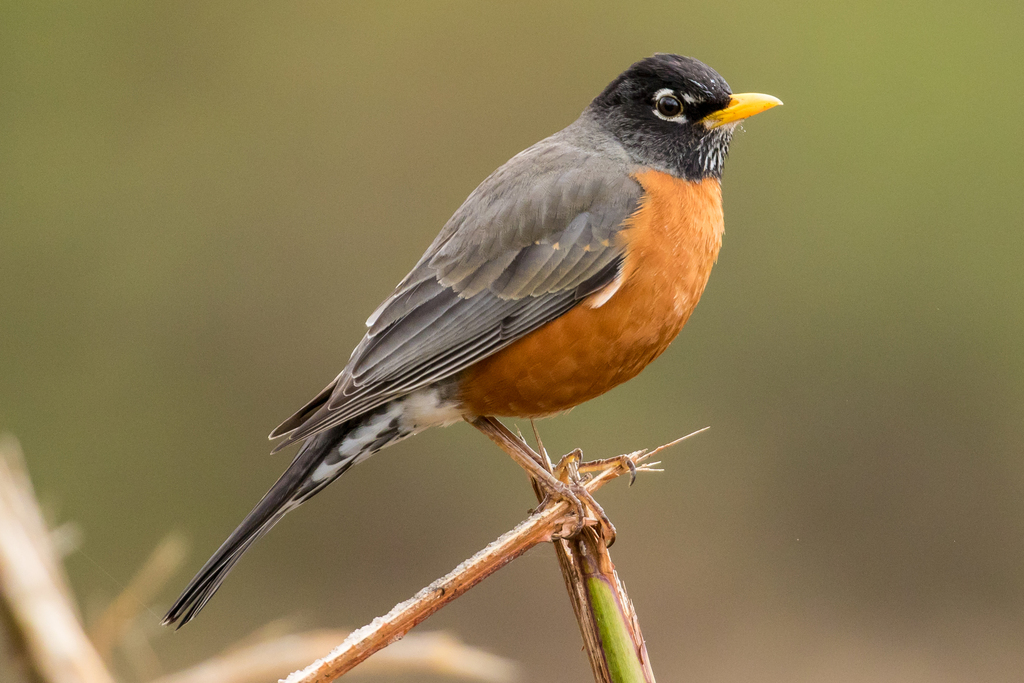
North America's most widespread thrush, a red-breasted lawn hunter whose caroling is often the first song heard before dawn. English colonists named it after the unrelated European robin because of its orange breast.
The American robin is a migratory bird of the true thrush genus and Turdidae, the wider thrush family. It is named after the European robin because of its reddish-orange breast, though the two species are not closely related, with the European robin belonging to the Old World flycatcher family. The American robin is widely distributed throughout North America, wintering from southern Canada to central Mexico and along the Pacific coast. Wikipedia
What it can do
- iHunts earthworms by running, stopping and cocking its head, locating prey largely by sight
- iiShifts from a mainly worm and insect diet in summer to fruit and berries in winter
- iiiBuilds a cup nest with a mud lining, shaped by the female pressing with her breast
- ivLays the sky-blue eggs that gave the name 'robin's egg blue'
In the field
Field marks
- aBrick-orange breast and belly contrasting with grey-brown back
- bBlackish head with broken white eye-ring
- cYellow bill; white lower belly and undertail
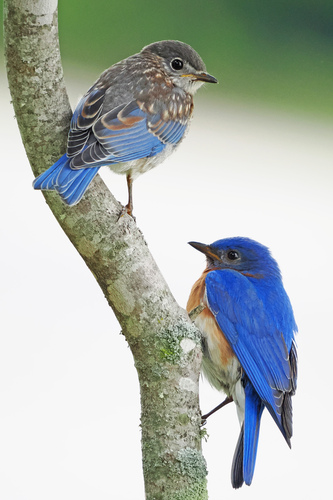
- dJuveniles have heavily spotted breasts, showing the thrush family resemblance
- Voice
- A rich, caroling series of whistled phrases, often rendered 'cheerily, cheer-up, cheerio'; calls include a sharp 'tut-tut' and a high thin 'seee' alarm for hawks.
- Not to be confused with
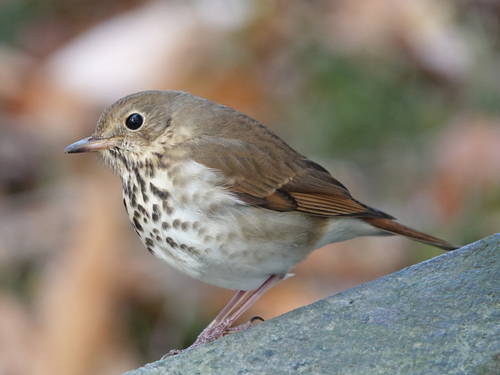
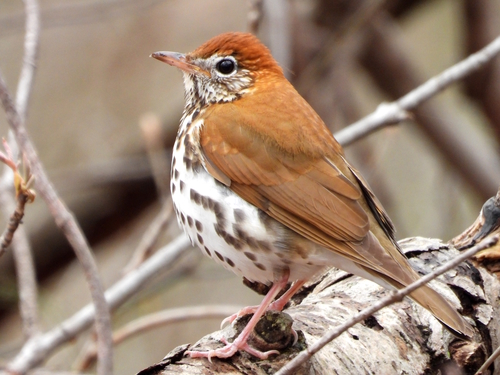
- Varied Thrush (west) has an orange eyebrow, orange wing bars and a black breast band. Eastern Towhee has rufous only on the flanks with a white belly. Spotted juveniles may suggest other thrushes but already show some orange.
- Where to see it
- Lawns, parks and gardens throughout the US and Canada; winter flocks in fruiting trees across the southern states.
- When
- Resident across much of the US; summer visitor in Canada and Alaska, Mar–Oct
Listen
Looking for field recordings…
Life & habits
- Diet
- Earthworms, insect larvae, and fruit such as holly, juniper and crabapple
- Habitat
- Lawns, parks, open woodland, farmland and forest to the tree line
- Size
- 23–28 cm; 77–85 g
- Lifespan
- About 2 years on average; banding record nearly 14 years
In winter many robins form large nomadic flocks that follow fruit crops and roost communally, often unnoticed because they stop singing on lawns.
Where it lives
Recorded sightings
—
geo-referenced records in GBIF, from museums, herbaria and field observers.
Native range
Breeds from Alaska and Canada to southern Mexico; northern birds winter south to the Gulf coast, Mexico and Guatemala
Drag the globe to turn it. Dots are where records exist, not a range map; darker means more records.
In the old herbals & bestiaries
No plate in the Source Library names this exact species, so these show its closest relatives as the old naturalists drew them: same genus, or the same kind of animal. Click a plate to read the page it came from, with translation.

The Natural History of Carolina Florida and Bahama Islands Vol. 2
Relative · Mark Catesby · 1743 · p.43

History of Animals, Book I: On Viviparous Quadrupeds
Relative · Conrad Gessner · 1554 · p.913

Historiae Animalium Liber III: De Avium Natura
Relative · Conrad Gesner · 1555 · p.762

Historiae Animalium Liber III: De Avium Natura
Relative · Conrad Gesner · 1555 · p.768

Theater of Earthly Creatures
Relative · Anonymous · 1672 · p.260

History of Animals, Book I: On Viviparous Quadrupeds
Relative · Conrad Gessner · 1554 · p.907

History of Animals, Book II: On Oviparous Quadrupeds
Relative · Conrad Gessner · 1586 · p.390

De Piscibus Libri V et De Cetis Liber Unus
Relative · Ulisse Aldrovandi · 1661 · p.35

Of the Eggs and Nests of Birds
Relative · Giuseppe Zinanni (Ginanni) (1692-1753) · 1737 · p.55

Mark Catesby — Piscium, serpentum, insectorum (pt. 1) (1750)
Relative · Mark Catesby · 1750 · p.37
In the stacks
Searching the stacks…
Every page naming Turdus migratorius in the Biodiversity Heritage Library →
Marginalia
It is the state bird of Connecticut, Michigan and Wisconsin, and its spring return has long been treated across North America as a sign that winter is ending.
Curiosity
Many American robins never leave the northern states in winter; they simply switch to fruit and become quiet, so their 'first of spring' sightings are often birds that were there all along.
Kinship
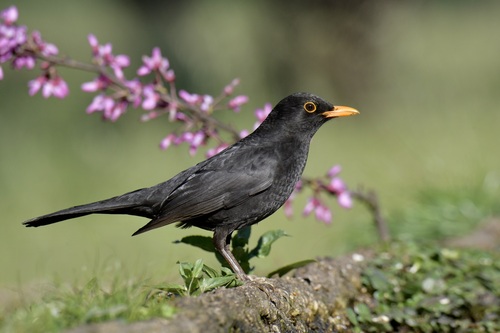


Photographs: iNaturalist contributors under the licences shown. Records: GBIF.org. Historical plates: Source Library (CC BY-SA 4.0; originals public domain). Summary text: Nature Library editors and Wikipedia (CC BY-SA). Medicinal and edibility notes are historical and educational, not advice. iNaturalist taxon 12727.