 NL·0459
Herbarium of the Nature Library
- Name
- Spinus tristis
- Family
- Fringillidae
- Native to
- Southern Canada and the United States; winters south to northern Mexico
- Habitat
- Weedy fields, Floodplains, Gardens, Woodland edge
On eBird ↗
American Goldfinch
Live sightings near you, the range map, bar charts of when it is seen, and Macaulay Library photos and recordings.
American goldfinch
Spinus tristis
Also calledJilguero canario (Spanish, Mexico) · Chardonneret jaune (French)
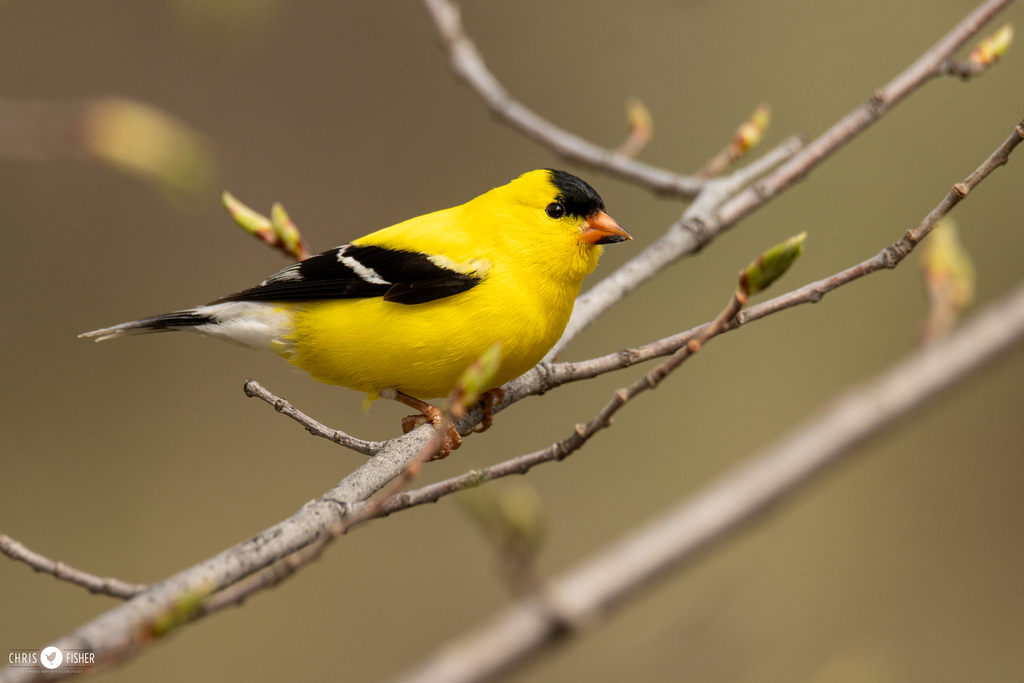
A small finch whose summer males glow lemon-yellow with a black cap. It is among the strictest vegetarians of North American songbirds and waits until late summer to nest, when thistles have gone to seed.
The American goldfinch is a small North American bird in the finch family. It is migratory, ranging from mid-Alberta to North Carolina during the breeding season, and from just south of the Canada–United States border to Mexico during the winter. Wikipedia
What it can do
- iFeeds its young almost entirely on regurgitated seeds
- iiLines nests with thistle down so tightly woven they can hold water
- iiiMoults its body feathers twice a year, switching between bright breeding and dull winter plumage
- ivBrown-headed Cowbird chicks raised in goldfinch nests rarely survive on the seed diet
In the field
Field marks
- aBreeding male: bright yellow with black cap, black wings with white bars, white undertail
- bFemale and winter birds: dull olive-buff with black wings and pale wing bars
- cShort, conical pink-orange bill in summer
- dNotched black-and-white tail
- Voice
- A long, canary-like series of twitters and warbles; flight call 'po-ta-to-chip', 'per-chic-o-ree'.
- Not to be confused with
- Lesser Goldfinch (west) has a greenish or black back and yellow undertail. Pine Siskin is streaky brown with yellow wing flashes. Yellow Warbler has a thin bill and no black.
- Where to see it
- Thistle and nyjer feeders across the US; weedy fields with coneflowers and sunflowers in late summer.
- When
- Resident across much of the US; northern birds move south in winter
Listen
Looking for field recordings…
Life & habits
- Diet
- Seeds of thistles, sunflowers, asters and other composites; nyjer and sunflower at feeders
- Habitat
- Weedy fields, roadsides, floodplains, orchards and gardens
- Size
- 11–13 cm; 11–20 g
- Lifespan
- Banding record about 10 years
It flies in deep, bouncing undulations, calling on each rise.
Where it lives
Recorded sightings
—
geo-referenced records in GBIF, from museums, herbaria and field observers.
Native range
Southern Canada and the United States; winters south to northern Mexico
Drag the globe to turn it. Dots are where records exist, not a range map; darker means more records.
In the old herbals & bestiaries
Woodcuts and engravings matched from the Source Library’s scanned books by name. Plates marked “relative” show a close kin rather than this exact species. Click a plate to read the page it came from, with translation.

In the stacks
Searching the stacks…
Every page naming Spinus tristis in the Biodiversity Heritage Library →
Marginalia
It is the state bird of Iowa, New Jersey and Washington, chosen in Washington by a schoolchildren's vote.
Curiosity
It nests later than almost any other North American songbird, often starting in July.
Kinship
- kingdomAnimalia
- ›phylumChordata
- ›subphylumVertebrata
- ›classAves
- ›orderPasseriformes
- ›familyFringillidae
- ›genusSpinus
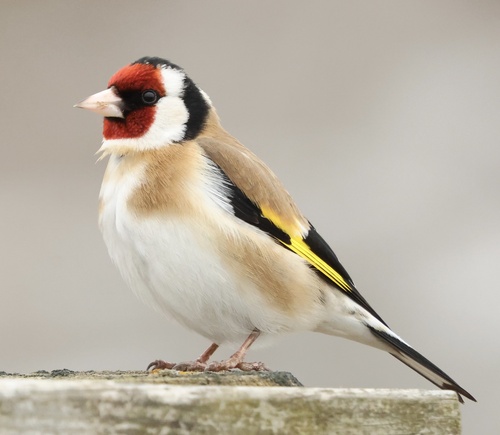
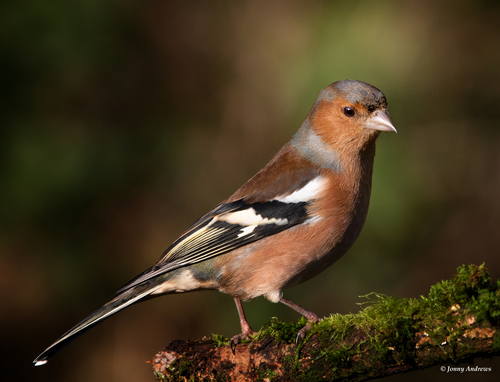
Neighbours on the shelf
Photographs: iNaturalist contributors under the licences shown. Records: GBIF.org. Historical plates: Source Library (CC BY-SA 4.0; originals public domain). Summary text: Nature Library editors and Wikipedia (CC BY-SA). Medicinal and edibility notes are historical and educational, not advice. iNaturalist taxon 145310.