 NL·0654
Herbarium of the Nature Library
- Name
- Pteropus vampyrus
- Family
- Pteropodidae
- Native to
- Southeast Asia: mainland from southern Myanmar and Vietnam to Malaysia, plus Sumatra, Java, Borneo, the Philippines and Lesser Sundas
- Habitat
- Tropical rainforest, Mangrove, Orchards, Coastal forest
Large flying fox
Pteropus vampyrus
Also calledKeluang (Malay) · Kalong (Indonesian/Javanese) · Paniki (Tagalog) · Dơi ngựa (Vietnamese)
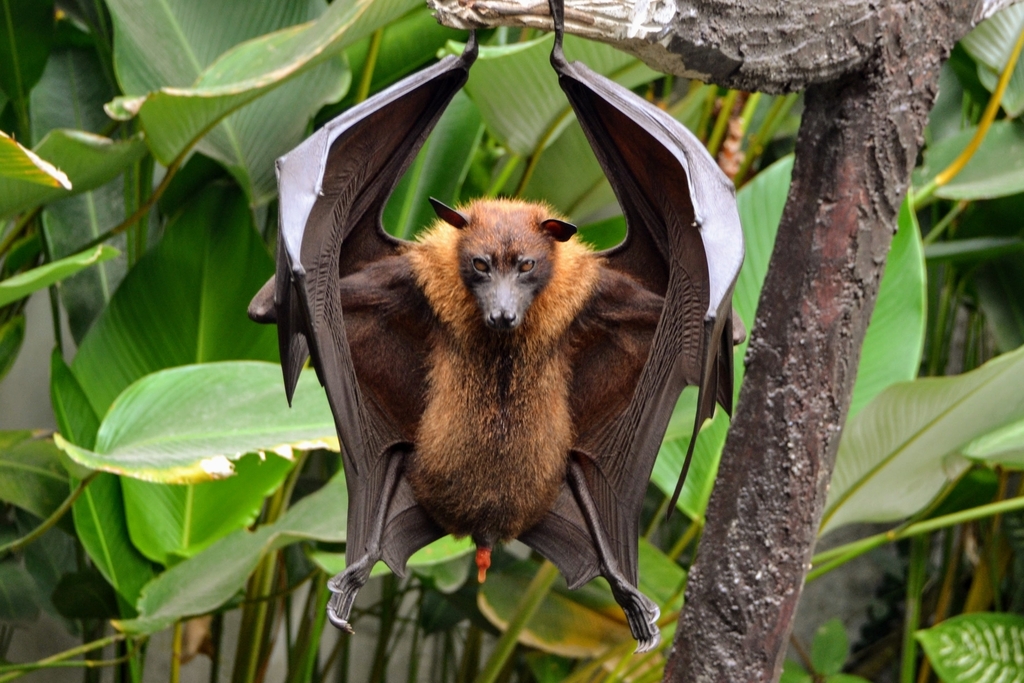
One of the largest bats in the world, with a wingspan up to about 1.5 m. These fruit- and nectar-eating bats fly long distances each night, spreading pollen and seeds across Southeast Asian forests.
The large flying fox, also known as the greater flying fox, Malayan flying fox, Malaysian flying fox, large fruit bat, kalang, or kalong, is a southeast Asian species of megabat in the family Pteropodidae. Despite its scientific name, it feeds exclusively on fruits, nectar, and flowers, like the other flying foxes of the genus Pteropus. It is noted for being one of the largest bats. As with nearly all other Old World fruit bats, it lacks the ability to echolocate but compensates for it with well-developed eyesight. Wikipedia
What it can do
- iFlies 50 km or more in a night between roosts and feeding trees
- iiPollinates night-flowering trees and disperses seeds over long distances
- iiiFinds food by sight and smell rather than echolocation
- ivHangs upside down using tendons that lock its claws without effort
In the field
Field marks
- aHuge fruit bat with a wingspan up to about 1.5 m
- bFox-like face with large eyes
- cBlack wings and reddish or brown mantle
- dHangs in large daytime roosts
- Voice
- Loud squabbling and shrieks at roosts
- Not to be confused with
- Golden-crowned flying fox (Philippines) has a golden head. Flying foxes can carry viruses; never handle bats.
- Where to see it
- Subic Bay Forest Reserve roost (Philippines)
- When
- Resident; colonies leave at dusk
Listen
Looking for field recordings…
Life & habits
- Diet
- Frugivore and nectarivore: fruit, nectar and flowers
- Habitat
- Forests, mangroves and orchards; roosts in large colonies in tall trees
- Size
- 0.6–1.1 kg; wingspan up to ~1.5 m
- Lifespan
- ~15 years in the wild; longer in captivity
Colonies of hundreds to thousands roost in the same trees by day and fan out at dusk, often crossing open sea between islands.
Where it lives
Recorded sightings
—
geo-referenced records in GBIF, from museums, herbaria and field observers.
Native range
Southeast Asia: mainland from southern Myanmar and Vietnam to Malaysia, plus Sumatra, Java, Borneo, the Philippines and Lesser Sundas
Drag the globe to turn it. Dots are where records exist, not a range map; darker means more records.
In the old herbals & bestiaries
Woodcuts and engravings matched from the Source Library’s scanned books by name. Plates marked “relative” show a close kin rather than this exact species. Click a plate to read the page it came from, with translation.

In the stacks
Searching the stacks…
Every page naming Pteropus vampyrus in the Biodiversity Heritage Library →
Marginalia
Linnaeus named it Vespertilio vampyrus in 1758, linking it to vampire legends, though it eats only fruit and nectar. In Malaysia it has long been hunted for food and as a folk remedy for asthma.
Curiosity
Flying foxes like this one are natural hosts of Nipah virus, which they carry without getting sick.
Kinship




Photographs: iNaturalist contributors under the licences shown. Records: GBIF.org. Historical plates: Source Library (CC BY-SA 4.0; originals public domain). Summary text: Nature Library editors and Wikipedia (CC BY-SA). Medicinal and edibility notes are historical and educational, not advice. iNaturalist taxon 40902.