 NL·0232
Herbarium of the Nature Library
- Name
- Polemaetus bellicosus
- Family
- Accipitridae
- Native to
- Sub-Saharan Africa, in open and semi-arid country
- Habitat
- Savanna, Semi-desert scrub, Open woodland
On eBird ↗
Martial Eagle
Live sightings near you, the range map, bar charts of when it is seen, and Macaulay Library photos and recordings.
Martial eagle
Polemaetus bellicosus
Also calledBreëkoparend (Afrikaans) · Aigle martial (French)
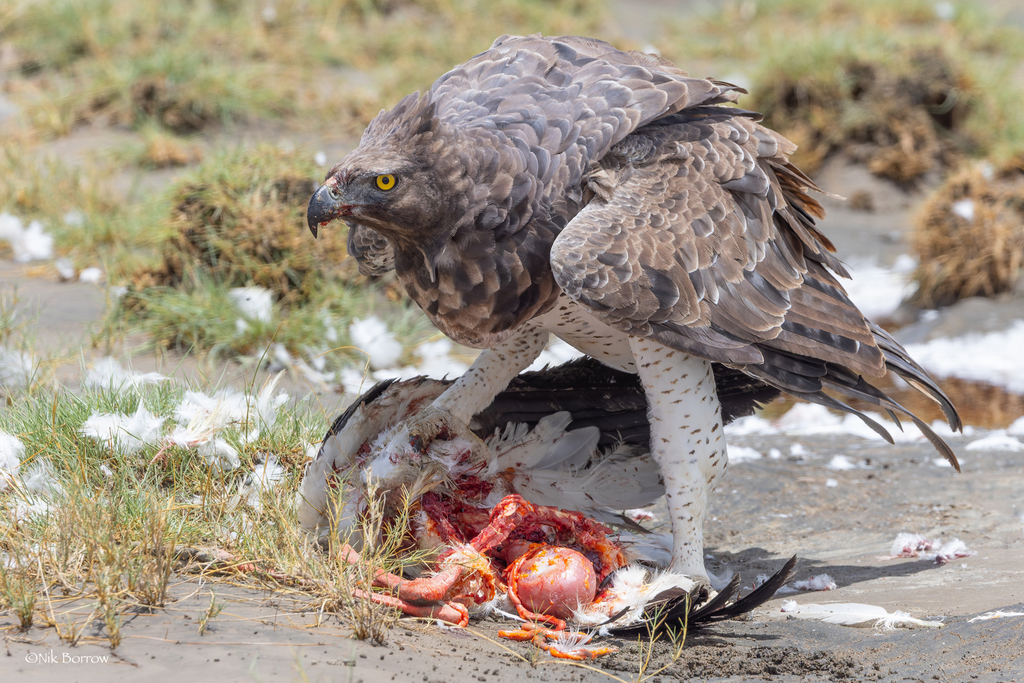
Africa's largest eagle, a powerful hunter of game birds, monitor lizards and small antelope. It hunts from a high soar, spotting prey from several kilometres away.
The martial eagle is a large eagle native to sub-Saharan Africa. It is the only member of the genus Polemaetus. A species of the booted eagle subfamily (Aquilinae), it has feathers over its tarsus. One of the largest and most powerful species of booted eagle, it is a fairly opportunistic predator that varies its prey selection between mammals, birds and reptiles. It is one of few eagle species known to hunt primarily from a high soar, by swooping down on its quarry. This species, an inhabitant of wooded belts of otherwise open savanna, has shown a precipitous decline in the last few centuries due to a variety of factors. The martial eagle is one of the most persecuted bird species in the world. Due to its habit of taking livestock and regionally valuable game, local farmers and game wardens frequently seek to eliminate martial eagles, although the effect of eagles on this prey is almost certainly considerably exaggerated. Currently, the martial eagle is classified with the status of Endangered by the IUCN. Wikipedia
What it can do
- iExceptional eyesight; spots prey at a great distance while soaring
- iiKills prey as large as young antelope, jackals and monitor lizards
- iiiUses enormous stick nests that may be reused for decades
In the field
Field marks
- aDark brown head, throat and upper breast forming a hood
- bWhite lower breast and belly lightly spotted with dark brown
- cShort crest; bright yellow eye
- dFeathered legs
- eDark underwings in flight, contrasting with pale belly
- Voice
- Mostly silent; in display a loud, ringing 'klee-klee-klooee'.
- Not to be confused with
- Black-chested snake eagle has a similar dark hood but an unspotted white belly, bare pale legs, a large round head with orange-yellow eyes and pale underwings. Juveniles are pale greyish-white below and can be confused with juvenile crowned eagles, which have barred legs and tails.
- Where to see it
- Kruger and Kgalagadi (South Africa), Etosha (Namibia), Maasai Mara and Tsavo (Kenya)
- When
- Resident year-round
Listen
Looking for field recordings…
Life & habits
- Diet
- Guineafowl, francolins, bustards, hyraxes, hares, monitor lizards, young antelope
- Habitat
- Savanna, thornbush and semi-desert with tall trees or pylons for nesting
- Size
- 78–96 cm long; wingspan about 1.9–2.6 m; 3–6 kg
It hunts mainly from a high, wide-circling soar, then drops in a long, shallow stoop on unsuspecting prey.
Where it lives
Recorded sightings
—
geo-referenced records in GBIF, from museums, herbaria and field observers.
Native range
Sub-Saharan Africa, in open and semi-arid country
Drag the globe to turn it. Dots are where records exist, not a range map; darker means more records.
In the stacks
Searching the stacks…
Every page naming Polemaetus bellicosus in the Biodiversity Heritage Library →
Marginalia
Its scientific name means 'warlike war-eagle'. Farmers have long persecuted it as a livestock killer; studies in Kruger tracked steep declines even inside protected areas.
Curiosity
Even in large reserves such as Kruger, martial eagle numbers fell by more than half in roughly two decades, prompting uplisting to Endangered in 2020.
Kinship
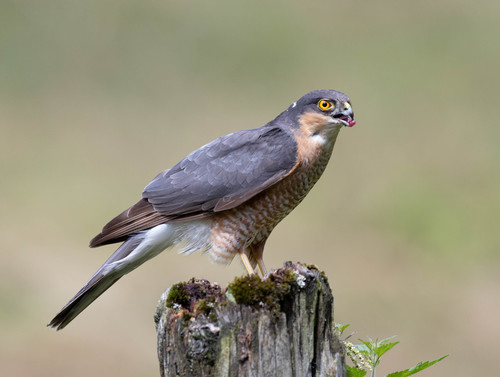

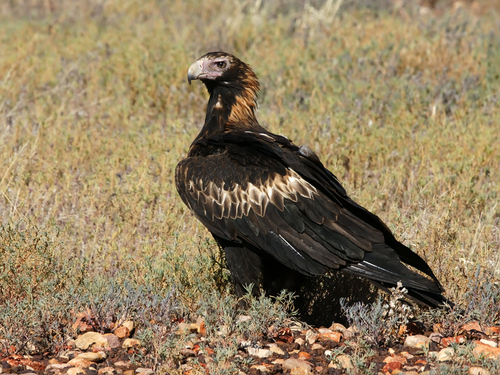
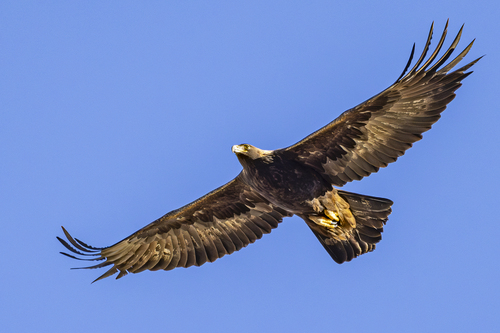

Photographs: iNaturalist contributors under the licences shown. Records: GBIF.org. Historical plates: Source Library (CC BY-SA 4.0; originals public domain). Summary text: Nature Library editors and Wikipedia (CC BY-SA). Medicinal and edibility notes are historical and educational, not advice. iNaturalist taxon 5344.