 NL·0350
Herbarium of the Nature Library
- Name
- Oreochromis niloticus
- Family
- Cichlidae
- Native to
- Nile basin, West African rivers (Niger, Volta, Senegal, Gambia), Lake Chad and Rift Valley lakes such as Turkana and Tanganyika; introduced to over 100 countries
- Habitat
- Rivers, Lakes, Ponds, Reservoirs
Nile tilapia
Oreochromis niloticus
Also calledBolti بلطي (Arabic) · Ngege (Swahili) · Pla nin ปลานิล (Thai) · Tilápia-do-nilo (Portuguese) · Cá rô phi (Vietnamese) · St Peter's fish (trade name)
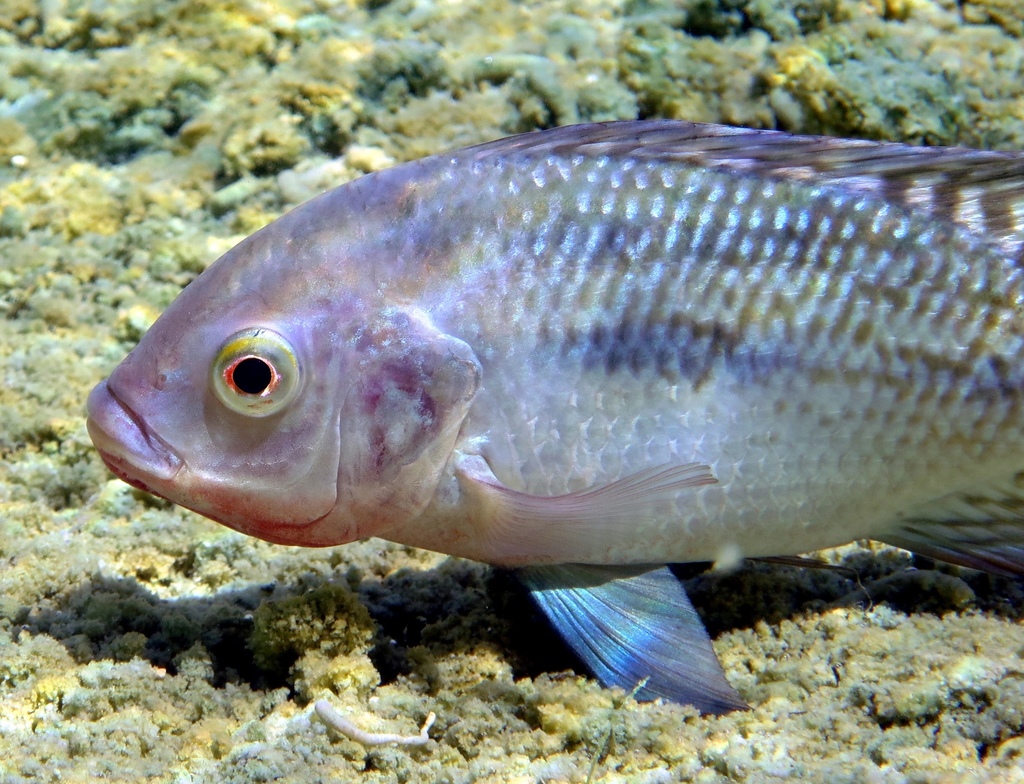
A hardy African cichlid that has become one of the world's most farmed fish. Females carry their eggs and fry in their mouths. It was a symbol of rebirth in ancient Egypt, and today it feeds millions from Thailand to Brazil.
The Nile tilapia is a species of tilapia, a cichlid occurring naturally in parts of Africa and the Levant, though numerous introduced populations exist outside its natural range. This current wide range is caused by its high commercial value as a food fish, where it is marketed as mango fish, nilotica, or boulti, along with many other names, both local and foreign. Due to its value, the Nile tilapia is widely aquacultured across the world due to its hardiness and a mode of reproduction conducive to mass rearing, namely mouthbrooding, and various attempts have been made to increase production yields, including hybridization with other tilapias. Wikipedia
What it can do
- iFemales brood eggs and fry in their mouths and let the young dart back in when danger threatens
- iiFilter-feeds on phytoplankton and grazes algae, so it grows on cheap feed
- iiiTolerates warm, low-oxygen, crowded and slightly brackish water
- ivBecomes invasive easily, and has displaced native fish in many tropical lakes
In the field
Field marks
- aDeep, perch-like body with a long continuous dorsal fin, spiny in front
- bRegular vertical dark bars on the tail fin (a key mark)
- cGreyish to olive body with faint vertical bands; breeding males with pinkish-red throat and fins
- dSingle nostril on each side of the snout (typical of cichlids)
- Not to be confused with
- Mozambique tilapia (O. mossambicus) has no regular bars on the tail, and breeding males are blackish with white lower jaws. Blue tilapia (O. aureus) has a red-edged tail fin and no regular vertical barring. Redbelly tilapia (Coptodon zillii) has a dark 'tilapia spot' on the soft dorsal fin.
- Where to see it
- The Nile at Cairo and Aswan; Lake Turkana (Kenya); fish ponds and markets across Egypt, Thailand, the Philippines and Brazil
- When
- Resident; breeds year-round in warm water
Life & habits
- Diet
- Omnivore: phytoplankton, algae, detritus and some invertebrates
- Habitat
- Shallow, warm lakes, rivers, ponds and canals
- Size
- Usually 20–40 cm; up to about 60 cm and 4 kg
- Lifespan
- Around 9–10 years
Males dig pits in the lake floor and defend them, flushing reddish while displaying. Females pick up the fertilised eggs and brood them in their mouths for about two weeks.
Where it lives
Recorded sightings
—
geo-referenced records in GBIF, from museums, herbaria and field observers.
Native range
Nile basin, West African rivers (Niger, Volta, Senegal, Gambia), Lake Chad and Rift Valley lakes such as Turkana and Tanganyika; introduced to over 100 countries
Drag the globe to turn it. Dots are where records exist, not a range map; darker means more records.
In the stacks
Searching the stacks…
Every page naming Oreochromis niloticus in the Biodiversity Heritage Library →
Marginalia
The hieroglyph of a tilapia (Gardiner sign K1) stood for the fish and for rebirth, because the young seemed to be swallowed and reborn from the mother's mouth. Tomb paintings at Thebes, such as Nebamun's, show tilapia ponds in Egyptian gardens. In Thailand the farmed strain was a 1965 gift from Crown Prince Akihito to King Bhumibol.
Curiosity
The Thai name pla nin was coined by King Bhumibol, from 'Nile', after he bred the 50 fish Akihito sent him at the palace ponds.
Kinship


Photographs: iNaturalist contributors under the licences shown. Records: GBIF.org. Historical plates: Source Library (CC BY-SA 4.0; originals public domain). Summary text: Nature Library editors and Wikipedia (CC BY-SA). Medicinal and edibility notes are historical and educational, not advice. iNaturalist taxon 121324.