 NL·0527
Herbarium of the Nature Library
- Name
- Manis javanica
- Family
- Manidae
- Native to
- Myanmar, Thailand, Cambodia, Laos, Vietnam, Peninsular Malaysia, Singapore, Sumatra, Java, Borneo and nearby islands
- Habitat
- Tropical rainforest, Secondary forest, Plantations
Sunda pangolin
Manis javanica
Also calledTenggiling (Malay/Indonesian) · Chuānshānjiǎ 穿山甲, 'pierces-mountain armour' (Chinese) · Tê tê (Vietnamese) · Lin (Thai)
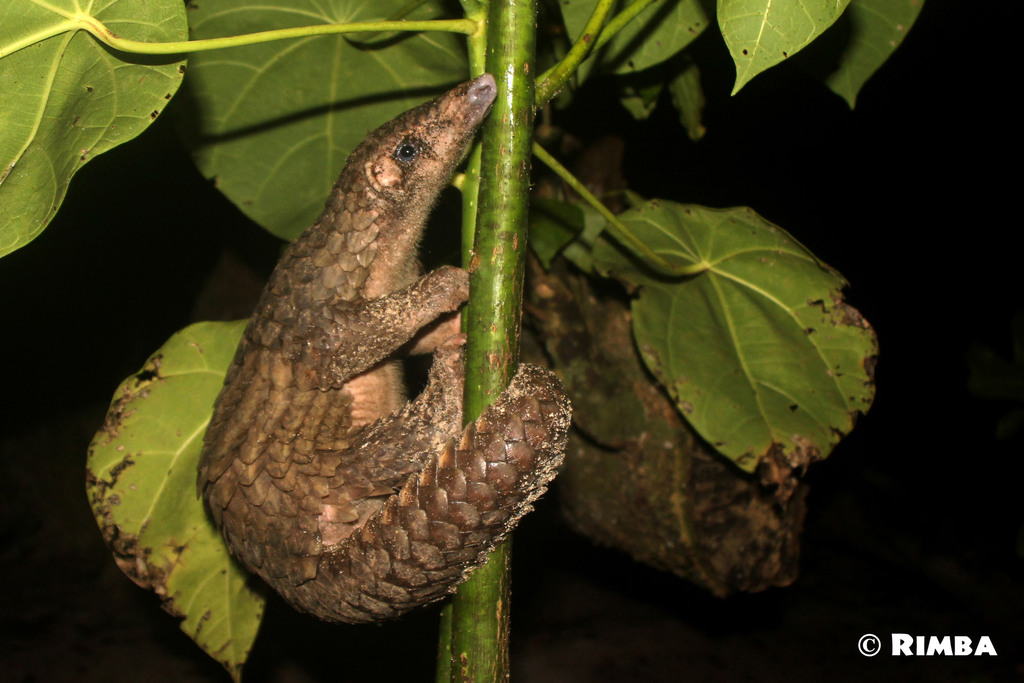
A scaly, toothless ant-eater of Southeast Asian forests and plantations, armoured in overlapping keratin scales. Pangolins are thought to be the most trafficked wild mammals, poached for meat and scales.
The Sunda pangolin, also known as the Malayan or Javan pangolin, is a species of pangolin. It is a member of the Manidae family. Its English name comes from the Malay name pëngulin, which means "roller". Wikipedia
What it can do
- iRolls into a tight, armoured ball that most predators cannot open
- iiRips into ant and termite nests with powerful foreclaws
- iiiCatches insects with a long, sticky tongue anchored deep in the chest
- ivSeals its nostrils and ears against biting ants while feeding
- vGrinds food with swallowed stones and keratin spines in its stomach instead of teeth
In the field
Field marks
- aCovered in overlapping brown scales
- bSmall head and long tail used for gripping
- cRolls into a ball when threatened
- dNocturnal and rarely seen
- Not to be confused with
- Chinese pangolin has larger ears and a shorter tail; Philippine pangolin lives only in Palawan.
- When
- Resident; nocturnal
Listen
Looking for field recordings…
Life & habits
- Diet
- Insectivore: ants and termites, including eggs and larvae
- Habitat
- Primary and secondary forest, plantations, gardens
- Size
- Body 40–65 cm plus a similar tail; ~4–10 kg
- Lifespan
- Unknown in the wild; ~20 years recorded in captivity for pangolins
Mostly nocturnal, it climbs well with its prehensile tail and sleeps in tree hollows or burrows. Mothers carry their single young on the base of the tail.
Where it lives
Recorded sightings
—
geo-referenced records in GBIF, from museums, herbaria and field observers.
Native range
Myanmar, Thailand, Cambodia, Laos, Vietnam, Peninsular Malaysia, Singapore, Sumatra, Java, Borneo and nearby islands
Drag the globe to turn it. Dots are where records exist, not a range map; darker means more records.
In the old herbals & bestiaries
No plate in the Source Library names this exact species, so these show its closest relatives as the old naturalists drew them: same genus, or the same kind of animal. Click a plate to read the page it came from, with translation.

Ortus sanitatis
Relative · 1491 · p.552

De Indiae utriusque re naturali et medica
Relative · Willem Piso · 1658 · p.462

Ten Books of Exotic Things
Relative · Carolus Clusius · 1605 · p.394

Collected Illustrations of the Three Realms: Birds and Beasts
Relative · 王圻, 王思義 · 1609 · p.37

De Indiae utriusque re naturali et medica
Relative · Willem Piso · 1658 · p.484
In the stacks
Searching the stacks…
Every page naming Manis javanica in the Biodiversity Heritage Library →
Marginalia
The English word comes from Malay pengguling, 'one that rolls up'. Pangolin scales have long been used in traditional Chinese medicine; in 2020 China removed them from its official pharmacopoeia and gave pangolins top legal protection.
Curiosity
Pangolin scales are made of keratin, the same protein as human fingernails.
Kinship




Fact-checked: 1 correction made to this sheet. Photographs: iNaturalist contributors under the licences shown. Records: GBIF.org. Historical plates: Source Library (CC BY-SA 4.0; originals public domain). Summary text: Nature Library editors and Wikipedia (CC BY-SA). Medicinal and edibility notes are historical and educational, not advice. iNaturalist taxon 43364.