 NL·0506
Herbarium of the Nature Library
- Name
- Isurus oxyrinchus
- Family
- Lamnidae
- Native to
- Tropical and temperate oceans worldwide
- Habitat
- Open ocean (pelagic)
Shortfin mako
Isurus oxyrinchus
Also calledMarrajo dientuso (Spanish) · Aozame (Japanese) · Mako (Māori) · Taupe bleue (French) · Anequim (Portuguese, Brazil)
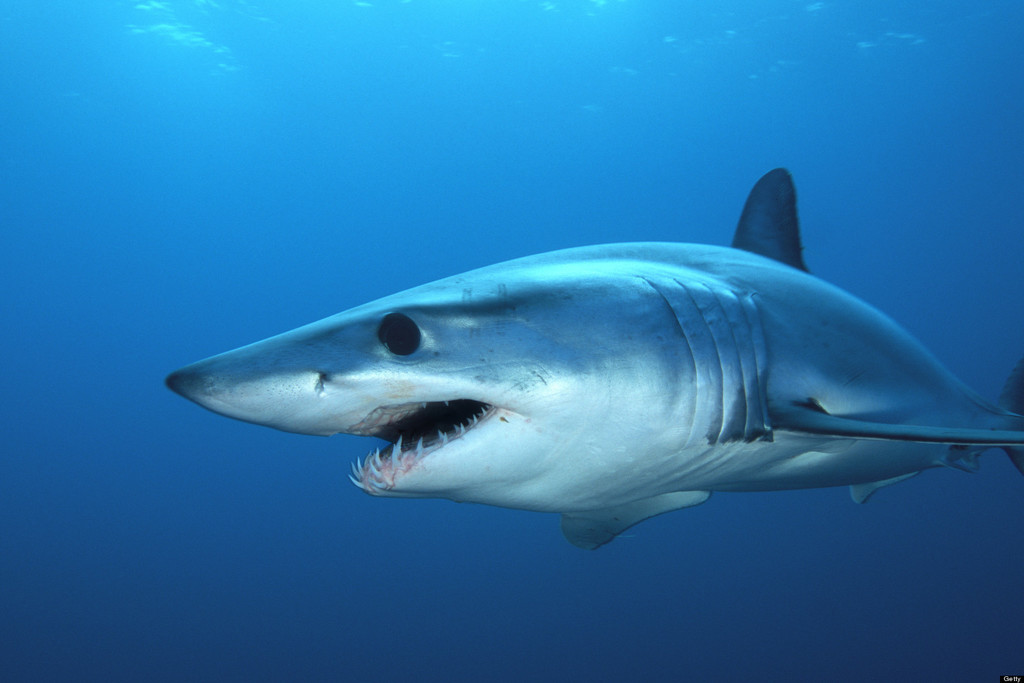
The fastest shark, capable of bursts often estimated around 70 km/h and spectacular leaps several metres out of the water. Warm-bodied and long-ranging, it has been heavily overfished for its meat and fins.
The shortfin mako shark, also known as the shortfin mako, blue pointer, or bonito shark, is a species of large mackerel shark. It is commonly referred to as the mako shark, as is the longfin mako shark. The fastest known shark species, able to reach speeds of 74 km/h (46 mph) in bursts, the shortfin mako can attain sizes of more than 4 m (13 ft) in length and weigh over 570 kg (1,260 lb). The species is classified as Endangered by the IUCN. Wikipedia
What it can do
- iRegional endothermy keeps muscles, brain and eyes warmer than the water
- iiFlexible scales (denticles) on the flanks may reduce drag by controlling flow separation
- iiiLeaps up to about 6 m clear of the water
- ivTagged makos have travelled many thousands of kilometres across ocean basins
In the field
Field marks
- aSlender, torpedo body with a sharply pointed conical snout
- bMetallic indigo-blue back and white belly
- cLong, curved, smooth-edged teeth visible even with the mouth closed
- dNearly symmetrical crescent tail with a strong keel
- eUnderside of snout white
- Not to be confused with
- Longfin mako (I. paucus) has much longer pectoral fins and a dusky snout underside; porbeagle has a secondary keel and white rear dorsal tip; great white is stockier with serrated triangular teeth.
- Where to see it
- Offshore cage and pelagic dives off San Diego, Cabo San Lucas, Rhode Island and Cape Point, South Africa
- When
- Southern California summer–autumn; New England Jun–Oct
Life & habits
- Diet
- Tunas, swordfish, mackerel, squid, other sharks
- Habitat
- Open ocean from the surface to about 500 m
- Size
- Commonly 3 m; up to about 4 m and 500 kg
- Lifespan
- About 30 years
A highly active, wide-ranging hunter that attacks swordfish and tuna from below.
Where it lives
Recorded sightings
—
geo-referenced records in GBIF, from museums, herbaria and field observers.
Native range
Tropical and temperate oceans worldwide
Drag the globe to turn it. Dots are where records exist, not a range map; darker means more records.
In the stacks
Searching the stacks…
Every page naming Isurus oxyrinchus in the Biodiversity Heritage Library →
Marginalia
Ernest Hemingway's The Old Man and the Sea (1952) features a mako ('dentuso') attacking Santiago's marlin; in 2019 it was listed on CITES Appendix II.
Curiosity
In 2021 ICCAT agreed to a two-year ban on retaining North Atlantic shortfin makos because the stock was overfished.
Kinship






Fact-checked: 1 correction made to this sheet. Photographs: iNaturalist contributors under the licences shown. Records: GBIF.org. Historical plates: Source Library (CC BY-SA 4.0; originals public domain). Summary text: Nature Library editors and Wikipedia (CC BY-SA). Medicinal and edibility notes are historical and educational, not advice. iNaturalist taxon 69677.