 NL·0593
Herbarium of the Nature Library
- Name
- Cyanistes caeruleus
- Family
- Paridae
- Native to
- Europe, Turkey, the Caucasus, northern Iran and the Middle East; the African blue tit of North Africa and the Canaries is now a separate species
- Habitat
- Temperate forest, Woodland, Gardens and parks
On eBird ↗
Eurasian Blue Tit
Live sightings near you, the range map, bar charts of when it is seen, and Macaulay Library photos and recordings.
Eurasian blue tit
Cyanistes caeruleus
Also calledMavi baştankara (Turkish) · Blaumeise (German) · Mésange bleue (French) · Herrerillo común (Spanish) · Pimpelmees (Dutch)
A tiny acrobatic tit with an azure cap, yellow underparts and a white face crossed by a dark eye-stripe. It is a dominant garden and woodland bird across Europe, raising some of the largest broods of any songbird.
The Eurasian blue tit is a small passerine bird in the tit family, Paridae. It is easily recognised by its blue and yellow plumage and small size. Wikipedia
What it can do
- iLays clutches of up to around 12 or more eggs, among the largest of any European songbird
- iiCrown feathers reflect ultraviolet light; females favour males with brighter UV crowns
- iiiHangs upside down to glean aphids and caterpillars from the tips of twigs
- ivLearned to open milk-bottle tops in 20th-century Britain, a classic case of spreading animal innovation
In the field
Field marks
- aBright blue crown, wings and tail
- bWhite cheeks with a dark line through the eye and dark collar
- cYellow underparts with a small dark belly smudge
- dSmall, short-billed and very active
- Voice
- Song a high 'tsee-tsee-tsirrrr' ending in a trill; scolds with a rapid 'chur-r-r-r'.
- Not to be confused with
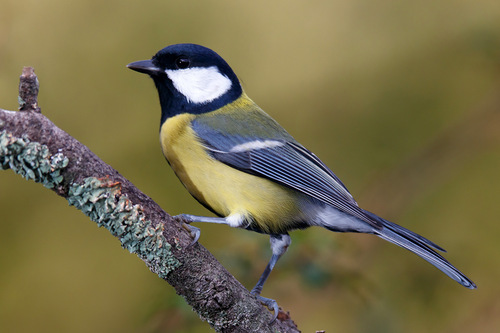
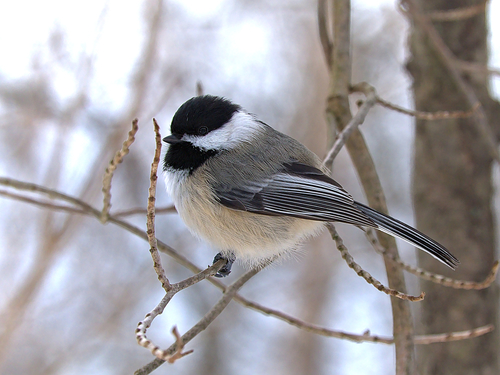
- Great tit is larger with a black head and a black breast stripe. Azure tit (Russia, Central Asia) is whiter below with a white crown. African blue tit of North Africa has a dark-blue cap and slate back.
- Where to see it
- Gardens and woods across Europe, Turkey and the Caucasus; common at feeders in winter.
- When
- Resident year-round
Listen
Looking for field recordings…
Life & habits
- Diet
- Caterpillars, aphids, spiders; seeds, nuts and nectar in winter
- Habitat
- Deciduous woodland, especially oak, parks, gardens, reedbeds in winter
- Size
- 10.5–12 cm; 9–12 g
- Lifespan
- Typically 1–3 years
Raises a single large brood timed to the oak-caterpillar peak, with parents delivering hundreds of caterpillars a day.
Where it lives
Recorded sightings
—
geo-referenced records in GBIF, from museums, herbaria and field observers.
Native range
Europe, Turkey, the Caucasus, northern Iran and the Middle East; the African blue tit of North Africa and the Canaries is now a separate species
Drag the globe to turn it. Dots are where records exist, not a range map; darker means more records.
In the old herbals & bestiaries
Woodcuts and engravings matched from the Source Library’s scanned books by name. Plates marked “relative” show a close kin rather than this exact species. Click a plate to read the page it came from, with translation.


In the stacks
Searching the stacks…
Every page naming Cyanistes caeruleus in the Biodiversity Heritage Library →
Marginalia
The milk-bottle raids reported by James Fisher and Robert Hinde in 1949 became a textbook example of cultural transmission in animals; the habit faded as doorstep milk deliveries declined.
Curiosity
Blue tits see in ultraviolet, so males and females that look identical to us are clearly different to each other.
Kinship
- kingdomAnimalia
- ›phylumChordata
- ›subphylumVertebrata
- ›classAves
- ›orderPasseriformes
- ›familyParidae
- ›genusCyanistes
Neighbours on the shelf
Photographs: iNaturalist contributors under the licences shown. Records: GBIF.org. Historical plates: Source Library (CC BY-SA 4.0; originals public domain). Summary text: Nature Library editors and Wikipedia (CC BY-SA). Medicinal and edibility notes are historical and educational, not advice. iNaturalist taxon 144849.