 NL·0582
Herbarium of the Nature Library
- Name
- Chlamydotis macqueenii
- Family
- Otididae
- Native to
- Breeds from Sinai, the Middle East and Iran across Central Asia to Mongolia and China; winters in the Arabian Peninsula, Iran, Pakistan and northwestern India
- Habitat
- Desert, Semi-desert, Steppe
On eBird ↗
Asian Houbara
Live sightings near you, the range map, bar charts of when it is seen, and Macaulay Library photos and recordings.
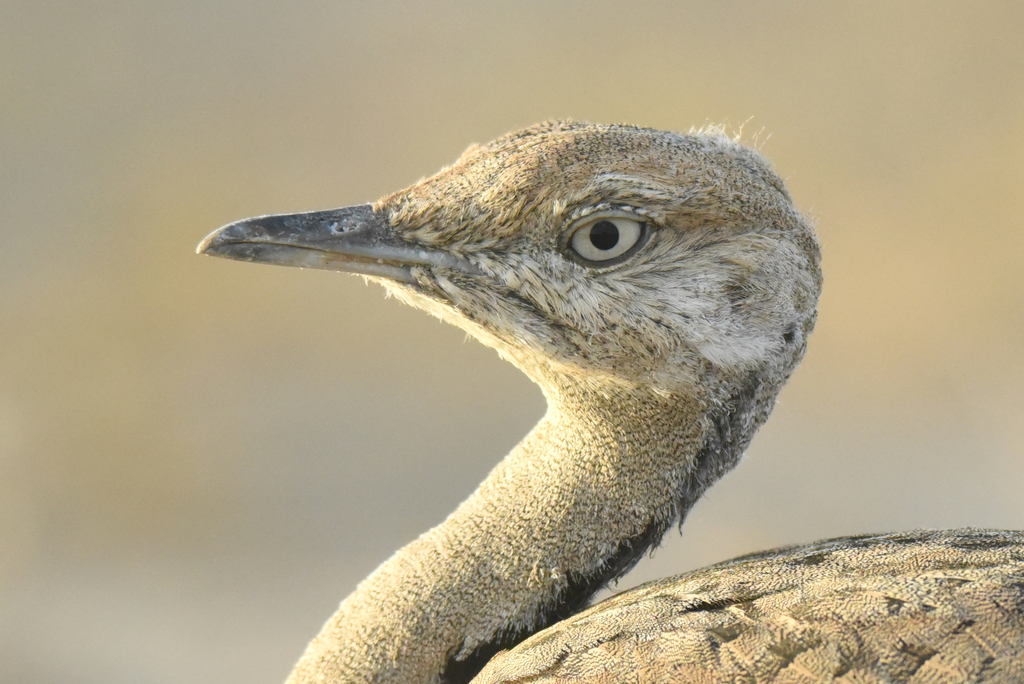
Asian houbara (MacQueen's bustard)
Chlamydotis macqueenii
Also calledHubara (Arabic) · Hubareh (Persian) · Tilor (Urdu) · Yakalı toy (Turkish) · Dzhek (Russian)
A sandy, cryptic bustard of deserts and semi-deserts that is the classic quarry of Arab falconry. Hunting and trapping along its migration routes have driven it into decline despite large captive-breeding programmes.
The Asian houbara, also known as MacQueen's bustard, is a large bird in the bustard family. It is native to the desert and steppe regions of Asia, east from the Sinai Peninsula extending across Iran and further north toward Kazakhstan and Mongolia. In the 19th century, vagrants were found as far west of their range as Great Britain. Populations have decreased by 20–50% between 1984 and 2004 mainly due to hunting and changes in land-use. The Asian houbara is a partial latitudinal migrant while the African houbara is more sedentary. These two species are the only members of the genus Chlamydotis. The Asian houbara used to be regarded as a subspecies of the African houbara. Wikipedia
What it can do
- iPlumage blends almost perfectly with sand and gravel desert
- iiCan obtain water largely from food in arid habitats
- iiiMigrates thousands of kilometres between Central Asian breeding grounds and South Asian or Arabian wintering grounds
- ivSquirts a jet of faeces at attacking falcons as a defence
In the field
Field marks
- aSandy buff upperparts finely vermiculated with black
- bBlack stripe running down each side of the neck into a white ruff
- cShort crest of white and black feathers
- dBold black-and-white wing pattern in flight
- Voice
- Mostly silent; a low booming during display.
- Not to be confused with
- African houbara (Chlamydotis undulata) of North Africa is very similar but has an all-white crest; ranges barely overlap. Great bustard is much larger, grey-headed and lacks the black neck stripe.
- Where to see it
- Kyzylkum Desert in Uzbekistan and Kazakhstan in spring; Cholistan and Balochistan (Pakistan) and the UAE in winter.
- When
- Summer visitor to Central Asia Mar–Oct; winter visitor to Arabia and South Asia
Listen
Looking for field recordings…
Life & habits
- Diet
- Shoots, seeds and fruits of desert plants; beetles, locusts and small reptiles
- Habitat
- Flat or rolling semi-desert with sparse shrubs
- Size
- 55–75 cm; wingspan 135–170 cm; 1.2–3.2 kg
Displaying males raise their white neck plumes over their heads and run in zigzags, a display visible from far across the desert.
Where it lives
Recorded sightings
—
geo-referenced records in GBIF, from museums, herbaria and field observers.
Native range
Breeds from Sinai, the Middle East and Iran across Central Asia to Mongolia and China; winters in the Arabian Peninsula, Iran, Pakistan and northwestern India
Drag the globe to turn it. Dots are where records exist, not a range map; darker means more records.
In the stacks
Searching the stacks…
Every page naming Chlamydotis macqueenii in the Biodiversity Heritage Library →
Marginalia
Hunting houbara with sakers and peregrines is a centuries-old Bedouin tradition, and special permits for Gulf rulers to hunt it in Pakistan have been the subject of court challenges in Pakistan's Supreme Court.
Curiosity
Captive-breeding centres in the UAE, Saudi Arabia and Morocco release large numbers of captive-bred houbara to support wild populations and falconry.
Kinship
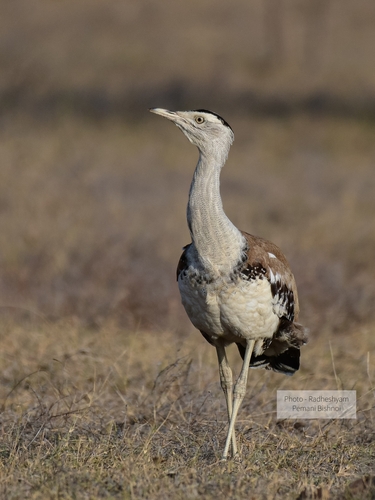
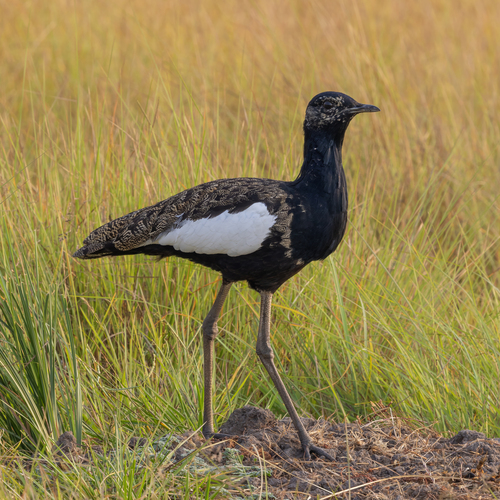


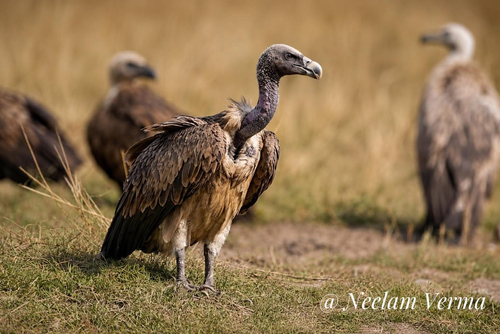
Photographs: iNaturalist contributors under the licences shown. Records: GBIF.org. Historical plates: Source Library (CC BY-SA 4.0; originals public domain). Summary text: Nature Library editors and Wikipedia (CC BY-SA). Medicinal and edibility notes are historical and educational, not advice. iNaturalist taxon 144471.