 NL·0027
Herbarium of the Nature Library
- Name
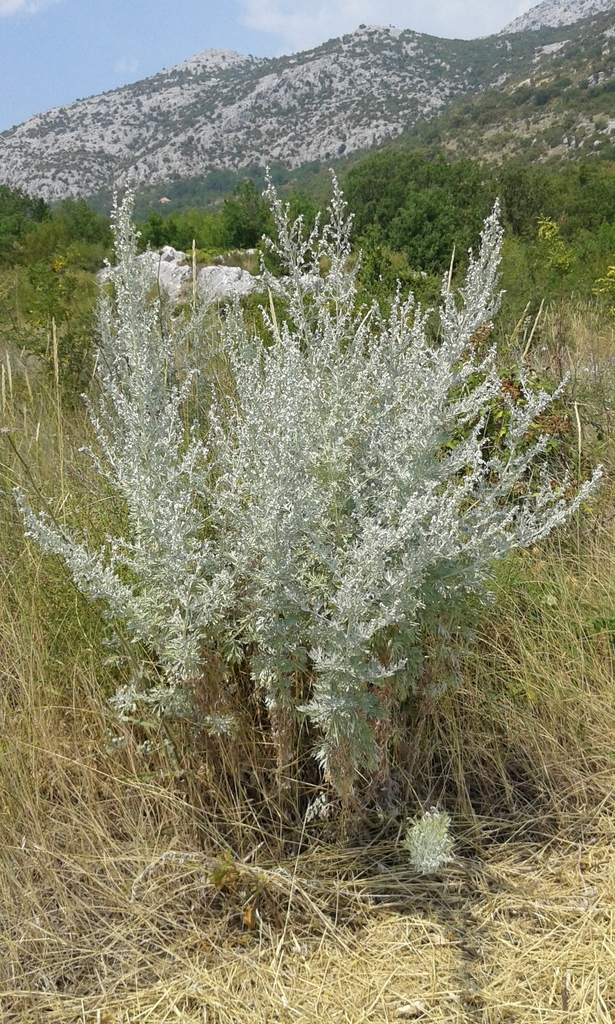
- Artemisia absinthium
- Family
- Asteraceae
- Native to
- Temperate Europe, North Africa and Western & Central Asia; naturalised in North America
- Habitat
- Dry grassland, Disturbed ground, Rocky slopes
Wormwood
Artemisia absinthium
Also calledAfsantīn أفسنتين (Arabic/Unani) · Wermut (German, source of 'vermouth') · Ajenjo (Spanish) · Grande absinthe (French) · Zhōng yà kǔ hāo 中亚苦蒿 (Chinese)
A silvery, intensely bitter perennial that gave its name to absinthe and vermouth. Its thujone was blamed for 'absinthism', and that fear got absinthe banned across much of Europe and the US in the early 20th century.
Artemisia absinthium, otherwise known as common wormwood, is a species of Artemisia native to North Africa and temperate regions of Eurasia, and widely naturalized in Canada and the northern United States. It is grown as an ornamental plant and is used as an ingredient in the spirit absinthe and some other alcoholic beverages. Wikipedia
What it can do
- iAbsinthin is among the most bitter substances known in plants and stimulates bitter receptors that drive digestive secretions
- iiThujone blocks GABA-A receptors and can cause seizures at high doses
- iiiReleases compounds from its leaves and roots that suppress nearby plants (allelopathy)
- ivSilky grey hairs reflect sunlight and reduce water loss
At the table
Used only in tiny regulated amounts as a bitter flavouring in absinthe, vermouth and bitters. The essential oil and large doses are toxic, and the herb is not a food.
In the medicine cabinet
| Tradition | Use |
|---|---|
| European folk medicine | Bitter tea or wine for poor appetite, indigestion, gallbladder complaints and intestinal worms |
| Unani | Afsanteen as a liver and stomach tonic, a deobstruent and for fevers and worms |
| Modern phytotherapy | EMA traditional-use monograph for loss of appetite and mild dyspepsia; a small trial in Crohn's disease |
Weight of evidence
Traditional. Long historical use; little or no modern clinical evidence.
Active compounds
absinthin, artabsin, α-thujone, β-thujone, chamazulene, sabinene
Fruit & seed
Fruit
Cypsela (achene)
Ripens: Autumn
Minute brown achenes without a pappus.
Seed
~1 mm
Tiny, oblong, pale-brown seeds
- Dispersal
- Wind and gravity
- Germination
- Needs light; 1–2 weeks at 15–20 °C
How to grow it
Hardiness (USDA zones)
USDA 4–9. Survives winters down to about -34 °C.
- Light
- Full sun
- Water
- Low
- Soil
- Dry, poor, well-drained
- Propagation
- Seed, cuttings or division
- To harvest
- Leafy tops from year 2, at flowering
- Climates
- Temperate, Continental, Mediterranean
- 1Surface-sow under cover or root cuttings in spring
- 2Plant away from vegetables, as its exudates inhibit neighbours
- 3Cut flowering tops in midsummer and hang to dry
- 4Cut back in spring to keep it compact
Can it grow where you are?
Where it lives
Recorded sightings
—
geo-referenced records in GBIF, from museums, herbaria and field observers.
Native range
Temperate Europe, North Africa and Western & Central Asia; naturalised in North America
Drag the globe to turn it. Dots are where records exist, not a range map; darker means more records.
In the old herbals & bestiaries
Woodcuts and engravings matched from the Source Library’s scanned books by name. Plates marked “relative” show a close kin rather than this exact species. Click a plate to read the page it came from, with translation.

The Book of Health: The Art of Distillation
Brunschwig, Hieronymus · 1505 · p.250

Commentaries on the Six Books of Dioscorides on Medical Matter
Pietro Andrea Mattioli · 1563 · p.471

Herbarius
1485 · p.14

De medicinali materia libri sex
Dioscorides · 1552 · p.386

On the Virtues of Herbs
Macer Floridus (Odo of Meung) · 1090 · p.21

On the Virtues of Herbs
Macer Floridus · 1150 · p.12

Latin Herbal with German Synonyms
1484 · p.339

Herbarius latinus (with Dutch synonyms)
1486 · p.11

Herbarius latinus (with French synonyms)
1486 · p.15

Ortus sanitatis
1491 · p.11
In the stacks
Searching the stacks…
Every page naming Artemisia absinthium in the Biodiversity Heritage Library →
Marginalia
Absinthe was banned in Switzerland (1910), the United States (1912) and France (1915). Modern analyses of pre-ban bottles found thujone levels too low to explain 'absinthism'; the high alcohol content is the more likely culprit. 'Wormwood' in English Bibles (Revelation 8:11) stands for bitterness.
Curiosity
The word 'vermouth' comes from the German Wermut, wormwood, the herb that gave the original fortified wines their bitterness.
Kinship


Photographs: iNaturalist contributors under the licences shown. Records: GBIF.org. Historical plates: Source Library (CC BY-SA 4.0; originals public domain). Summary text: Nature Library editors and Wikipedia (CC BY-SA). Medicinal and edibility notes are historical and educational, not advice. iNaturalist taxon 60350.