 NL·0269
Herbarium of the Nature Library
- Name
- Apteryx mantelli
- Family
- Apterygidae
- Native to
- North Island of New Zealand
- Habitat
- Temperate rainforest, Scrubland, Plantation forest
On eBird ↗
North Island Brown Kiwi
Live sightings near you, the range map, bar charts of when it is seen, and Macaulay Library photos and recordings.
North Island brown kiwi
Apteryx mantelli
Also calledKiwi-nui (Māori) · Kiwi (Māori)
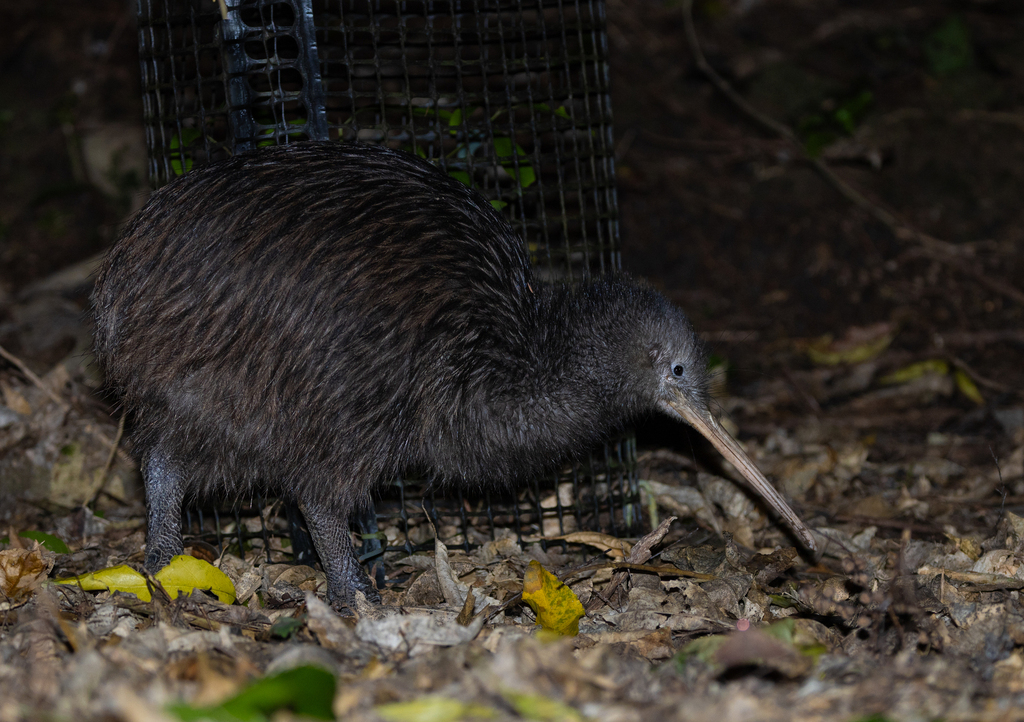
A flightless, nocturnal bird of New Zealand that hunts with nostrils at the tip of its long bill. Females lay an egg about a fifth of their own body weight, one of the largest relative to body size of any bird.
The North Island brown kiwi is a nocturnal flightless bird and species of kiwi that is widespread in the northern two-thirds of the North Island of New Zealand and, with about 35,000 remaining, it is the most common kiwi species. The eggs laid by the North Island brown kiwi are among the largest eggs relative to its body size. Wikipedia
What it can do
- iOnly bird with nostrils at the tip of its bill, smelling prey underground
- iiBill-tip sensory pits detect vibrations of invertebrates
- iiiEgg weighs about 15–20% of the mother's weight
- ivHas a body temperature lower than most birds, around 38 °C
- vHair-like feathers and tiny vestigial wings
In the field
Field marks
- aPear-shaped, flightless bird with no visible wings or tail
- bShaggy, streaky reddish-brown feathers
- cLong, pale, slightly curved bill with nostrils at the tip
- dNocturnal, probing the ground
- Voice
- Male gives a shrill, rising whistle repeated many times; female a lower, hoarse cry
- Not to be confused with
- It is the only wild kiwi over most of the North Island; little spotted kiwi (on a few island and fenced sanctuaries) is smaller and pale grey with fine mottling.
- Where to see it
- Trounson Kauri Park night walks (Northland); nocturnal kiwi houses such as Otorohanga Kiwi House
- When
- Resident
Listen
Looking for field recordings…
Life & habits
- Diet
- Earthworms, beetle larvae, cicadas, spiders and fallen fruit
- Habitat
- Native and exotic forest, scrub and farmland edges
- Size
- About 40 cm; 2–3.5 kg
- Lifespan
- Around 30–40 years or more
Pairs defend territories with shrill calls at night, and the male incubates the egg for about three months.
Where it lives
Recorded sightings
—
geo-referenced records in GBIF, from museums, herbaria and field observers.
Native range
North Island of New Zealand
Drag the globe to turn it. Dots are where records exist, not a range map; darker means more records.
In the stacks
Searching the stacks…
Every page naming Apteryx mantelli in the Biodiversity Heritage Library →
Marginalia
Kiwi are a taonga (treasure) to Māori, and cloaks of kiwi feathers (kahu kiwi) were worn by high-ranking people. The bird gave New Zealanders their nickname.
Curiosity
Without predator control, around 95% of kiwi chicks die before breeding age, mostly to stoats and cats.
Kinship





Photographs: iNaturalist contributors under the licences shown. Records: GBIF.org. Historical plates: Source Library (CC BY-SA 4.0; originals public domain). Summary text: Nature Library editors and Wikipedia (CC BY-SA). Medicinal and edibility notes are historical and educational, not advice. iNaturalist taxon 20496.