 NL·0346
Herbarium of the Nature Library
- Name
- Eretmochelys imbricata
- Family
- Cheloniidae
- Native to
- Tropical coral reefs of the Atlantic, Indian and Pacific oceans
- Habitat
- Coral reef, Sandy beaches, Mangrove lagoons
Hawksbill sea turtle
Eretmochelys imbricata
Also calledCarey (Spanish) · Tartaruga-de-pente (Portuguese) · Taimai タイマイ (Japanese) · Penyu sisik (Malay/Indonesian) · Kasa (Swahili, sea turtle)
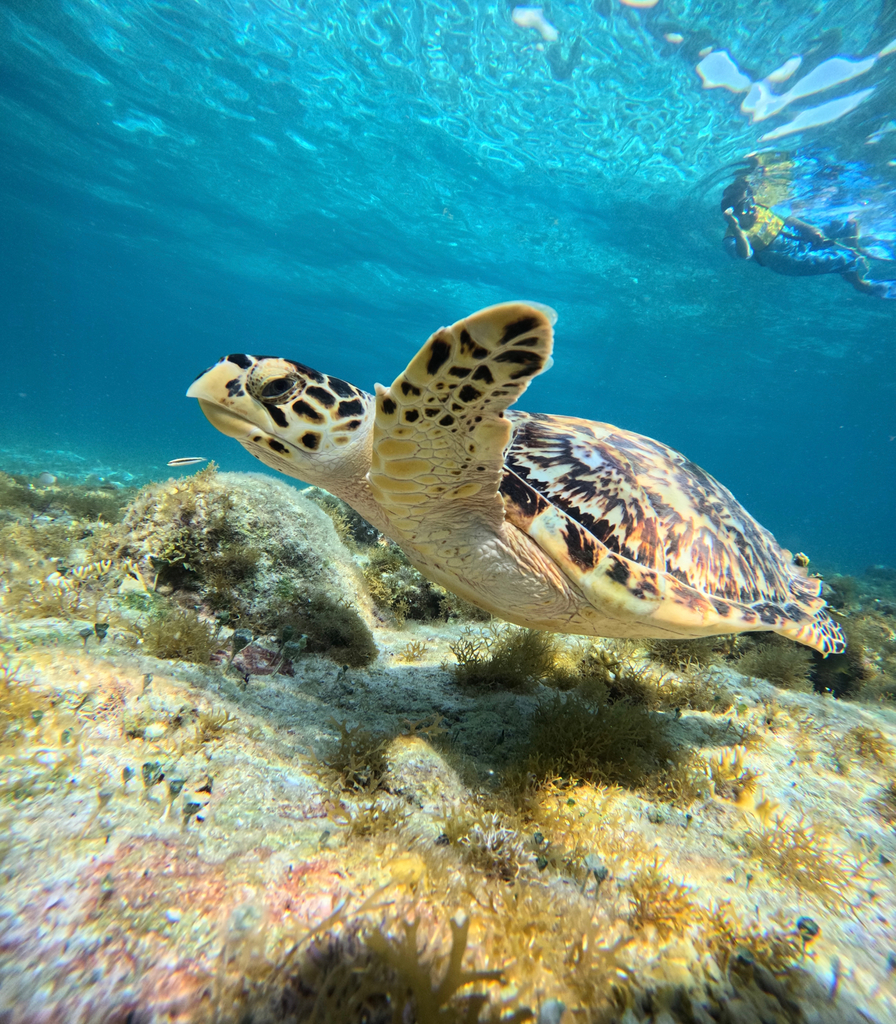
A reef-dwelling sea turtle with a narrow, hooked beak and beautifully mottled, overlapping shell plates. For centuries it was killed for 'tortoiseshell', and it is now Critically Endangered.
The hawksbill sea turtle is a critically endangered sea turtle belonging to the family Cheloniidae. It is the only extant species in the genus Eretmochelys. The species has a global distribution that is largely limited to tropical and subtropical marine and estuary ecosystems. Wikipedia
What it can do
- iFeeds largely on sponges, many of which are full of toxins and glass-like spicules
- iiBy eating sponges, it keeps them from overgrowing reef-building corals
- iiiIts narrow, bird-like beak can reach into crevices in the reef
In the field
Field marks
- aNarrow head with a sharp, hooked, hawk-like beak
- bOverlapping shell scutes, giving a saw-toothed back edge
- cAmber, brown and black 'tortoiseshell' pattern
- dTwo pairs of scales (prefrontals) between the eyes
- Not to be confused with
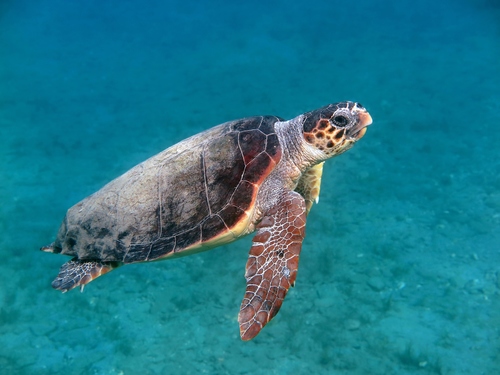
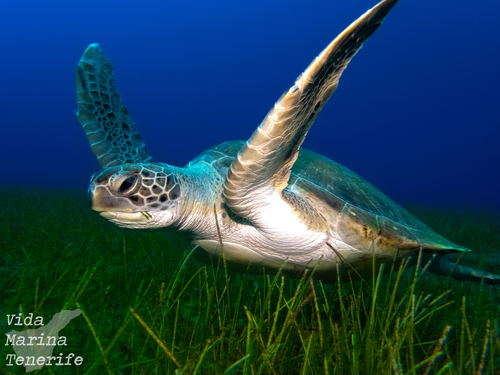
- The green turtle has a blunt rounded snout, one pair of scales between the eyes and non-overlapping shell scutes. Loggerheads have a big head and reddish shell.
- Where to see it
- Cousin Island (Seychelles), Bahia (Brazil), Mona Island (Puerto Rico), Milman Island (Great Barrier Reef), snorkelling reefs of the Caribbean and Red Sea
- When
- Resident on reefs; nesting peaks vary by region (e.g. Oct–Jan in the Seychelles)
Life & habits
- Diet
- Mainly sponges; also soft corals, anemones, jellyfish
- Habitat
- Coral reefs, rocky areas and lagoons; nests on small island beaches
- Size
- Shell up to ~1 m; weight ~45–80 kg
- Lifespan
- Probably 30–50 years
Often nests alone and in daylight on remote beaches, sometimes under beach vegetation.
Where it lives
Recorded sightings
—
geo-referenced records in GBIF, from museums, herbaria and field observers.
Native range
Tropical coral reefs of the Atlantic, Indian and Pacific oceans
Drag the globe to turn it. Dots are where records exist, not a range map; darker means more records.
In the old herbals & bestiaries
Woodcuts and engravings matched from the Source Library’s scanned books by name. Plates marked “relative” show a close kin rather than this exact species. Click a plate to read the page it came from, with translation.


In the stacks
Searching the stacks…
Every page naming Eretmochelys imbricata in the Biodiversity Heritage Library →
Marginalia
Tortoiseshell combs and ornaments were traded from ancient Rome to Edo-period Japan, where the craft is known as bekkō. CITES banned the international trade in 1977, and Japan, which had held a reservation, ended imports at the end of 1992 and withdrew its reservation in 1994.
Curiosity
In 2015 marine biologist David Gruber filmed a hawksbill off the Solomon Islands glowing red and green under blue light. It was the first biofluorescence reported in a reptile.
Kinship




Fact-checked: 1 correction made to this sheet. Photographs: iNaturalist contributors under the licences shown. Records: GBIF.org. Historical plates: Source Library (CC BY-SA 4.0; originals public domain). Summary text: Nature Library editors and Wikipedia (CC BY-SA). Medicinal and edibility notes are historical and educational, not advice. iNaturalist taxon 39672.