On eBird ↗
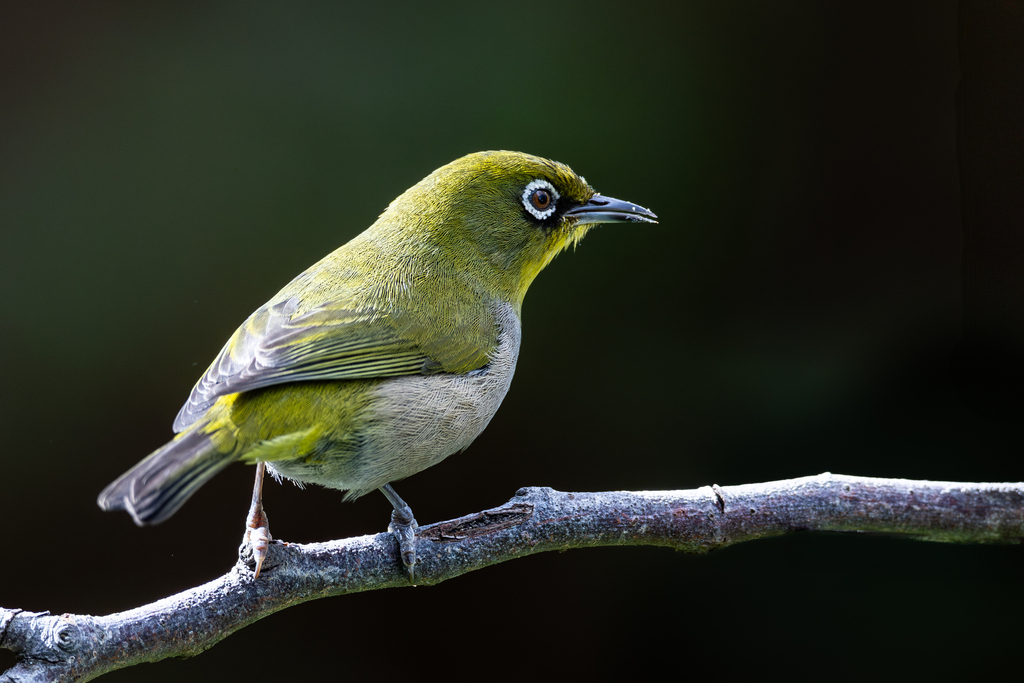
Cape White-eye
Live sightings near you, the range map, bar charts of when it is seen, and Macaulay Library photos and recordings.
Cape White-eye
Zosterops virens
The Cape white-eye (Zosterops virens) is a small passerine bird in the white-eye family. It is native to southern Africa. It is commonly found in suburbia, parks and gardens, besides a variety of mesic to well-watered habitats.
From the article Cape white-eye on Wikipedia (CC BY-SA), quoted section by section
Range & habitat
It is found in a wide range of densely to lightly wooded habitats in South Africa, Botswana, Lesotho, Eswatini and marginally in Mozambique. Most populations are resident, but some perform minor seasonal movements.
Wikipedia: “Distribution”
What it does
This is a sociable species forming large flocks outside the breeding season. It builds a cup nest in a tree and lays 2-3 unspotted pale blue eggs. The eggs hatch in 11–12 days, and fledging occurs in another 12–13 days. The peak breeding season is September to December. The Cape white-eye feeds mainly on insects, but also soft fleshy flowers, nectar, fruit and small grains. It readily comes to bird feeders.
Wikipedia: “Behaviour”
Listen
Looking for field recordings…
Where it lives
Recorded sightings
—
geo-referenced records in GBIF, from museums, herbaria and field observers.
Drag the globe to turn it. Dots are where records exist, not a range map; darker means more records.
In the stacks
Searching the stacks…
Every page naming Zosterops virens in the Biodiversity Heritage Library →
This page is assembled live from iNaturalist, GBIF, Wikipedia, the Source Library and the Internet Archive. It is not yet part of the hand-edited codex. iNaturalist taxon 472770.