- Animals
- ›Chordates
- ›Vertebrates
- ›Ray-finned Fishes
- ›Spiny-rayed fishes
- ›Perches, Scorpionfishes, Sticklebacks, and Allies
- ›Perches, groupers and allies
- ›Perches, Darters, and allies
- ›Darters
- ›Etheostoma
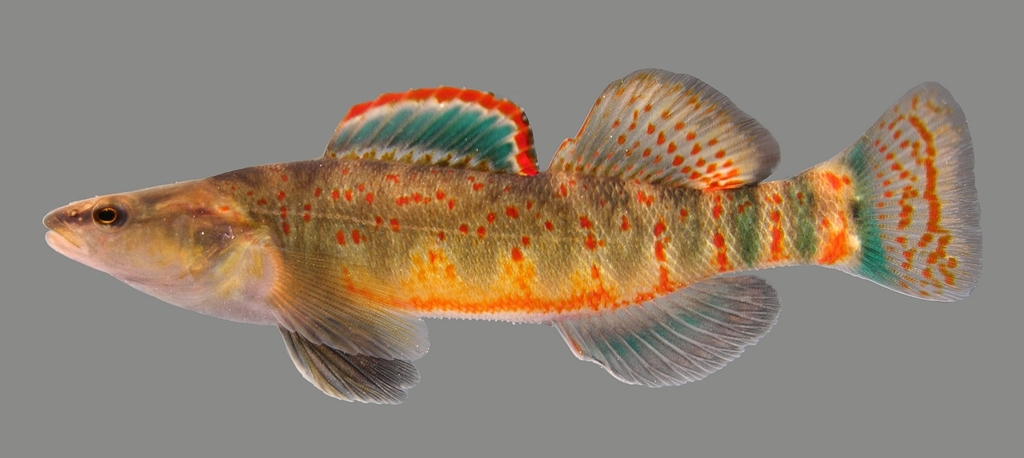
Kentucky Arrow Darter
Etheostoma spilotum
The Kentucky arrow darter (Etheostoma spilotum), sometimes known as the Cumberland Plateau darter, is a species of freshwater ray-finned fish, a darter from the subfamily Etheostomatinae, part of the family Percidae, which also contains the perches, ruffes and pikeperches. It is endemic to the eastern United States, where it is found only in the upper Kentucky River drainage in Kentucky. It inhabits rocky riffles and pools of headwaters, creeks and small rivers. This species can reach a length of 12 cm (4.7 in).
From the article Kentucky arrow darter on Wikipedia (CC BY-SA), quoted section by section
Range & habitat
Habitat includes upland creeks and streams, generally in headwaters, but juveniles and sometimes adults are also sometimes found in larger streams; generally this darter occurs in slow to moderate current in cool, sluggish pools or areas above and below riffles (avoids swift currents) over bedrock, rubble, cobble, and pebble, often interspersed with sandy areas. Spawning occurs apparently in riffles in water about 5–15 cm deep or under or near rocks in raceways.
Wikipedia: “Habitat and ecology”
Where it lives
Recorded sightings
—
geo-referenced records in GBIF, from museums, herbaria and field observers.
Drag the globe to turn it. Dots are where records exist, not a range map; darker means more records.
In the stacks
Searching the stacks…
Every page naming Etheostoma spilotum in the Biodiversity Heritage Library →
This page is assembled live from iNaturalist, GBIF, Wikipedia, the Source Library and the Internet Archive. It is not yet part of the hand-edited codex. iNaturalist taxon 219577.