 NL·0036
Herbarium of the Nature Library
- Name
- Betula pendula
- Family
- Betulaceae
- Native to
- Most of Europe to Siberia and northern Kazakhstan, south to Turkey and Iran
- Habitat
- Boreal forest, Temperate broadleaf forest, Heathland
Silver birch
Betula pendula
Also calledBeryoza берёза (Russian) · Koivu (Finnish) · Hängebirke (German) · Bouleau verruqueux (French) · Abedul (Spanish) · Beith (Gaelic)
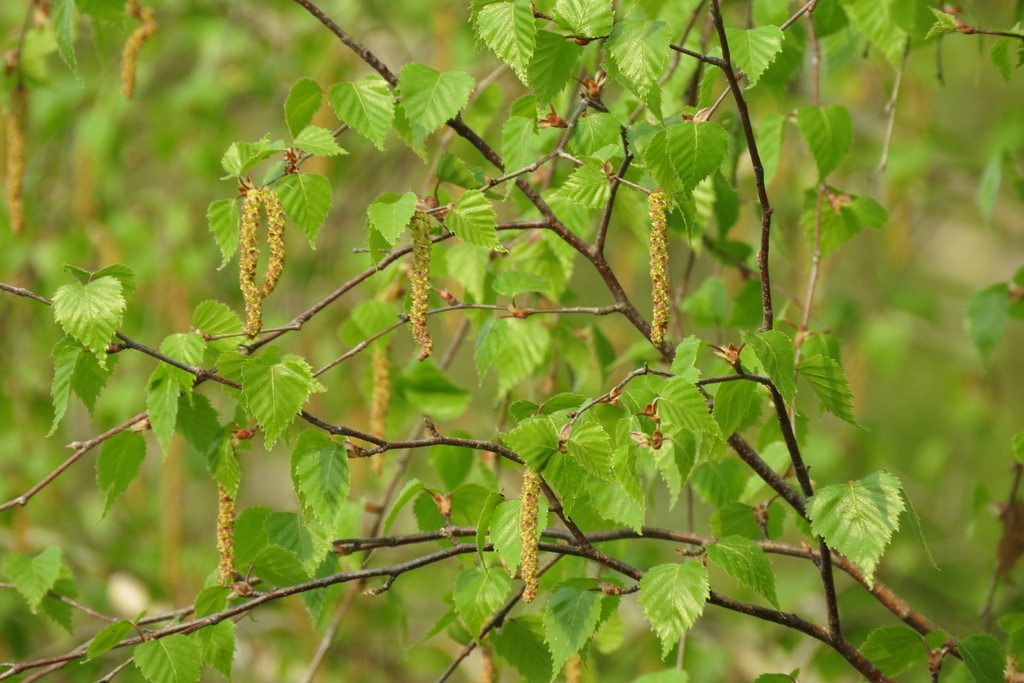
The pioneer of the north. Silver birch is among the first trees to recolonise burned, cleared or glacier-scoured ground, and its white bark, rich in betulin, reflects sunlight. People have tapped its sap, written on its bark and built canoes and boxes from it for thousands of years.
Betula pendula, the silver birch, is a species of tree in the flowering plant family, Betulaceae. The trees can reach a height of 30 m, and have white bark that sheds regularly. It is native to Europe, Morocco, temperate Asia, Canada, and Alaska, although in southern Europe and Morocco it is only found at higher elevations. Its range extends into Siberia, China, and southwest Asia in the mountains of northern Turkey, the Caucasus, and northern Iran. Wikipedia
What it can do
- iDisperses millions of light winged seeds, so it is quick to colonise open ground
- iiIts bark is rich in betulin, a white triterpene that reflects light and repels water
- iiiPushes large volumes of sugary sap up in spring before leafing out
- ivPrepares soil for later trees by cycling nutrients through fast-rotting leaves
At the table
Eatenspring sap (fresh or fermented) · young leaves (tea) · inner bark (famine flour)
Sap is drunk fresh in spring across Eastern Europe and Scandinavia. Birch pollen is a major cause of hay fever, and people with birch allergy often react to raw apples, hazelnuts and cherries.
In the medicine cabinet
| Tradition | Use |
|---|---|
| European herbal medicine | Leaf tea as a diuretic for urinary tract irrigation (approved by German Commission E) |
| Russian folk medicine | Birch tar (dyogot) applied to skin conditions; birch twigs used in the banya |
Weight of evidence
Traditional. Long historical use; little or no modern clinical evidence.
Active compounds
betulin, betulinic acid, flavonoids (hyperoside)
Fruit & seed


Fruit
Winged nutlet in a catkin
Ripens: Late summer
Cylindrical catkins break up into tiny winged seeds and three-lobed scales.

Seed
~2 mm
Tiny two-winged nutlets
- Dispersal
- Wind, often across snow
- Germination
- Surface-sow; needs light. Brief cold stratification improves germination.
Photographs from Wikimedia Commons under open licences; hover for the photographer, click for the file.
How to grow it
Hardiness (USDA zones)
USDA 2–7. Survives winters down to about -46 °C.
- Light
- Full sun
- Water
- Moderate
- Soil
- Light, acidic, well-drained
- Propagation
- Seed
- To harvest
- Sap from trees ~20 cm diameter, about 15–20 years
- Climates
- Boreal, Temperate, Continental
- 1Surface-sow seed in late winter and keep moist and bright
- 2Plant out small: birches transplant poorly when larger
- 3To tap sap, drill a small hole in early spring before bud-break and collect for a few days only
- 4Plug the tap hole afterwards to protect the tree
Can it grow where you are?
Where it lives
Recorded sightings
—
geo-referenced records in GBIF, from museums, herbaria and field observers.
Native range
Most of Europe to Siberia and northern Kazakhstan, south to Turkey and Iran
Drag the globe to turn it. Dots are where records exist, not a range map; darker means more records.
In the old herbals & bestiaries
Woodcuts and engravings matched from the Source Library’s scanned books by name. Plates marked “relative” show a close kin rather than this exact species. Click a plate to read the page it came from, with translation.

Commentaries on the Six Books of Dioscorides on Medical Matter
Pietro Andrea Mattioli · 1563 · p.207

Discourses on the Six Books of Dioscorides
Dioscorides; Pietro Andrea Mattioli (comm.) · 1568 · p.340

Six Groups of the History of Plants
Rembert Dodoens · 1583 · p.849

Herbarium Portatile, Oder Behendes Kräuter- und Gewächs-Buch: Darinn nicht allein 1363. so wol Einheimische als Außländndische Kräuter mit Lateinisch und Deutscher Benennung abgebildet, sondern auch die meisten, so in der Medicin gebräuchlich, kürtzlich erkläret werden
Panckow, Thomas · 1656 · p.360
In the stacks
Searching the stacks…
Every page naming Betula pendula in the Biodiversity Heritage Library →
Marginalia
Medieval citizens of Novgorod scratched letters onto birch bark; more than 1,000 such 'beresty' documents have been dug up since 1951. Ötzi the Iceman carried birch-bark containers and birch-tar adhesive. It is the national tree of Finland and Russia.
Curiosity
Birch tar is the oldest known synthetic material; Neanderthals were making it as a glue more than 200,000 years ago.
Kinship



Fact-checked: 1 correction made to this sheet. Photographs: iNaturalist contributors under the licences shown. Records: GBIF.org. Historical plates: Source Library (CC BY-SA 4.0; originals public domain). Summary text: Nature Library editors and Wikipedia (CC BY-SA). Medicinal and edibility notes are historical and educational, not advice. iNaturalist taxon 83992.