On eBird ↗
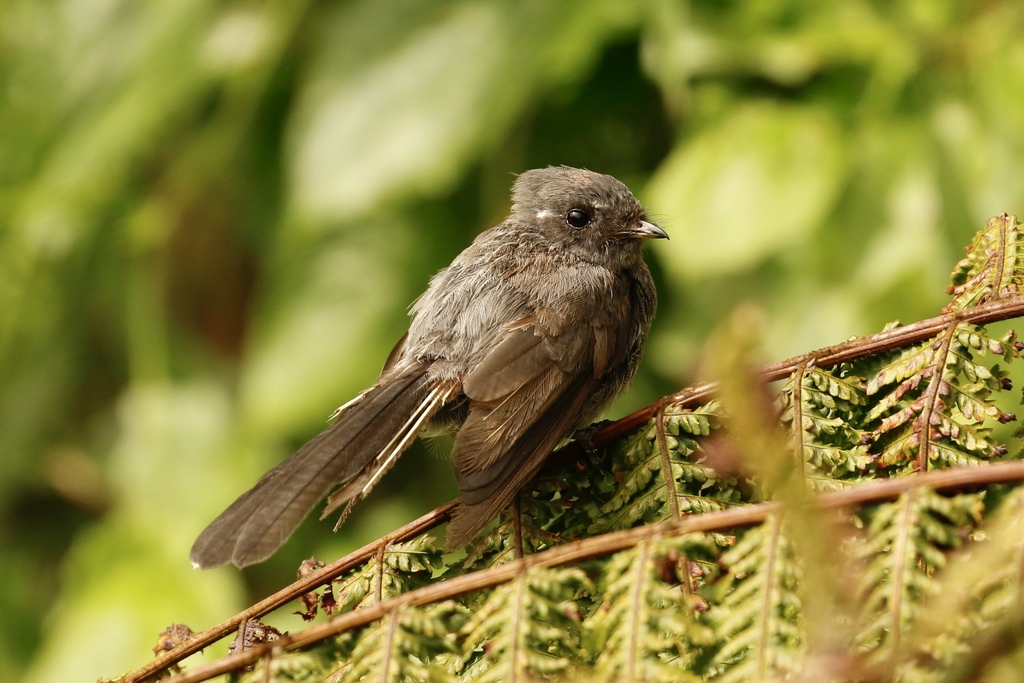
Samoan Fantail
Live sightings near you, the range map, bar charts of when it is seen, and Macaulay Library photos and recordings.
Samoan Fantail
Rhipidura nebulosa
The Samoan fantail (Rhipidura nebulosa) is a species of bird in the family Rhipiduridae.
It is endemic to Samoa and is found in Upolu and Savaiʻi islands.
From the article Samoan fantail on Wikipedia (CC BY-SA), quoted section by section
Description
The plumage is mostly dark greyish-brown with white undertail, black tail and light (white or pale smoky) throat. White spot behind the eyes. Like other fantails, Samoan fantail often spreads its long tail like a fan. The usual sounds are a low chirp. Sometimes imitates the voices of other bird species.
Range & habitat
The Samoan fantail is described as common and widespread on Upolu Island and has a limited distribution on the island of Savaiʻi. Its natural habitats are subtropical or tropical moist lowland forests and subtropical or tropical moist montane forests. Prefers primary and secondary rainforests, but tolerates man-made landscapes: plantations and gardens.
Wikipedia: “Distribution and habitat”
Listen
Looking for field recordings…
Where it lives
Recorded sightings
—
geo-referenced records in GBIF, from museums, herbaria and field observers.
Drag the globe to turn it. Dots are where records exist, not a range map; darker means more records.
In the stacks
Searching the stacks…
Every page naming Rhipidura nebulosa in the Biodiversity Heritage Library →
This page is assembled live from iNaturalist, GBIF, Wikipedia, the Source Library and the Internet Archive. It is not yet part of the hand-edited codex. iNaturalist taxon 8134.