 NL·0620
Herbarium of the Nature Library
- Name
- Phoenicopterus roseus
- Family
- Phoenicopteridae
- Native to
- Africa, the Mediterranean, the Middle East and South Asia
- Habitat
- Salt lakes, Lagoons, Mudflats, Salt pans
On eBird ↗
Greater Flamingo
Live sightings near you, the range map, bar charts of when it is seen, and Macaulay Library photos and recordings.
Greater flamingo
Phoenicopterus roseus
Also calledNuḥām (Arabic) · Hanj (Gujarati) · Flamenco común (Spanish) · Huǒliè niǎo (Chinese) · Heroe (Swahili)
The largest and most widespread flamingo, gathering in tens of thousands on salt lakes and lagoons. Its pink comes from carotenoid pigments in the algae and crustaceans it eats.
The greater flamingo is the largest and most widespread species of the flamingo family. Common in the Old World, they are found in Northern (coastal) and Sub-Saharan Africa, the Indian subcontinent, Central Asia, the Middle East, the Levant, the Persian Gulf, the Gulf of Aden, the Red Sea, and the Mediterranean countries of Southern Europe. Wikipedia
What it can do
- iFilter-feeds with its head upside down, pumping water through bill lamellae
- iiTolerates highly saline and alkaline lakes
- iiiTurns pink from dietary carotenoids such as canthaxanthin
- ivRubs pigment from preen-gland oil onto feathers as 'make-up' in breeding season
- vBoth parents feed chicks a crop milk
In the field
Field marks
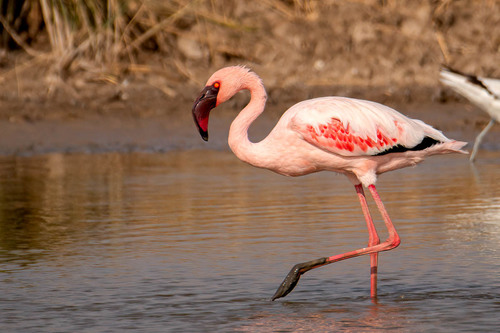
- aVery tall, pale pink wading bird with long neck and legs
- bPink bill with a black tip, bent sharply downward
- cBright red and black wings in flight
- dFeeds with head upside down
- Voice
- Goose-like honking and grunting in flocks
- Not to be confused with
- Lesser flamingo is smaller and deeper pink with a dark carmine bill that looks all-dark at a distance.
- Where to see it
- Camargue (Pont de Gau), France; Rann of Kutch, India; Walvis Bay, Namibia
- When
- Present all year at many wetlands; breeding colonies and numbers shift with water levels
Listen
Looking for field recordings…
Life & habits
- Diet
- Brine shrimp, small molluscs, insect larvae and algae
- Habitat
- Shallow saline and alkaline wetlands
- Size
- 110–150 cm; 2–4 kg
- Lifespan
- Over 30 years in the wild; over 80 in captivity
Groups perform synchronised 'marching' displays, heads raised and turning, before breeding.
Where it lives
Recorded sightings
—
geo-referenced records in GBIF, from museums, herbaria and field observers.
Native range
Africa, the Mediterranean, the Middle East and South Asia
Drag the globe to turn it. Dots are where records exist, not a range map; darker means more records.
In the old herbals & bestiaries
Woodcuts and engravings matched from the Source Library’s scanned books by name. Plates marked “relative” show a close kin rather than this exact species. Click a plate to read the page it came from, with translation.


In the stacks
Searching the stacks…
Every page naming Phoenicopterus roseus in the Biodiversity Heritage Library →
Marginalia
Pliny the Elder recorded that the Roman gourmet Apicius prized flamingo tongue as a delicacy. The Great Rann of Kutch in India hosts one of the largest breeding colonies, called 'Flamingo City'.
Curiosity
A captive greater flamingo at Adelaide Zoo lived to at least 83 years.
Kinship





Photographs: iNaturalist contributors under the licences shown. Records: GBIF.org. Historical plates: Source Library (CC BY-SA 4.0; originals public domain). Summary text: Nature Library editors and Wikipedia (CC BY-SA). Medicinal and edibility notes are historical and educational, not advice. iNaturalist taxon 73222.