 NL·0059
Herbarium of the Nature Library
- Name
- Manihot esculenta
- Family
- Euphorbiaceae
- Native to
- Southern Amazon basin of Brazil (Rondônia/Mato Grosso); grown throughout the tropics
- Habitat
- Tropical savanna and forest edges, Tropical farmland
Cassava
Manihot esculenta
Also calledMandioca / Aipim (Portuguese, Tupi origin) · Yuca (Spanish) · Manioc (French) · Muhogo (Swahili) · Ege / Gbaguda (Yoruba) · Ubi kayu (Malay/Indonesian) · Kappa / Maravalli (Malayalam/Tamil) · Mùshǔ (Chinese)
A woody shrub from the southern Amazon whose starchy roots feed over half a billion people, mainly in Africa. Every part contains cyanogenic glucosides, and Indigenous Amazonians developed elaborate grating, pressing and fermenting methods to make it safe — techniques later adopted across Africa and Asia.
Manihot esculenta, commonly called cassava, manioc, or yuca, is a woody shrub of the spurge family, Euphorbiaceae, native to South America, from Brazil, Paraguay and parts of the Andes. Although a perennial plant, cassava is extensively cultivated in tropical and subtropical regions as an annual crop for its edible starchy tuberous root. Cassava is predominantly consumed in boiled form, but substantial quantities are processed to extract cassava starch, called tapioca, which is used for food, animal feed, and industrial purposes. The Brazilian farofa, and the related garri of West Africa, is an edible coarse flour obtained by grating cassava roots, pressing moisture off the obtained grated pulp, and finally drying and roasting it. Wikipedia
What it can do
- iSurvives drought, poor acidic soils and erratic rainfall where grains fail
- iiRoots can be left in the ground for up to two years and harvested when needed
- iiiContains linamarin and lotaustralin, which release hydrogen cyanide when cells are damaged
- ivGrown easily from stem cuttings
At the table
Eatenroots (peeled, soaked, fermented, cooked — as fufu, gari, farinha, tapioca) · young leaves (pounded and long-boiled, e.g. pondu, saka-saka)
Never eat raw. Roots and leaves release cyanide; 'sweet' varieties need peeling and thorough cooking, while 'bitter' varieties must be grated, soaked or fermented, pressed and cooked. Poorly processed cassava causes acute poisoning and the paralytic disease konzo.
In the medicine cabinet
| Tradition | Use |
|---|---|
| West African folk medicine | Leaf poultices applied to wounds and sores |
| Brazilian folk medicine | Tapioca porridge as a gentle food for diarrhoea |
Weight of evidence
Traditional. Long historical use; little or no modern clinical evidence.
Active compounds
starch, linamarin, lotaustralin, vitamin C (leaves)
Fruit & seed


Fruit
Capsule (schizocarp)
Ripens: Variable in the tropics
Rounded, six-winged green capsule about 1.5 cm that dries and splits explosively, throwing out three seeds.

Seed
~1 cm
Oval, smooth, mottled grey-brown seeds about 1 cm long, with a pale fleshy appendage (caruncle) at one end
- Dispersal
- Explosive capsules; ants carry seeds by the caruncle
- Germination
- Seed used mainly in breeding; needs warmth (30–35 °C). Farmers plant stem cuttings
Photographs from Wikimedia Commons under open licences; hover for the photographer, click for the file.
How to grow it
Hardiness (USDA zones)
Tropical only (USDA 10–12); annual in warm subtropics. Survives winters down to about -1 °C.
- Light
- Full sun
- Water
- Low–moderate; very drought-tolerant once established
- Soil
- Light, sandy or loamy, well-drained; tolerates poor acidic soils (pH 4.5–7)
- Propagation
- Stem cuttings 20–30 cm long from mature, disease-free stems
- To harvest
- 8–24 months (sweet types from 6–8 months)
- Climates
- Tropical, Monsoon, Semi-arid tropical
- 1Cut 20–30 cm lengths with 5–8 nodes from mature, virus-free stems (check for mosaic disease).
- 2Plant at the start of rains, 1 m apart, either upright, angled or flat with two-thirds buried and buds pointing up.
- 3Weed for the first three months, after which the canopy shades out weeds.
- 4Harvest by lifting the stem and pulling roots; process within 1–2 days as roots spoil quickly.
- 5Peel, then soak, grate, ferment, press and cook as appropriate to the variety before eating — never eat raw.
Can it grow where you are?
Where it lives
Recorded sightings
—
geo-referenced records in GBIF, from museums, herbaria and field observers.
Native range
Southern Amazon basin of Brazil (Rondônia/Mato Grosso); grown throughout the tropics
Drag the globe to turn it. Dots are where records exist, not a range map; darker means more records.
In the old herbals & bestiaries
Woodcuts and engravings matched from the Source Library’s scanned books by name. Plates marked “relative” show a close kin rather than this exact species. Click a plate to read the page it came from, with translation.

Metamorphosis Insectorum Surinamensium
Maria Sibylla Merian · 1705 · p.24

Metamorphosis Insectorum Surinamensium
Maria Sibylla Merian · 1705 · p.21

Maria Sibylla Merian — Dissertatio de generatione et metamorphosibus insectorum Surinamensium (1719)
Maria Sibylla Merian · 1719 · p.203

Maria Sibylla Merian — Dissertatio de generatione et metamorphosibus insectorum Surinamensium (1719)
Maria Sibylla Merian · 1719 · p.32

Compendium of Materia Medica
李時珍 · 1596 · p.16

Historia naturalis Brasiliae
Willem Piso / Georg Marcgraf · 1648 · p.70

De Indiae utriusque re naturali et medica
Willem Piso · 1658 · p.335

De Indiae utriusque re naturali et medica
Willem Piso · 1658 · p.142

Elements of Botany
Joseph Pitton de Tournefort · 1719 · p.189

Historia naturalis Brasiliae
Willem Piso / Georg Marcgraf · 1648 · p.170
In the stacks
Searching the stacks…
Every page naming Manihot esculenta in the Biodiversity Heritage Library →
Marginalia
The Tupi and Arawak peoples grew cassava long before European contact, inventing the woven tipiti press to squeeze out its poisonous juice. Portuguese traders carried it from Brazil to the Congo basin in the 16th century, where it became central to Central African cuisine.
Curiosity
The 'pearls' in bubble tea are made from tapioca, the purified starch of cassava roots.
Kinship
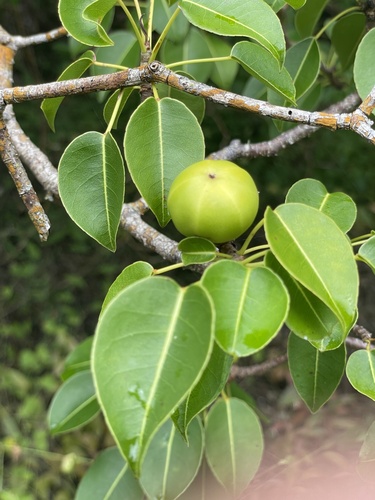
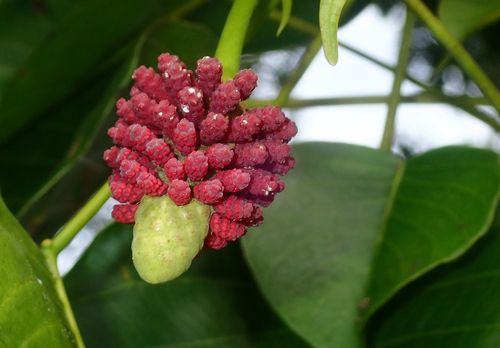


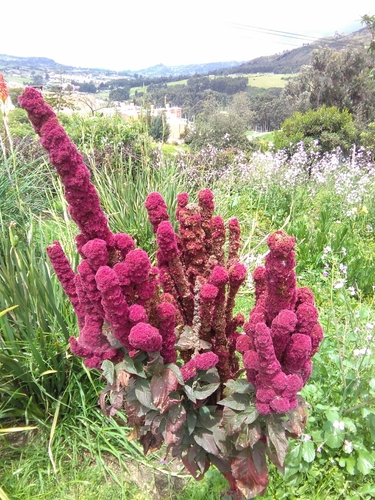
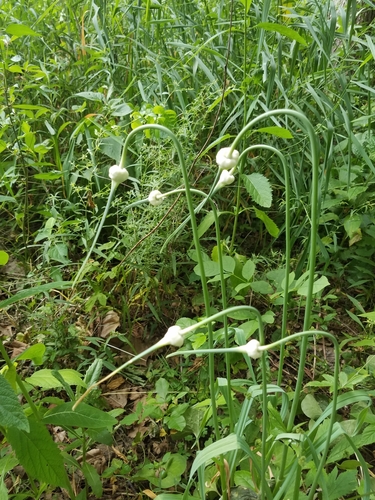
Photographs: iNaturalist contributors under the licences shown. Records: GBIF.org. Historical plates: Source Library (CC BY-SA 4.0; originals public domain). Summary text: Nature Library editors and Wikipedia (CC BY-SA). Medicinal and edibility notes are historical and educational, not advice. iNaturalist taxon 165138.