- Plants
- ›Vascular Plants
- ›flowering plants
- ›Dicots
- ›Legumes, Milkworts, and Allies
- ›Legumes
- ›Faboideae
- ›Phaseoleae
- ›Phaseolinae
- ›Vigna
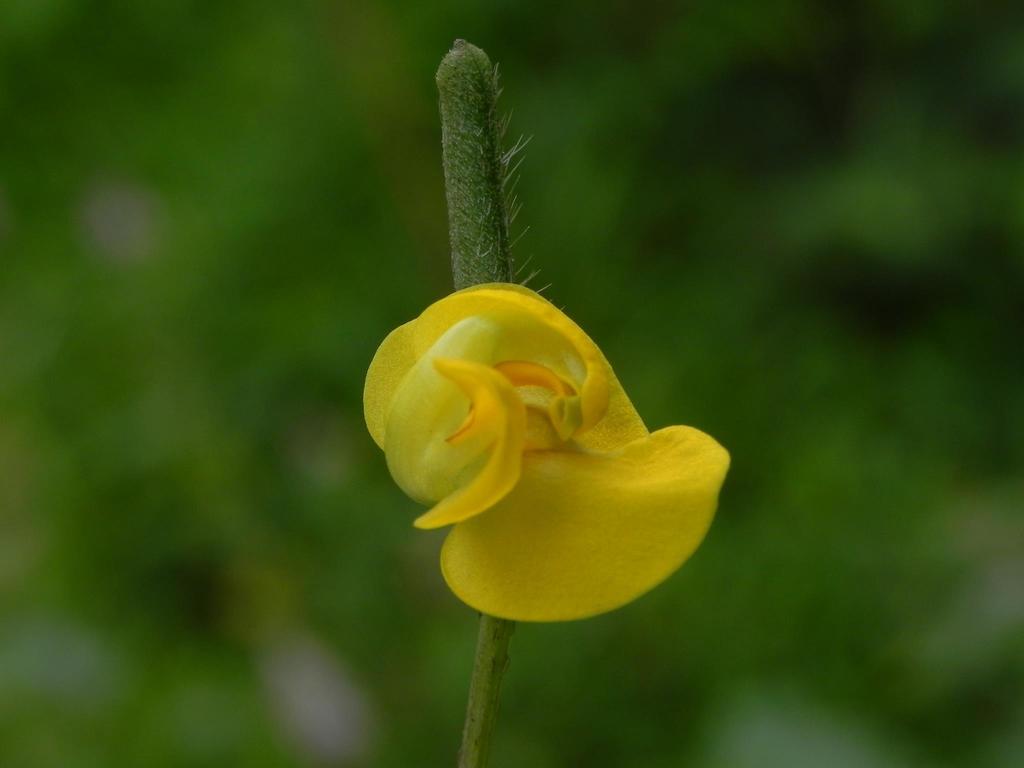
Mung Bean
Vigna radiata
The mung bean (Vigna radiata), alternatively known as the moong bean, green gram, or mung Sanskrit मुद्ग / mudga, is a plant species in the legume family. The mung bean is mainly cultivated in Pakistan, India, China, Korea, and Southeast Asia. It is used as an ingredient in both savory and sweet dishes.
From the article Mung bean on Wikipedia (CC BY-SA), quoted section by section
Description
The green gram is an annual vine with yellow flowers and fuzzy brown pods. It has a height of about 15–125 cm (6–49 in). Mung bean has a well-developed root system. The lateral roots are many and slender, with root nodules grown. Stems are much branched, sometimes twining at the tips. Young stems are purple or green, and mature stems are grayish-yellow or brown. They can be divided into erect cespitose, semi-trailing and trailing types. Wild types tend to be prostrate while cultivated types are more erect. Leaves are ovoid or broad-ovoid, cotyledons die after emergence, and ternate leaves are produced on two single leaves. The leaves are 6–12 cm long and 5–10 cm wide. Racemes with yellow flowers are borne in the axils and tips of the leaves, with 10–25 flowers per pedicel, self-pollinated. The fruits are elongated cylindrical or flat cylindrical pods, usually 30–50 per plant. The pods are 5–10 cm long and 0.4–0.6 cm wide and contain 12–14 septum-separated seeds, which can be either cylindrical or spherical in shape, and green, yellow, brown, or blue in color. Seed colors and presence or absence of a rough layer are used to distinguish different types of mung bean.
Growth stages. Germination is typically within 4–5 days, but the actual rate varies according to the amount of moisture introduced during the germination stage. …
At the table
The mung bean is recognized for its high nutritive value. A mung bean contains about 55–65% carbohydrate (equal to 630 g/kg dry weight) and are rich in protein, vitamins, and minerals. It is composed of about 20–50% protein of total dry weight, among which globulin (60%) and albumin (25%) are the primary storage proteins (see table). The mung bean is considered to be a substantive source of dietary proteins. The proteolytic cleavage of these proteins is even higher during sprouting. Mung bean carbohydrates are easily digestible, which causes less flatulence in humans compared to other forms of legumes. Both seeds and sprouts of the mung bean produce lower calories compared to other cereals, which makes it a more attractive bean to obese and diabetic individuals.
Wikipedia: “Nutritional value”
Where it lives
Recorded sightings
—
geo-referenced records in GBIF, from museums, herbaria and field observers.
Drag the globe to turn it. Dots are where records exist, not a range map; darker means more records.
In the old herbals & bestiaries


In the stacks
Searching the stacks…
Every page naming Vigna radiata in the Biodiversity Heritage Library →
This page is assembled live from iNaturalist, GBIF, Wikipedia, the Source Library and the Internet Archive. It is not yet part of the hand-edited codex. iNaturalist taxon 122885.