On eBird ↗
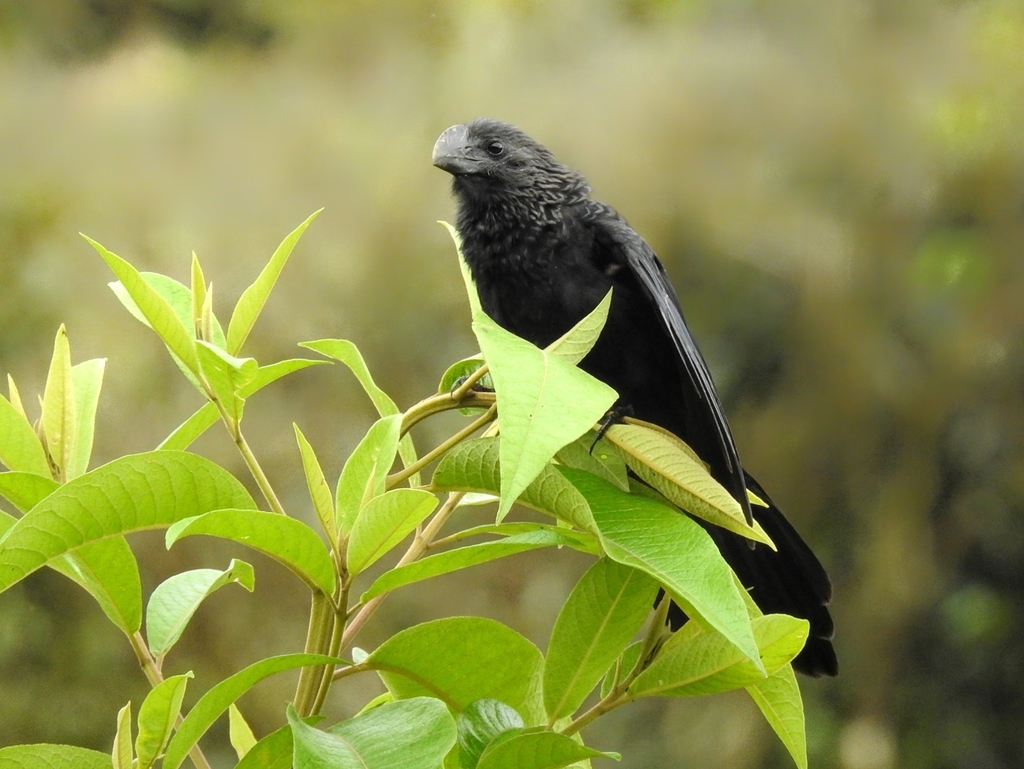
Smooth-billed Ani
Live sightings near you, the range map, bar charts of when it is seen, and Macaulay Library photos and recordings.
Smooth-billed Ani
Crotophaga ani
The smooth-billed ani (Crotophaga ani) is a large near passerine bird in the cuckoo family. It is a resident breeding species from southern Florida, the Caribbean, parts of Central America, south to western Ecuador, Brazil, and northern Argentina. It was introduced to Galápagos around the 1960s and is potentially impacting native and endemic species across the archipelago.
From the article Smooth-billed ani on Wikipedia (CC BY-SA), quoted section by section
Description
The smooth-billed ani is a mid-sized species, larger on average than the groove-billed ani but smaller than the greater ani. It measures approximately 35 cm (14 in) in overall length. Males weigh around 115 g (4.1 oz) while females are lighter and with a weight of around 95 g (3.4 oz). The adult is mainly glossy black, with a long tail, deep ridged black bill and a brown iris. The flight is weak and wobbly, but the bird runs well and usually feeds on the ground. This species is called "el pijul" in Venezuelan folklore. The calls include a whining ooo-leeek.
Range & habitat
This ani is found in open and semi-open country and areas under cultivation. This common and conspicuous species has greatly benefited from deforestation.
Wikipedia: “Distribution and habitat”
What it does
The smooth-billed ani feeds on termites, large insects, other invertebrates and even lizards, frogs, eggs and hatchlings of other birds, and fruit. They will occasionally remove ticks and other parasites from grazing animals.
Wikipedia: “Food and feeding”
Listen
Looking for field recordings…
Where it lives
Recorded sightings
—
geo-referenced records in GBIF, from museums, herbaria and field observers.
Drag the globe to turn it. Dots are where records exist, not a range map; darker means more records.
In the stacks
Searching the stacks…
Every page naming Crotophaga ani in the Biodiversity Heritage Library →
This page is assembled live from iNaturalist, GBIF, Wikipedia, the Source Library and the Internet Archive. It is not yet part of the hand-edited codex. iNaturalist taxon 1971.