 NL·0371
Herbarium of the Nature Library
- Name
- Hemiphaga novaeseelandiae
- Family
- Columbidae
- Native to
- New Zealand
- Habitat
- Temperate rainforest, Lowland forest, Suburban gardens
On eBird ↗
New Zealand Pigeon
Live sightings near you, the range map, bar charts of when it is seen, and Macaulay Library photos and recordings.
Kererū
Hemiphaga novaeseelandiae
Also calledKererū (Māori) · Kūkupa (Māori, Northland) · Kūkū (Māori) · New Zealand pigeon (English)
A big, iridescent green-and-white pigeon whose wingbeats whoosh through New Zealand forests. With other large fruit-eating birds extinct, it is the only native bird able to swallow the largest forest fruits whole, making it vital for spreading the seeds of trees such as taraire and tawa.
The kererū, also known as kūkupa, New Zealand pigeon or wood pigeon, is a species of pigeon native to New Zealand. Johann Friedrich Gmelin described the bird in 1789 as a large, conspicuous pigeon up to 50 cm (20 in) in length and 550–850 g (19–30 oz) in weight, with a white breast and iridescent green–blue plumage. Two subspecies have been recognised; the second—the Norfolk pigeon of Norfolk Island—became extinct in the early 20th century. Kererū pairs are monogamous, breeding over successive seasons and remaining together when not breeding. They construct nests with twigs in trees, with a single egg clutch. Wikipedia
What it can do
- iSwallows fruits up to about 2.5 cm across and disperses their seeds
- iiMain or sole disperser of large-fruited native trees including taraire, tawa, karaka and miro
- iiiPerforms steep, swooping display flights, stalling at the top before diving
In the field
Field marks
- aLarge pigeon with iridescent green-bronze head, throat and upperparts
- bClean white breast and belly, sharply divided from the green bib
- cRed bill, eye and feet
- dLoud whooshing wingbeats in flight
- Voice
- Mostly silent; a soft, low 'ooo' coo. The noisy swish of the wings is usually heard first.
- Not to be confused with
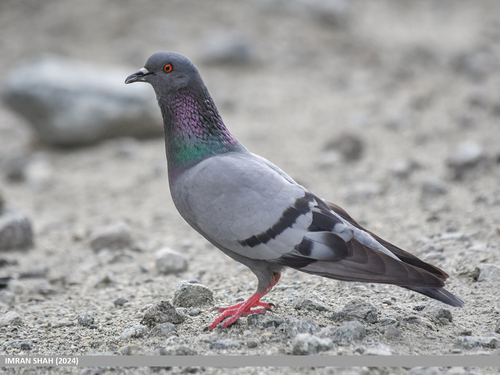
- Feral rock pigeons are smaller and grey. On the Chatham Islands the related parea is about a fifth larger, paler on the back, with a pale grey rump and an orange-tipped bill.
- Where to see it
- Zealandia and Otari-Wilton's Bush (Wellington), Tiritiri Matangi, Christchurch Botanic Gardens, native forest throughout New Zealand
- When
- Resident
Listen
Looking for field recordings…
Life & habits
- Diet
- Fruit, leaves, buds and flowers of native and introduced plants
- Habitat
- Native forest, scrub, farmland with trees, parks and gardens
- Size
- About 51 cm; 550–850 g
After gorging on fermenting fruit in summer, kererū are sometimes found too intoxicated to fly properly.
Where it lives
Recorded sightings
—
geo-referenced records in GBIF, from museums, herbaria and field observers.
Native range
New Zealand
Drag the globe to turn it. Dots are where records exist, not a range map; darker means more records.
In the stacks
Searching the stacks…
Every page naming Hemiphaga novaeseelandiae in the Biodiversity Heritage Library →
Marginalia
Kererū were an important traditional food for Māori, harvested under seasonal restrictions, and their feathers were woven into cloaks; the bird is now fully protected. It was voted New Zealand's Bird of the Year in 2018.
Curiosity
Because no surviving native bird can swallow fruit as large, the decline of kererū could leave several of New Zealand's biggest-fruited trees with no natural seed disperser.
Kinship

Fact-checked: 1 correction made to this sheet. Photographs: iNaturalist contributors under the licences shown. Records: GBIF.org. Historical plates: Source Library (CC BY-SA 4.0; originals public domain). Summary text: Nature Library editors and Wikipedia (CC BY-SA). Medicinal and edibility notes are historical and educational, not advice. iNaturalist taxon 204520.