 NL·0416
Herbarium of the Nature Library
- Name
- Dicrurus macrocercus
- Family
- Dicruridae
- Native to
- SE Iran and Afghanistan through Pakistan, India, Sri Lanka, Nepal and Bangladesh to southern China, Southeast Asia and Java; introduced to the Mariana Islands
- Habitat
- Farmland, Open woodland, Grassland, Urban
On eBird ↗
Black Drongo
Live sightings near you, the range map, bar charts of when it is seen, and Macaulay Library photos and recordings.
Black drongo
Dicrurus macrocercus
Also calledKotwal (Hindi/Urdu; 'policeman') · Finge (Bengali) · Hēi juǎn wěi 黑卷尾 (Chinese) · King crow
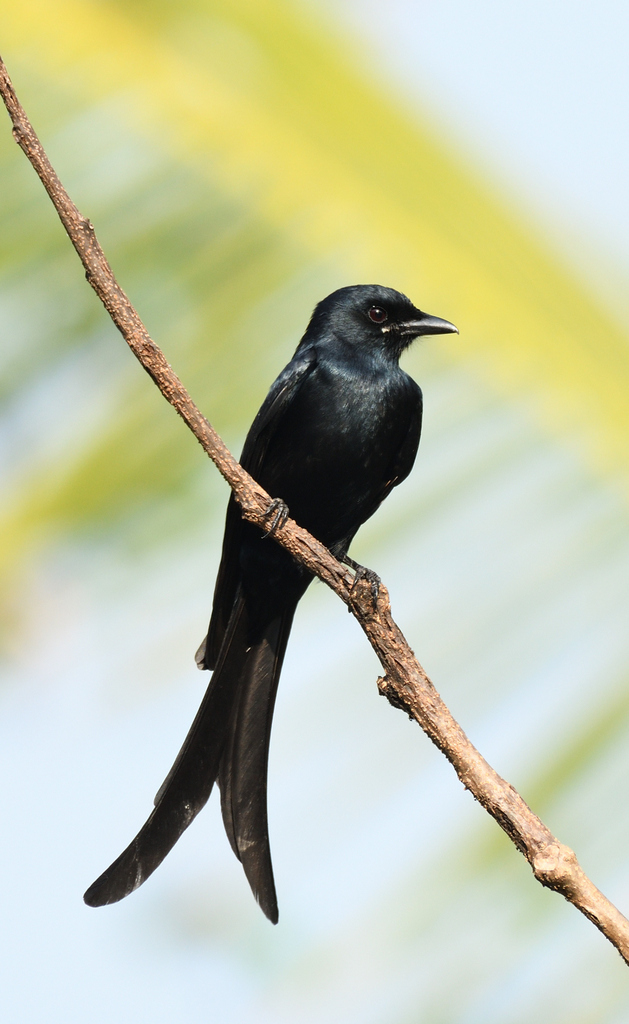
A glossy black, fork-tailed bird that rides on grazing cattle and fearlessly dive-bombs crows, kites and eagles that come near its nest. Smaller birds often nest close to drongos for protection.
The black drongo is a small Asian passerine bird of the drongo family Dicruridae. It is a common resident breeder in much of tropical southern Asia from southwest Iran through Pakistan, India, Bangladesh and Sri Lanka east to southern China and Indonesia and accidental visitor of Japan. It is an all black bird with a distinctive forked tail and measures 28 cm (11 in) in length. It feeds on insects, and is common in open agricultural areas and light forest throughout its range, perching conspicuously on a bare perch or along power or telephone lines. Wikipedia
What it can do
- iAggressively attacks much larger birds of prey and crows near its nest
- iiHawks flying insects stirred up by cattle, tractors and grass fires
- iiiMimics the calls of other species, including the Shikra
In the field
Field marks
- aAll glossy blue-black plumage
- bLong, deeply forked tail with the outer tips flaring outward
- cSmall white spot at the gape (corner of the bill) in adults
- dUpright posture on exposed perches
- Voice
- Harsh, varied 'ti-tiu' and 'cheece-cheece' calls; often one of the first birds to call before dawn
- Not to be confused with
- Ashy drongo is slate-grey with a red eye; Bronzed and Racket-tailed drongos are forest birds, the latter with long wire-like tail rackets; male Asian koel is black but has a red eye and pale bill.
- Where to see it
- Common over farmland across Pakistan and India, easily seen on livestock along the Indus and Ganges plains
- When
- Mostly resident; northern populations (including much of Pakistan) partly migratory, more widespread in summer
Listen
Looking for field recordings…
Life & habits
- Diet
- Insects caught in the air or on the ground: grasshoppers, moths, termites, bees; occasionally small vertebrates
- Habitat
- Open farmland, grassland, roadsides and light woodland
- Size
- About 28–31 cm including the tail
Perches on wires, fence posts and the backs of buffalo and cattle, sallying out after insects; during the breeding season it will chase and strike raptors many times its size.
Where it lives
Recorded sightings
—
geo-referenced records in GBIF, from museums, herbaria and field observers.
Native range
SE Iran and Afghanistan through Pakistan, India, Sri Lanka, Nepal and Bangladesh to southern China, Southeast Asia and Java; introduced to the Mariana Islands
Drag the globe to turn it. Dots are where records exist, not a range map; darker means more records.
In the stacks
Searching the stacks…
Every page naming Dicrurus macrocercus in the Biodiversity Heritage Library →
Marginalia
Its Hindi and Urdu name kotwal means the town's police chief, a nod to the way it patrols and chases off intruders.
Curiosity
Smaller birds such as bulbuls and orioles are known to nest close to drongo nests, apparently gaining protection from its aggressive defence.
Kinship
Photographs: iNaturalist contributors under the licences shown. Records: GBIF.org. Historical plates: Source Library (CC BY-SA 4.0; originals public domain). Summary text: Nature Library editors and Wikipedia (CC BY-SA). Medicinal and edibility notes are historical and educational, not advice. iNaturalist taxon 8277.