 NL·0544
Herbarium of the Nature Library
- Name
- Copsychus saularis
- Family
- Muscicapidae
- Native to
- Pakistan, India, Sri Lanka, Nepal, Bangladesh and Myanmar through southern China to Southeast Asia
- Habitat
- Urban, Gardens, Open woodland, Farmland
On eBird ↗
Oriental Magpie-Robin
Live sightings near you, the range map, bar charts of when it is seen, and Macaulay Library photos and recordings.
Oriental magpie-robin
Copsychus saularis
Also calledDoel (Bengali) · Dahiyal / Dhayal (Hindi) · Què qú 鹊鸲 (Chinese) · Murai kampung (Malay)
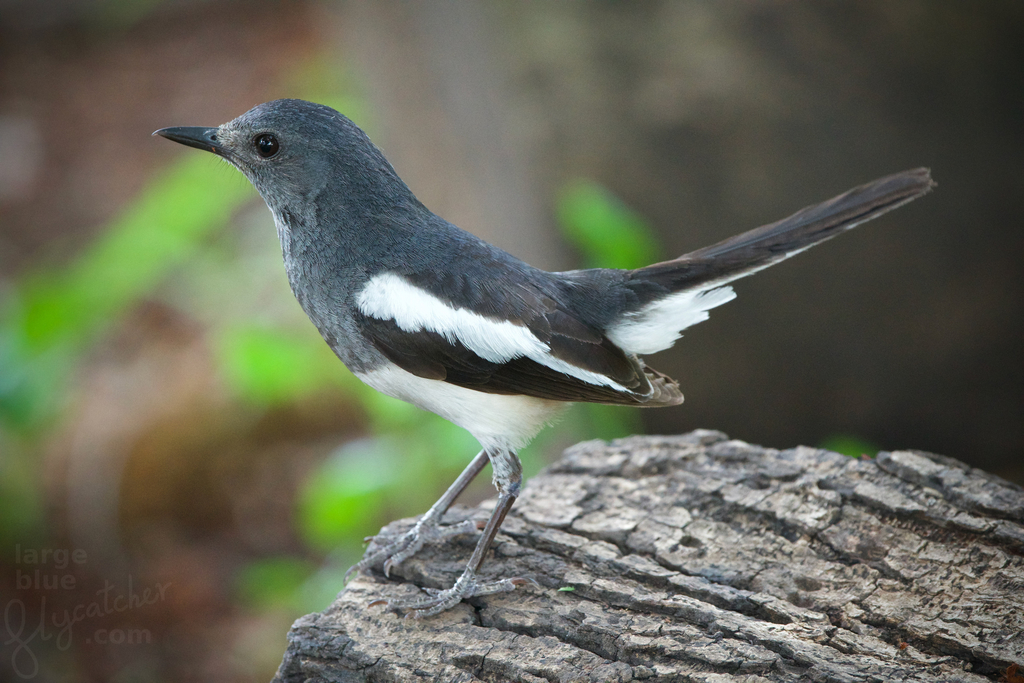
A pied black-and-white bird that cocks its tail and sings sweet, varied songs from rooftops and garden trees at dawn. As the doel, it is the national bird of Bangladesh.
The Oriental magpie-robin is a small passerine bird that was formerly classed as a member of the thrush family Turdidae, but now considered an Old World flycatcher. The males are distinctive black and white birds with a long tail that is held upright as they forage on the ground or perch conspicuously. Occurring across most of the Indian subcontinent and parts of Southeast Asia, they are common birds in urban gardens as well as forests. They are particularly well known for their songs and are popular as cagebirds. Wikipedia
What it can do
- iRich, varied song that includes mimicry of other birds
- iiNests readily in wall holes and nest boxes in villages and towns
- iiiMales defend territories fiercely and sing through the hottest months
In the field
Field marks
- aMale: glossy blue-black head, breast and upperparts with a white belly
- bBold white wing stripe and white outer tail feathers
- cFemale: same pattern but grey where the male is black
- dTail often cocked upright
- Voice
- Sweet, varied song of whistles and warbles, often with mimicry; scolding 'chrrr' alarm
- Not to be confused with
- White-rumped shama has a long tail, orange belly and white rump; Pied bushchat is smaller with a short tail and no white tail sides; Indian robin male is black with a chestnut vent.
- Where to see it
- Gardens in Dhaka, Kolkata and Colombo; Lahore's and Islamabad's leafy suburbs; widespread in Southeast Asian towns
- When
- Resident year-round; most song from February to June
Listen
Looking for field recordings…
Life & habits
- Diet
- Insects and other invertebrates; occasionally small lizards, nectar and fruit
- Habitat
- Gardens, villages, open woodland and cultivation
- Size
- About 19–21 cm long
Hops on the ground with tail cocked and fanned, flicking it up and down; males sing from exposed perches especially at dawn.
Where it lives
Recorded sightings
—
geo-referenced records in GBIF, from museums, herbaria and field observers.
Native range
Pakistan, India, Sri Lanka, Nepal, Bangladesh and Myanmar through southern China to Southeast Asia
Drag the globe to turn it. Dots are where records exist, not a range map; darker means more records.
In the stacks
Searching the stacks…
Every page naming Copsychus saularis in the Biodiversity Heritage Library →
Marginalia
The doel is Bangladesh's national bird and gives its name to Doel Chattar, a well-known monument in Dhaka. In Southeast Asia it was long trapped and kept for its song, causing declines in Singapore and parts of Indonesia.
Kinship


Photographs: iNaturalist contributors under the licences shown. Records: GBIF.org. Historical plates: Source Library (CC BY-SA 4.0; originals public domain). Summary text: Nature Library editors and Wikipedia (CC BY-SA). Medicinal and edibility notes are historical and educational, not advice. iNaturalist taxon 204491.