On eBird ↗
Bermuda Petrel
Live sightings near you, the range map, bar charts of when it is seen, and Macaulay Library photos and recordings.
Bermuda Petrel
Pterodroma cahow
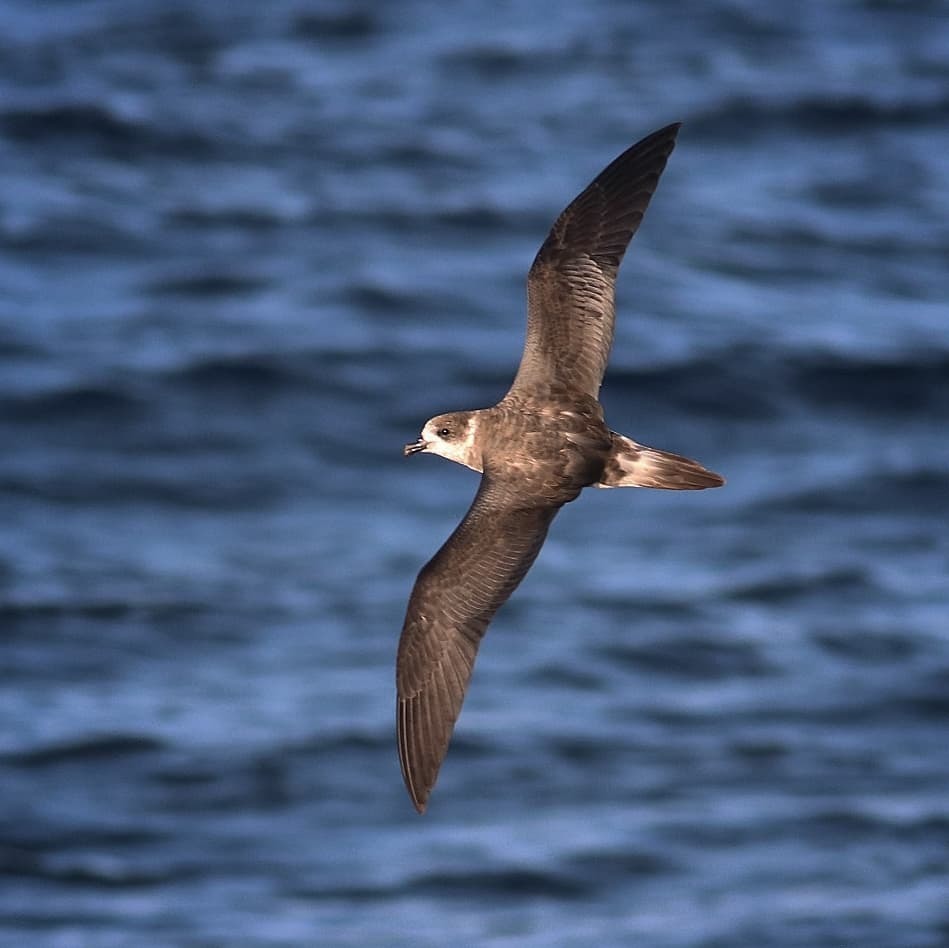
The Bermuda petrel (Pterodroma cahow) is a gadfly petrel. Commonly known in Bermuda as the cahow, a name derived from its eerie cries, this nocturnal ground-nesting seabird is the national bird of Bermuda and is pictured on Bermudian currency. Bermuda petrels are the second rarest seabird on the planet. They have medium-sized bodies and long wings, a greyish-black crown and collar, dark grey upper-wings and tail, white upper-tail coverts and white under-wings edged with black, and the underparts are completely white.
For 300 years, it was thought to be extinct. The dramatic rediscovery in 1951 of eighteen nesting pairs made this a "Lazarus species", that is, a species found to be alive after having been considered extinct. Its rediscovery inspired a book and two documentary films. A national programme to preserve the bird and restore the species has helped increase its numbers, but scientists are still working to enlarge its nesting habitat on the restored Nonsuch Island.
From the article Bermuda petrel on Wikipedia (CC BY-SA), quoted section by section
Range & habitat
Cahows, being a recovering Lazarus species, need special attention in order to support recovery and population growth. All nesting and nearby islands are strictly protected as part of the Castle Islands Nature Reserve, and landing by the public is prohibited except by special permission in the company of the conservation officer. This area is also designated as an international I.B.A. (Important Bird Area), in recognition of containing the entire world population of Bermuda petrel, and up to 20% of the North Atlantic population of white-tailed tropicbird. These islands are maintained rat-free by an annual baiting program, and domestic animals are prohibited from landing on all islands in the reserve. In addition, there is an ongoing management program to eradicate non-native invasive plant species on all of the reserve islands, coupled with plantings of native and endemic plant species, many of which are also endangered. Several of the nesting islands are also the subject of an ecological restoration project, to restore them as examples of the terrestrial plant and animal communities once found on, but now largely lost from, the rest of Bermuda.
Wikipedia: “Habitat restoration”
What it does
Cahows typically eat small fish, squid and shrimp-like crustaceans. They also predominantly feed in colder waters. Geolocator studies carried out between 2009 and 2011 confirmed that they primarily forage in two widely separated locations during the non-breeding season (July to October), between Bermuda, Nova Scotia and North Carolina, and to the north and northwest of the Azores archipelago. Special glands in their tube-like nostrils allow them to ingest seawater. These glands filter out the salt and expel it through sneezing.
Wikipedia: “Diet and foraging”
In human culture
The Spanish sailors of the 1500s used Bermuda and its surrounding islands as a waypoint to the Americas. At that time, cahows were abundant and formed dense, noisy colonies. These sailors, as Diego Ramirez wrote in 1603, would take up to 4,000 birds a night for food. In addition to eating birds, conquistadors brought hogs to the island to sustain themselves over their voyage. These hogs decimated the ground-nesting cahow, rooting up their burrows, eating eggs, chicks and adults and disrupting their breeding cycle. Following the Spanish visits to Bermuda, the English ship Sea Venture was wrecked on the island in 1609, and the survivors culled the fattest individual petrels and harvested their eggs in abundance, especially in January when other food were scarce. Although most of the survivors continued on to Jamestown in two newly built vessels, this shipwreck began the permanent settlement of Bermuda by the English as three men remained and were joined by others in 1612 when Bermuda was officially added to the territory of Virginia. Bermuda's colonization by the English introduced species like rats, cats and dogs, and mass killings of the birds for food by these early colonists devastated their numbers. The remaining cahow population also decreased due to widespread burning of vegetation and deforestation by the settlers during the first 20 years of settlement. …
Wikipedia: “History”
Listen
Looking for field recordings…
Where it lives
Recorded sightings
—
geo-referenced records in GBIF, from museums, herbaria and field observers.
Drag the globe to turn it. Dots are where records exist, not a range map; darker means more records.
In the stacks
Searching the stacks…
Every page naming Pterodroma cahow in the Biodiversity Heritage Library →
This page is assembled live from iNaturalist, GBIF, Wikipedia, the Source Library and the Internet Archive. It is not yet part of the hand-edited codex. iNaturalist taxon 4036.