 NL·0219
Herbarium of the Nature Library
- Name
- Gypaetus barbatus
- Family
- Accipitridae
- Native to
- Mountains of southern Europe (Pyrenees, Alps, Corsica, Crete), North Africa, Turkey, the Caucasus, the Middle East, Central Asia, the Himalaya and Tibetan Plateau, and East and southern Africa
- Habitat
- Mountains, Alpine grassland, Cliffs
On eBird ↗
Bearded Vulture
Live sightings near you, the range map, bar charts of when it is seen, and Macaulay Library photos and recordings.
Bearded vulture (Lammergeier)
Gypaetus barbatus
Also calledHoma (Persian) · Sakallı akbaba (Turkish) · Bartgeier (German) · Gypaète barbu (French) · Quebrantahuesos (Spanish) · Huma (Urdu)
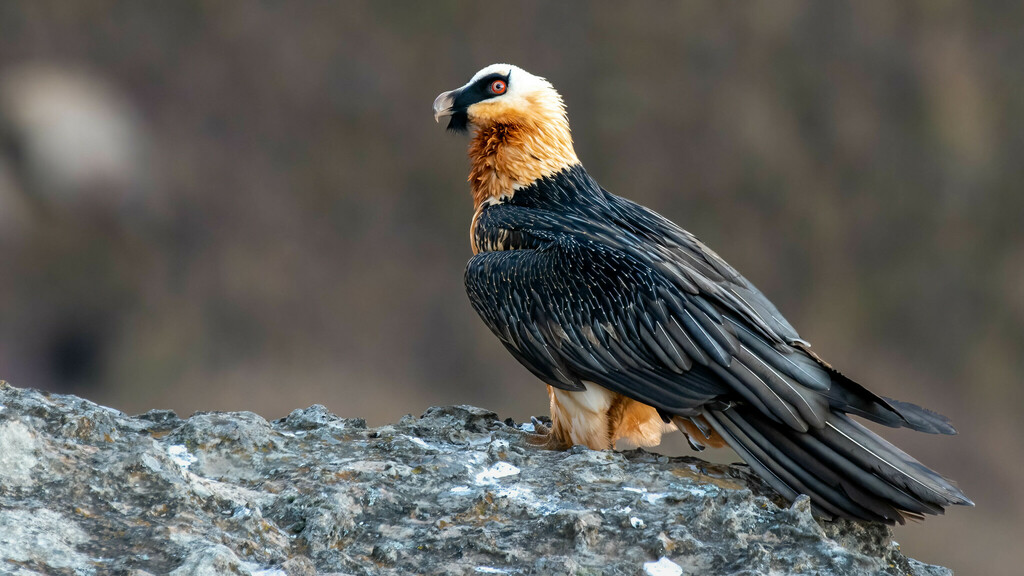
A huge mountain vulture that lives mostly on bone. It drops large bones from height onto rock slabs to shatter them, and paints its own white plumage rust-orange by bathing in iron-rich mud.
The bearded vulture, also known as the lammergeier and ossifrage, is a very large bird of prey in the monotypic genus Gypaetus. The bearded vulture is the only known vertebrate whose diet consists of 70–90% bone. Wikipedia
What it can do
- iBone makes up most of its diet; stomach acid with a pH near 1 dissolves bone
- iiDrops bones from height onto rock 'ossuaries' to split them
- iiiSwallows bones as large as a lamb's femur whole
- ivStains its plumage orange with iron oxide-rich mud, a cosmetic behaviour
In the field
Field marks
- aVery long, narrow, pointed wings and long, diamond-shaped tail
- bDark slate upperparts; head and underparts creamy to rusty orange
- cBlack mask and bristly black 'beard' below the bill
- dRed ring around a pale eye; juveniles all dark
- Voice
- Usually silent; occasional high whistles and shrill calls during display.
- Not to be confused with
- Griffon vulture is broad-winged and short-tailed with a pale ruff. Golden eagle has a shorter, squared tail and broader wings. Juveniles can be confused with Egyptian vulture juveniles, which are much smaller.
- Where to see it
- Ordesa and the Pyrenees, the Swiss and French Alps (reintroduced), Crete, the Caucasus, Ethiopia's Simien Mountains and the Himalaya.
- When
- Resident; nests in midwinter
Listen
Looking for field recordings…
Life & habits
- Diet
- Bones and marrow from carcasses; occasionally tortoises and live prey
- Habitat
- High mountains with cliffs, alpine pastures and gorges
- Size
- 94–125 cm; wingspan 2.3–2.8 m; 4.5–7.8 kg
- Lifespan
- 20–30 years in the wild; over 40 in captivity
Patrols ridges on long, narrow wings and may make repeated drops of the same bone until it breaks.
Where it lives
Recorded sightings
—
geo-referenced records in GBIF, from museums, herbaria and field observers.
Native range
Mountains of southern Europe (Pyrenees, Alps, Corsica, Crete), North Africa, Turkey, the Caucasus, the Middle East, Central Asia, the Himalaya and Tibetan Plateau, and East and southern Africa
Drag the globe to turn it. Dots are where records exist, not a range map; darker means more records.
In the old herbals & bestiaries
Woodcuts and engravings matched from the Source Library’s scanned books by name. Plates marked “relative” show a close kin rather than this exact species. Click a plate to read the page it came from, with translation.

In the stacks
Searching the stacks…
Every page naming Gypaetus barbatus in the Biodiversity Heritage Library →
Marginalia
The Persian Homa (Huma), a bird whose shadow bestowed kingship, has long been associated with the bearded vulture, and Pliny repeats the legend that the playwright Aeschylus was killed by a tortoise dropped by an eagle onto his bald head.
Curiosity
It was exterminated from the Alps by the early 20th century; reintroduction since 1986 has re-established a wild breeding population there.
Kinship
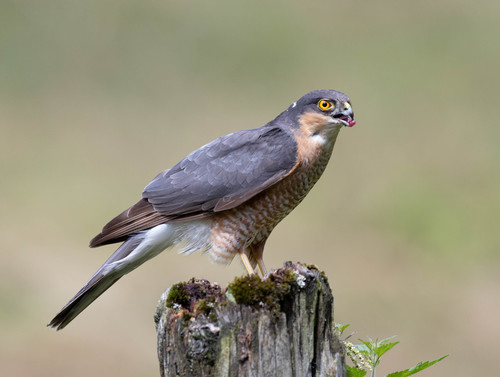




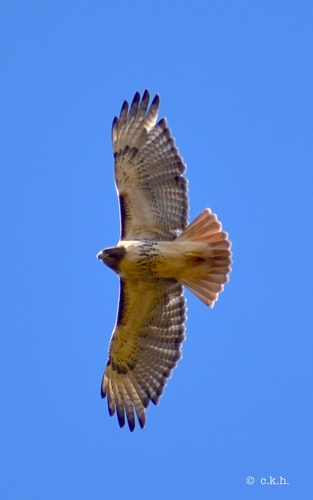
Photographs: iNaturalist contributors under the licences shown. Records: GBIF.org. Historical plates: Source Library (CC BY-SA 4.0; originals public domain). Summary text: Nature Library editors and Wikipedia (CC BY-SA). Medicinal and edibility notes are historical and educational, not advice. iNaturalist taxon 5379.