 NL·0223
Herbarium of the Nature Library
- Name
- Haliaeetus albicilla
- Family
- Accipitridae
- Native to
- Coasts and large wetlands of Norway, the Baltic, Iceland, Scotland and eastern Europe, east through Russia, Kazakhstan and Siberia to Japan; also western Greenland; winters south to Turkey, the Middle East and China
- Habitat
- Coast, Wetland, Lakes, Boreal forest
On eBird ↗
White-tailed Eagle
Live sightings near you, the range map, bar charts of when it is seen, and Macaulay Library photos and recordings.
White-tailed eagle
Haliaeetus albicilla
Also calledAk kuyruklu kartal (Turkish) · Iolaire sùil na grèine (Scottish Gaelic) · Seeadler (German) · Pygargue à queue blanche (French) · Havørn (Norwegian) · Erne (Old English)
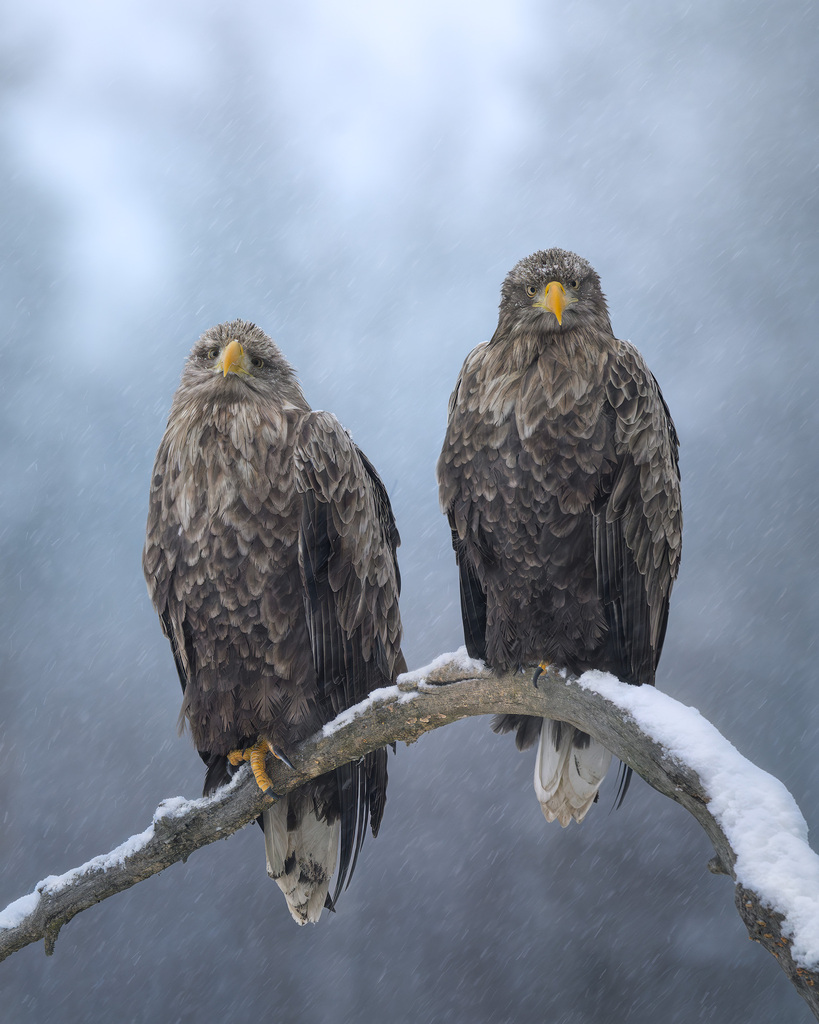
Europe's largest eagle, with broad, plank-like wings, a massive yellow bill and a short white tail. Persecution wiped it out across much of western Europe; reintroductions have returned it to Scotland, Ireland and England.
The white-tailed eagle, sometimes known as the "sea eagle", is a large bird of prey, widely distributed across temperate Eurasia. Like other eagles, it is a member of the family Accipitridae which also includes other diurnal raptors such as hawks, kites, and harriers. One of up to eleven members in the genus Haliaeetus, which are commonly called sea eagles, it is also referred to as the white-tailed sea-eagle. Sometimes, it is known as the ern or erne, gray sea eagle and Eurasian sea eagle. Wikipedia
What it can do
- iWingspan up to about 2.5 m, the broadest of any European eagle
- iiSnatches fish from the surface and robs otters, ospreys and gulls of food
- iiiBuilds huge nests used for decades
- ivRecovered across the Baltic after DDT and PCBs were banned
In the field
Field marks
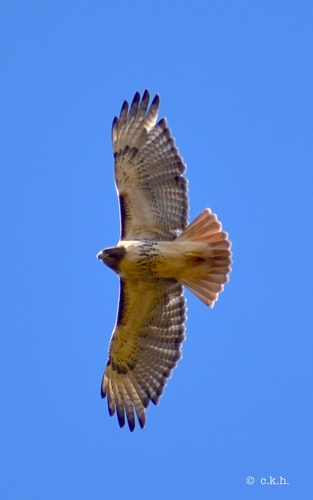
- aHuge, broad, rectangular wings with deeply fingered tips
- bShort, wedge-shaped white tail in adults
- cMassive yellow bill and pale head in adults
- dJuveniles dark with dark bill and tail
- Voice
- A yelping 'kli-kli-kli' or 'krick-krick', often given in duet by pairs.
- Not to be confused with
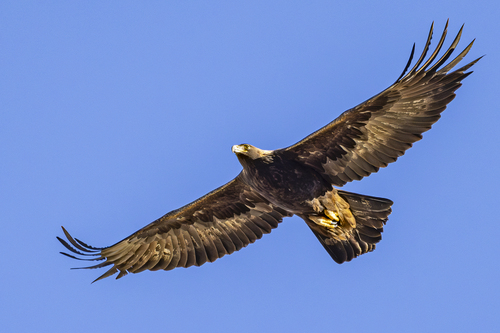
- Golden eagle has a longer tail, narrower wings held in a shallow V and a golden nape. Osprey is white below with long, angled wings. Pallas's fish eagle (Central Asia) has a dark tail with a white band.
- Where to see it
- Isle of Mull and Skye (Scotland), the Isle of Wight (England), Lofoten (Norway), Danube Delta, Polish lakes, Hokkaido in winter.
- When
- Resident in the west; northern and eastern birds move south in winter
Listen
Looking for field recordings…
Life & habits
- Diet
- Fish, waterbirds, carrion and occasionally mammals
- Habitat
- Rocky coasts, large lakes, rivers and estuaries
- Size
- 70–90 cm; wingspan 1.9–2.5 m; 3–7 kg
- Lifespan
- Often 20+ years; can exceed 25 in the wild
Often sits for hours on a shoreline perch, then glides out low over the water to snatch fish.
Where it lives
Recorded sightings
—
geo-referenced records in GBIF, from museums, herbaria and field observers.
Native range
Coasts and large wetlands of Norway, the Baltic, Iceland, Scotland and eastern Europe, east through Russia, Kazakhstan and Siberia to Japan; also western Greenland; winters south to Turkey, the Middle East and China
Drag the globe to turn it. Dots are where records exist, not a range map; darker means more records.
In the old herbals & bestiaries
Woodcuts and engravings matched from the Source Library’s scanned books by name. Plates marked “relative” show a close kin rather than this exact species. Click a plate to read the page it came from, with translation.

Ornithology
Ulisse Aldrovandi · 1599 · p.225

Ornithology
Ulisse Aldrovandi · 1599 · p.241

François Bouchard — Recueil de cent-trente-trois oiseaux des plus belles especes (1775)
François Bouchard · 1775 · p.20

François Bouchard — Recueil de cent-trente-trois oiseaux des plus belles especes (1775)
François Bouchard · 1775 · p.22

Compendium of Materia Medica: Illustrated Volume, Middle of the Lower Part
李時珍 · 1596 · p.99
In the stacks
Searching the stacks…
Every page naming Haliaeetus albicilla in the Biodiversity Heritage Library →
Marginalia
Neolithic people placed white-tailed eagle bones with human remains in the 'Tomb of the Eagles' on South Ronaldsay, Orkney, around 5,000 years ago, and the eagle's Old English name 'erne' survives in place names.
Curiosity
The last native British bird was shot in Shetland in 1918; reintroduction began on the Isle of Rùm in 1975 with birds from Norway.
Kinship


Photographs: iNaturalist contributors under the licences shown. Records: GBIF.org. Historical plates: Source Library (CC BY-SA 4.0; originals public domain). Summary text: Nature Library editors and Wikipedia (CC BY-SA). Medicinal and edibility notes are historical and educational, not advice. iNaturalist taxon 5309.