 NL·0651
Herbarium of the Nature Library
- Name
- Psittacus erithacus
- Family
- Psittacidae
- Native to
- Equatorial Africa from Côte d'Ivoire to western Kenya and Tanzania
- Habitat
- Tropical rainforest, Forest edge, Mangrove
On eBird ↗
Gray Parrot
Live sightings near you, the range map, bar charts of when it is seen, and Macaulay Library photos and recordings.
Grey parrot
Psittacus erithacus
Also calledKasuku (Swahili) · Odíderé (Yoruba) · Perroquet jaco (French)
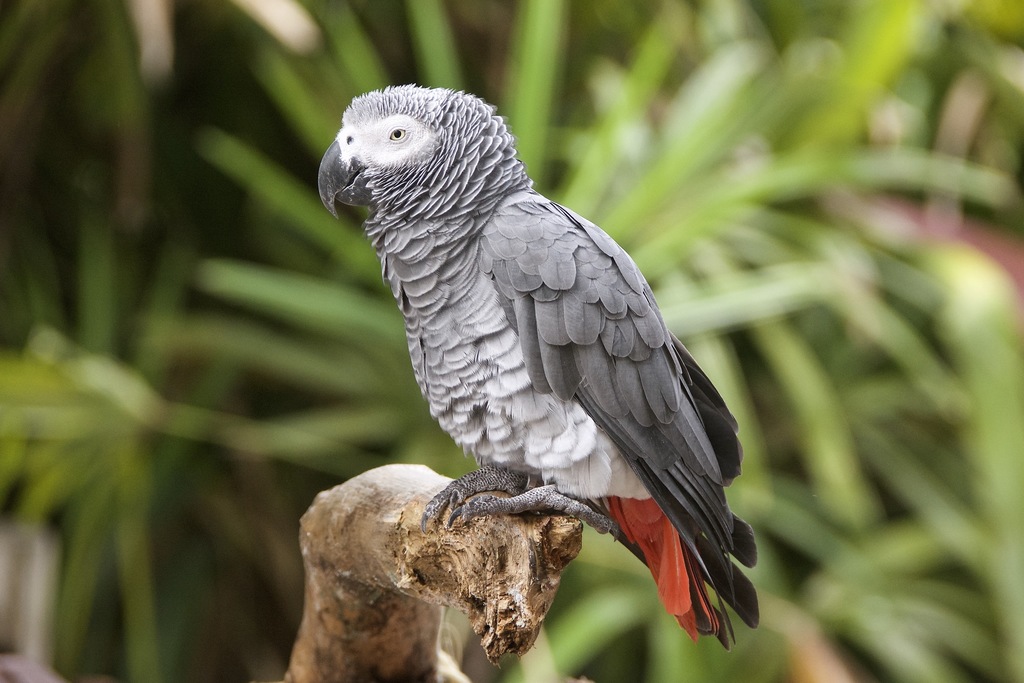
A grey, red-tailed parrot of West and Central African forests, renowned for its ability to mimic speech and to use words meaningfully. Capture for the pet trade has devastated wild populations.
The grey parrot, also known as the Congo grey parrot, is an African parrot in the family Psittacidae. Psittacus erithacus was previously also known as the African grey parrot until the Timneh parrot, previously treated as a subspecies, was elevated to a full species. The grey parrot is known for its intelligence, being considered one of the smartest bird species and is regarded for its speaking abilities. Wikipedia
What it can do
- iExceptional vocal mimic; captive birds learn hundreds of words
- iiShows abilities in categorisation, number and inference in laboratory studies
- iiiGathers at dusk in communal roosts of hundreds to thousands
- ivVisits forest clearings to eat clay, likely to aid digestion or mineral intake
In the field
Field marks
- aAsh-grey body with paler scalloped head and neck
- bBright scarlet tail
- cBare white face patch around a pale yellow eye
- dHeavy black bill
- Voice
- Shrill whistles, screeches and clicks in flight; wild birds rarely mimic.
- Not to be confused with
- Timneh parrot (West Africa, from Guinea to Côte d'Ivoire), now a separate species, is darker grey with a maroon tail and a horn-coloured upper mandible.
- Where to see it
- Lobéké and Dja (Cameroon), Odzala-Kokoua (Republic of Congo), Kibale (Uganda), Príncipe island; forest clearings known as bais
- When
- Resident
Listen
Looking for field recordings…
Life & habits
- Diet
- Fruit, seeds and nuts, especially oil-palm fruits
- Habitat
- Lowland rainforest, forest edges, savanna woodland mosaics and mangroves
- Size
- About 33 cm; 400–500 g
- Lifespan
- Up to 40–60 years in captivity
Flocks fly to communal roosts at dusk with loud screeches and whistles, often in pairs within the flock.
Where it lives
Recorded sightings
—
geo-referenced records in GBIF, from museums, herbaria and field observers.
Native range
Equatorial Africa from Côte d'Ivoire to western Kenya and Tanzania
Drag the globe to turn it. Dots are where records exist, not a range map; darker means more records.
In the old herbals & bestiaries
Woodcuts and engravings matched from the Source Library’s scanned books by name. Plates marked “relative” show a close kin rather than this exact species. Click a plate to read the page it came from, with translation.

Ornithology
Ulisse Aldrovandi · 1599 · p.712

Jan Jonston — Naeukeurige beschryving van de natuur der viervoetige dieren (1660)
Jan Jonston · 1660 · p.65

Ornithology
Ulisse Aldrovandi · 1599 · p.711

Ornithology: The History of Birds
Ulisse Aldrovandi · 1599 · p.708

François Bouchard — Recueil de cent-trente-trois oiseaux des plus belles especes (1775)
François Bouchard · 1775 · p.139
In the stacks
Searching the stacks…
Every page naming Psittacus erithacus in the Biodiversity Heritage Library →
Marginalia
Irene Pepperberg's grey parrot Alex (1976–2007) could label objects, colours, shapes and quantities. The red tail feathers have long been used in Yoruba ritual and royal regalia.
Curiosity
Over a million wild-caught grey parrots are estimated to have entered international trade in recent decades; the species was moved to CITES Appendix I in 2016.
Kinship



Fact-checked: 1 correction made to this sheet. Photographs: iNaturalist contributors under the licences shown. Records: GBIF.org. Historical plates: Source Library (CC BY-SA 4.0; originals public domain). Summary text: Nature Library editors and Wikipedia (CC BY-SA). Medicinal and edibility notes are historical and educational, not advice. iNaturalist taxon 19269.