- Animals
- ›Chordates
- ›Vertebrates
- ›Ray-finned Fishes
- ›Spiny-rayed fishes
- ›Perches, Scorpionfishes, Sticklebacks, and Allies
- ›Perches, groupers and allies
- ›Anthiases
- ›Caesioperca
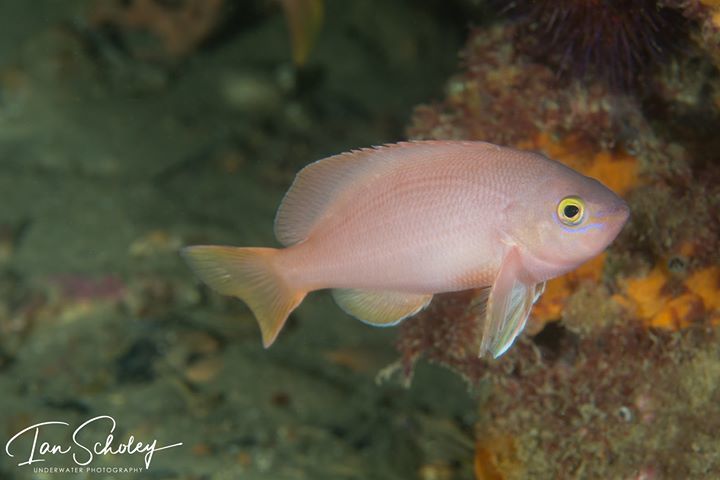
Barber Perch
Caesioperca rasor
The barber perch (Caesioperca rasor), also called the barber sea perch, red perch or Tasmanian barber, is endemic to Australia, found from southern Victoria to southwestern Western Australia, including Tasmania.
From the article Barber perch on Wikipedia (CC BY-SA), quoted section by section
Description
The barber perch is a laterally compressed, deep-bodied fish growing to a maximum length of 26 cm (10 in). Females and larger juveniles are a pinkish colour with a large black vertical bar on the flank towards the posterior end and a blue streak just under the eye. Smaller juveniles additionally have a black head. Males are similarly marked but their overall hue is silvery or yellowish. They additionally have blue margins to the fins and a small blue spot on each scale. It differs from the closely related Butterfly perch by having a more slender body and males are more blue with a darker bar, rather than blotch, on the side. The two species sometimes form mixed shoals.
What it does
The barber perch is a schooling species of fish which forms dense shoals at depths down to about 180 m (591 ft). It is largely a piscivore.
== References ==
Wikipedia: “Behaviour”
Where it lives
Recorded sightings
—
geo-referenced records in GBIF, from museums, herbaria and field observers.
Drag the globe to turn it. Dots are where records exist, not a range map; darker means more records.
In the stacks
Searching the stacks…
Every page naming Caesioperca rasor in the Biodiversity Heritage Library →
This page is assembled live from iNaturalist, GBIF, Wikipedia, the Source Library and the Internet Archive. It is not yet part of the hand-edited codex. iNaturalist taxon 353491.