- Animals
- ›Chordates
- ›Vertebrates
- ›Ray-finned Fishes
- ›Spiny-rayed fishes
- ›Wrasses and allies
- ›False scorpionfishes, wrasses, and parrotfishes
- ›Wrasses and Parrotfishes
- ›Hogfishes, Cales and Tuskfishes
- ›Achoerodus
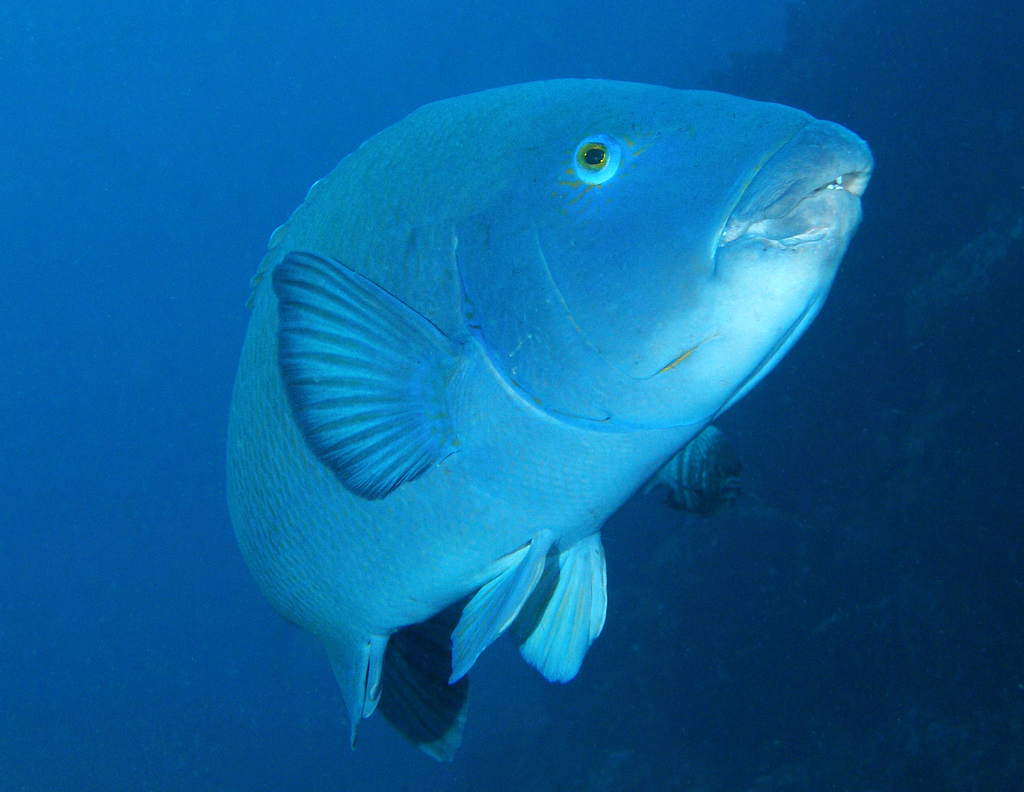
Eastern Blue Groper
Achoerodus viridis
The eastern blue groper (Achoerodus viridis) is a species of wrasse native to southeastern Australia from Hervey Bay in southern Queensland to Wilsons Promontory in Victoria. They occur in coastal waters, preferring rocky areas at a depth of about 40 m (130 ft). Juveniles inhabit beds of seagrass in estuaries. The diet of this species consists of invertebrates such as various molluscs, crabs, sea urchins, and cunjevoi. This species grows to a length of 100 centimetres (39 inches) as adult males, while females are less than 70 cm (28 in) long. In 1998, the eastern blue groper was made the state fish emblem of New South Wales.
From the article Achoerodus viridis on Wikipedia (CC BY-SA), quoted section by section
Range & habitat
The eastern blue groper is native to the southeastern coast of Australia. Its range extends from Mooloolaba in southern Queensland southwards to Wilsons Promontory in the south of Victoria, including the eastern end of the Bass Strait. Its habitat is rocky areas down to a depth of about 40 m (131 ft).
Wikipedia: “Distribution and habitat”
What it does
The eastern blue groper feeds mainly on crabs, shrimps, molluscs and echinoderms. Juvenile fish live in seagrass beds, where their diet is primarily small crustaceans. This fish is a monandric sequential hermaphrodite, always starting life as a female and becoming a male when it has reached a length of at least 60 cm (24 in). Most females are brown, and most males are blue (the sexes may occasionally exhibit the opposite colour). The fish become sexually mature at age two to three, and breeding takes place between July and September. The larvae are planktonic at first and settle in seagrass beds. Females may live for 8–19+ years before they become males.
Wikipedia: “Behaviour”
Where it lives
Recorded sightings
—
geo-referenced records in GBIF, from museums, herbaria and field observers.
Drag the globe to turn it. Dots are where records exist, not a range map; darker means more records.
In the stacks
Searching the stacks…
Every page naming Achoerodus viridis in the Biodiversity Heritage Library →
This page is assembled live from iNaturalist, GBIF, Wikipedia, the Source Library and the Internet Archive. It is not yet part of the hand-edited codex. iNaturalist taxon 93137.