- Animals
- ›Chordates
- ›Vertebrates
- ›Ray-finned Fishes
- ›Spiny-rayed fishes
- ›Perches, Scorpionfishes, Sticklebacks, and Allies
- ›Perches, groupers and allies
- ›Perches, Darters, and allies
- ›Darters
- ›Etheostoma
- ›Etheostoma spectabile
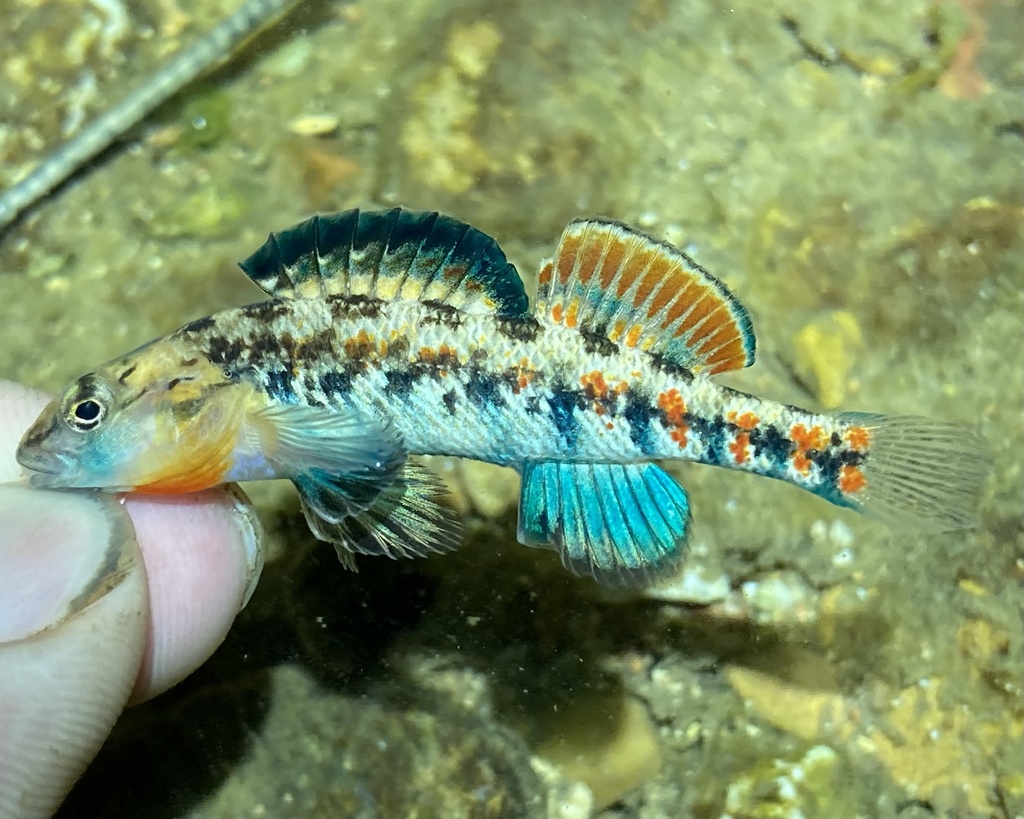
Buffalo Darter
Etheostoma bison
The buffalo darter (Etheostoma bison) is a species of freshwater ray-finned fish, a darter from the subfamily Etheostomatinae, part of the family Percidae, which also contains the perches, ruffes and pikeperches. It is found in the tributaries of the lower Duck and lower Tennessee Rivers. It is distinguished from other darter species by the presence of eight anal rays, as well breeding males having a unique hump behind the head reminiscent of a buffalo.
From the article Buffalo darter on Wikipedia (CC BY-SA), quoted section by section
Range & habitat
E. bison is found in a very small range of tributaries in Tennessee, although a population survey has not been done to assess the actual range of these species specifically. The current distribution of this species is only known to be in the tributaries of the lower Duck and Tennessee Rivers. This small area of habitats and limited sightings could be due to these fish evolving to inhabit smaller, less connected areas of these rivers, or it could be due to human disturbances, such as erosion and dam building.
Wikipedia: “Geographic distribution”
What it does
A dearth of literature exists on the ecology of these species explicitly, but based on similar darter ecology, as well as the slightly subterminal present mouth on the fish, they probably rest near the bottom on the creeks and rivers they inhabit. In the areas where they have been found, these darters are generally small in size and occupy the benthic zone of various freshwater habitats, including the riffles, pools, and runs of small to large streams. These fish most likely eat a diet similar to other darters, which is made up of insects and their larvae, copepods, and other small aquatic organisms. Because these fish live and hunt on the beds of smaller streams and tributaries, destruction/ defilement of these habitats could reduce populations of these species.
Wikipedia: “Ecology”
In human culture
Due to the lack of research on buffalo darter life history ecology, inferences will be made based on closely related darter species found in similar habitats. Darters usually mate in the spring, with active mating occurring from early spring to early summer. Clutch sizes can vary from a few eggs to 2000 or more eggs per brood created by multiple females. Darters use nesting rocks to lay their eggs, and can either be in shallow or deep rushing water. A marked trend of male parental care exists in darters, with males keeping close to the eggs for protection. E. bison most likely has a lifespan to similar to other darters, which is typically a few years.
Wikipedia: “Life history”
Where it lives
Recorded sightings
—
geo-referenced records in GBIF, from museums, herbaria and field observers.
Drag the globe to turn it. Dots are where records exist, not a range map; darker means more records.
In the stacks
Searching the stacks…
Every page naming Etheostoma bison in the Biodiversity Heritage Library →
This page is assembled live from iNaturalist, GBIF, Wikipedia, the Source Library and the Internet Archive. It is not yet part of the hand-edited codex. iNaturalist taxon 100446.