- Animals
- ›Chordates
- ›Vertebrates
- ›Ray-finned Fishes
- ›Spiny-rayed fishes
- ›Perches, Scorpionfishes, Sticklebacks, and Allies
- ›Perches, groupers and allies
- ›Perches, Darters, and allies
- ›Darters
- ›Etheostoma
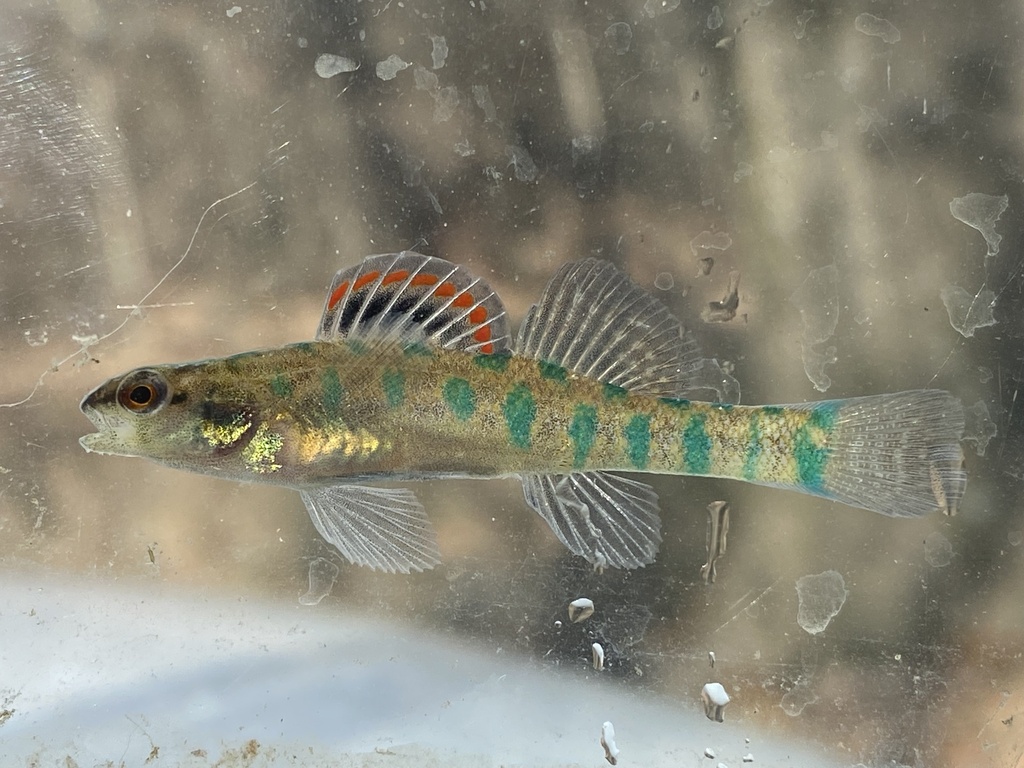
Slough Darter
Etheostoma gracile
Etheostoma gracile, the slough darter, is a small species of ray-finned fish, a darter from the subfamily Etheostomatinae, part of the family Percidae which includes the perches, ruffs and pike-perches. It inhabits slow to moderately flowing waters and with substrates that are predominantly mud, silt, or sand. Major food sources include chironomids, copepods, and cladocerans, as well as mayflies in the spring. Adults reach 35 to 50 mm (1.4 to 2.0 in) total length. It is one of the 324 species of fish found in Tennessee.
At the southern end of its range in Texas, the slough darter breeds from January to March, while at the northern end of its range in Illinois, it breeds in May and June. The eggs are attached to submerged vegetation, leaves, or twigs, and the adults do not guard them as some other members of this family do.
From the article Etheostoma gracile on Wikipedia (CC BY-SA), quoted section by section
Range & habitat
Etheostoma gracile is found in the Mississippi River basin from central Illinois and northeastern Missouri to Louisiana, also in the Red River drainages to southeastern Kansas and eastern Oklahoma, and the Gulf Slope drainages from the Tombigbee River in Mississippi to the Nueces River in Texas. Suitable habitats include pools of slow-flowing water in small streams, backwaters of larger rivers, turbid water over sand or mud, oxbow lakes, swamps, and among vegetation.
Wikipedia: “Distribution and habitat”
Where it lives
Recorded sightings
—
geo-referenced records in GBIF, from museums, herbaria and field observers.
Drag the globe to turn it. Dots are where records exist, not a range map; darker means more records.
In the stacks
Searching the stacks…
Every page naming Etheostoma gracile in the Biodiversity Heritage Library →
This page is assembled live from iNaturalist, GBIF, Wikipedia, the Source Library and the Internet Archive. It is not yet part of the hand-edited codex. iNaturalist taxon 100483.