- Animals
- ›Chordates
- ›Vertebrates
- ›Ray-finned Fishes
- ›Spiny-rayed fishes
- ›Perches, Scorpionfishes, Sticklebacks, and Allies
- ›Perches, groupers and allies
- ›Perches, Darters, and allies
- ›Darters
- ›Etheostoma
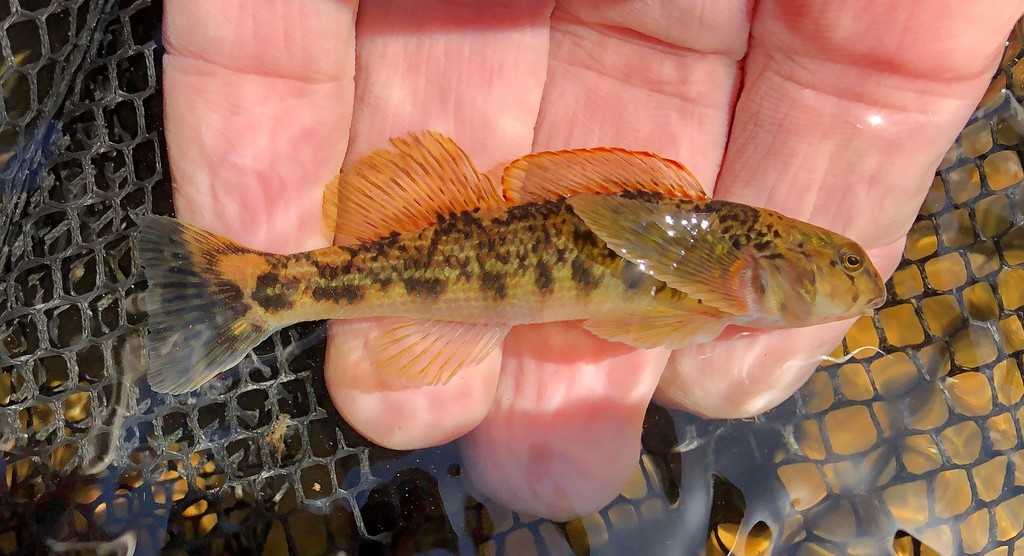
Swannanoa Darter
Etheostoma swannanoa
The Swannanoa darter (Etheostoma swannanoa) is a species of freshwater ray-finned fish, a darter from the subfamily Etheostomatinae, part of the family Percidae, which also contains the perches, ruffes and pikeperches. It is endemic to the eastern United States where it occurs in the drainage of the Tennessee River. It prefers flowing water in riffles in cool, clear mountain streams, with boulder substrates. The diet and natural history of this species have been little studied but are probably similar to those of its close relative, the greenside darter (Etheostoma blenniodies). The population trend of this fish seems to be stable and it is a common species with numerous sub-populations over its limited range, and the International Union for Conservation of Nature has assessed its conservation status as being of "least concern".
From the article Swannanoa darter on Wikipedia (CC BY-SA), quoted section by section
Range & habitat
The Swannanoa darter has a relatively limited distribution compared to some other etheostomid darters. It can be found in the southern Appalachian Mountain headwaters of the Tennessee River and other areas in East Tennessee, Southwest Virginia, and Western North Carolina. It is found in the Clinch and Powell River systems in Virginia and through the upper Holston and French Broad River systems along the Tennessee, Virginia, and North Carolina borders. Although it has been documented in the Clinch and Powell River systems in Virginia, it is not found in these same systems in Tennessee. E. swannanoa was found only sporadically in the Tennessee River headwaters and specifically in the Clinch, Holston, Watauga, and Nolichucky Rivers. It prefers cold, clear water with boulder substrates.
Wikipedia: “Distribution”
What it does
The Swannanoa darter prefers flowing water in riffles pools in cool, clear mountain streams. For the greenside darter (Etheostoma blenniodies), a close relative of the Swannanoa darter found in similar areas, juveniles mostly eat midge larvae and microcrustaceans. Adults have more varied diets, primarily made up of mayflies and caddisflies. Adults also eat midge, black fly, and other aquatic insect larvae. In some areas, such as the Little River of Tennessee, adults ate many Leptoxis spp. snails. Feeding intensity is much less in winter and greatest in May and June. Juvenile specimens were lacking in summer and early fall collections. This suggests the juvenile habitat is different from the adult habitat. Pollution from mining operations and the impoundment of streams and rivers throughout the Swannanoa darter's range has possibly resulted in declines in distribution.
Wikipedia: “Ecology”
Where it lives
Recorded sightings
—
geo-referenced records in GBIF, from museums, herbaria and field observers.
Drag the globe to turn it. Dots are where records exist, not a range map; darker means more records.
In the stacks
Searching the stacks…
Every page naming Etheostoma swannanoa in the Biodiversity Heritage Library →
This page is assembled live from iNaturalist, GBIF, Wikipedia, the Source Library and the Internet Archive. It is not yet part of the hand-edited codex. iNaturalist taxon 100550.