- Animals
- ›Chordates
- ›Vertebrates
- ›Ray-finned Fishes
- ›Spiny-rayed fishes
- ›Perches, Scorpionfishes, Sticklebacks, and Allies
- ›Sculpins and Allies
- ›Typical Sculpins
- ›Cottocomephorus
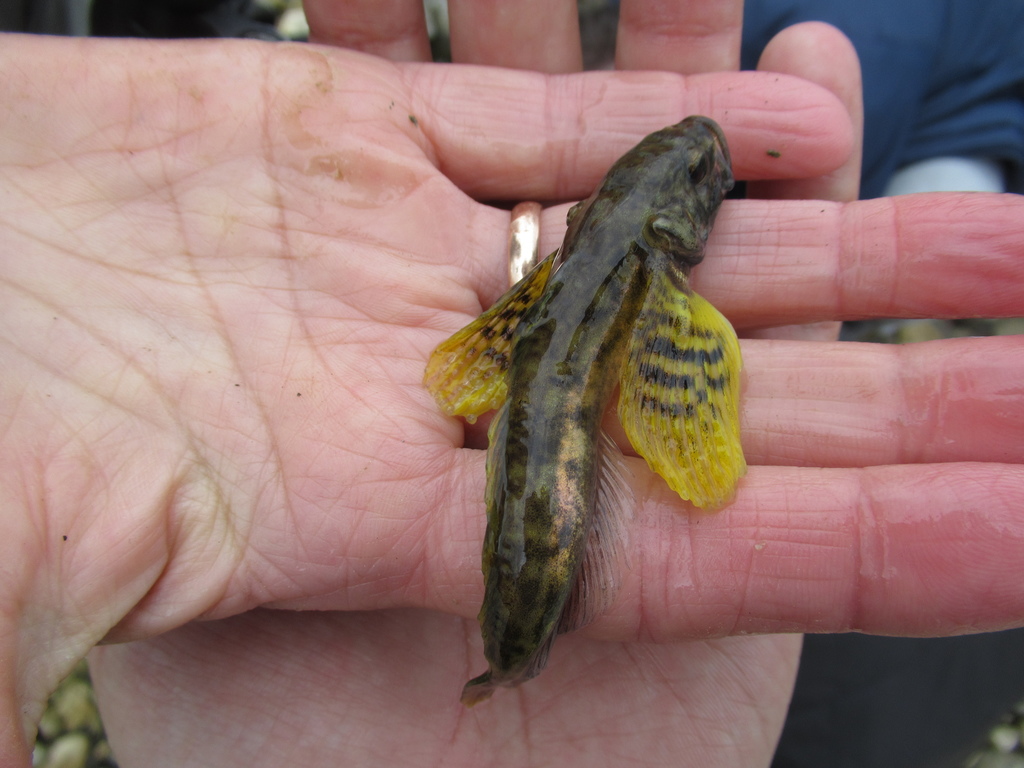
Baikal Yellowfin
Cottocomephorus grewingkii
The Baikal yellowfin (Cottocomephorus grewingkii), also known as the yellow-finned sculpin or yellow-wing sculpin, is a species of freshwater ray-finned fish belonging to the family Cottidae, the typical sculpins. It is endemic to Lake Baikal and its tributaries in Siberia, Russia. It is most common in the southern part of the lake and lives from near the shore to a depth of 300 m (980 ft).
From the article Baikal yellowfin on Wikipedia (CC BY-SA), quoted section by section
Description
It can reach up to 19 cm (7.5 in) in total length, but most are 10–14 cm (3.9–5.5 in). They have relatively large pectoral fins, which are yellow in males. During the breeding season, the male's head becomes black when encountering other males.
Wikipedia: “Appearance”
What it does
The Baikal yellowfin feeds on copepods (notably Epischura baikalensis), amphipods, insect larvae and fish larvae. There are three separate breeding periods: March, May and August. There are some differences in the breeding behavior and site depending on when the fish breeds. Breeding occurs at a depth of 0.2 to 20 m (0.7–65.6 ft) in a crevice under a rock, which measures from 15 cm × 20 cm (6 in × 8 in) to 30 cm × 40 cm (12 in × 16 in). The distance between the rock's flat underside and the bottom is preferably 2.5–4 cm (1.0–1.6 in). The female lays 389 to 3136 eggs on the underside of the rock (upperside of the crevice), which are guarded by the male and if he disappears, the eggs usually perish. The eggs hatch after 15–20 days at a water temperature of 10–11 °C (50–52 °F), and 20–24 days at 5–8 °C (41–46 °F). After hatching, the fish larvae initially survive off their yolk sac and then start feeding on copepods. The Baikal yellowfin can reach an age of up to six years and reach sexual maturity when two or three.
Wikipedia: “Behavior”
Where it lives
Recorded sightings
—
geo-referenced records in GBIF, from museums, herbaria and field observers.
Drag the globe to turn it. Dots are where records exist, not a range map; darker means more records.
In the stacks
Searching the stacks…
Every page naming Cottocomephorus grewingkii in the Biodiversity Heritage Library →
This page is assembled live from iNaturalist, GBIF, Wikipedia, the Source Library and the Internet Archive. It is not yet part of the hand-edited codex. iNaturalist taxon 612158.