- Animals
- ›Arthropods
- ›Crustaceans
- ›Typical Crustaceans
- ›Malacostracans
- ›Decapods, Isopods, and allies
- ›Decapods and Krill
- ›Decapods
- ›Crabs, Lobsters, Shrimps, and Allies
- ›Crayfishes and Lobsters
- ›Lobsters
- ›True Lobsters
- ›Acanthacaris
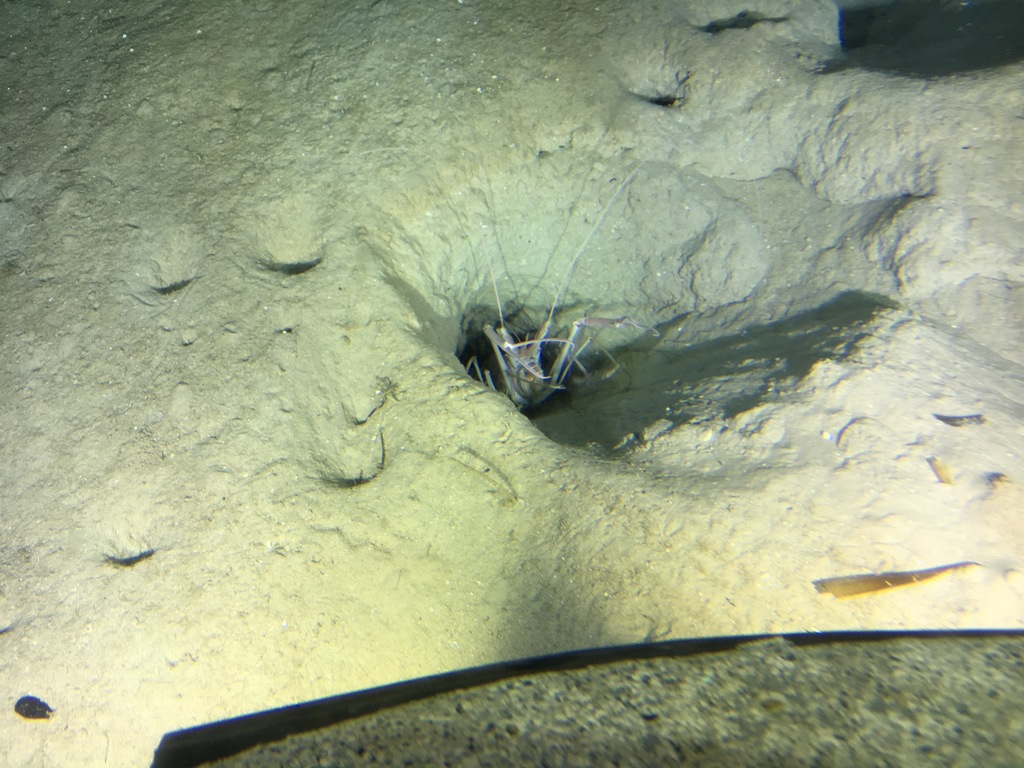
Atlantic Deep-Sea Lobster
Acanthacaris caeca
Acanthacaris caeca is a species of deep-water lobster. It was originally described under the name Phoberus caecus by Alphonse Milne-Edwards. Lacking eyes, A. caeca is blind.
From the article Acanthacaris caeca on Wikipedia (CC BY-SA), quoted section by section
Range & habitat
Acanthacaris caeca are found in the Caribbean Sea and in the Gulf of Mexico. They are generally found in burrows between 550 and 825 m (1,800 and 2,710 ft), but they can be found as deep as 880 m (2,890 ft) and as shallow as 290 m (950 ft). They burrow exclusively in muddy environments, and the burrows are 10 to 20 cm (4 to 8 in) deep.
Wikipedia: “Habitat”
Where it lives
Recorded sightings
—
geo-referenced records in GBIF, from museums, herbaria and field observers.
Drag the globe to turn it. Dots are where records exist, not a range map; darker means more records.
In the stacks
Searching the stacks…
Every page naming Acanthacaris caeca in the Biodiversity Heritage Library →
This page is assembled live from iNaturalist, GBIF, Wikipedia, the Source Library and the Internet Archive. It is not yet part of the hand-edited codex. iNaturalist taxon 92990.