- Animals
- ›Arthropods
- ›Crustaceans
- ›Typical Crustaceans
- ›Malacostracans
- ›Decapods, Isopods, and allies
- ›Decapods and Krill
- ›Decapods
- ›Crabs, Lobsters, Shrimps, and Allies
- ›Crayfishes and Lobsters
- ›Lobsters

True Lobsters
Nephropidae
Lobsters are malacostracan decapod crustaceans of the family Nephropidae or its synonym Homaridae. They have long bodies with muscular tails and live in crevices or burrows on the sea floor. Three of their five pairs of legs have claws, including the first pair, which are usually much larger than the others. Highly prized as seafood, lobsters are economically important and are often one of the most profitable commodities in the coastal areas they populate.
Commercially important species include two species of Homarus from the northern Atlantic Ocean; the smaller Nephrops norvegicus, known as true scampi, Norway lobster, or langoustine; and multiple small species in the genus Metanephrops, commonly called Pacific scampi.
14 branches of this family, most-observed first

Homarus
genusHomarus
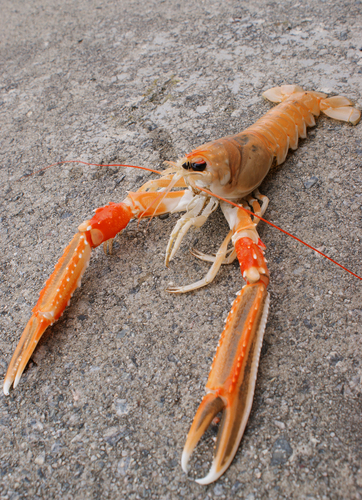
Norway Lobsters
genusNephrops

Scampi
genusMetanephrops

Deep-Sea Lobsters
genusAcanthacaris

Eunephrops
genusEunephrops
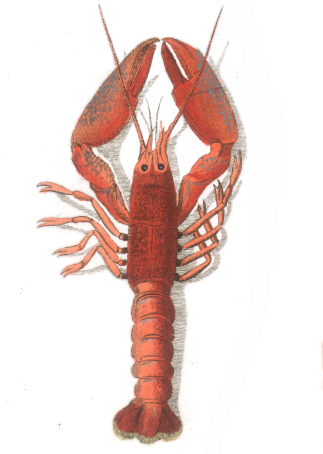
Cape Lobsters
genusHomarinus

Lobsterettes
genusNephropsis
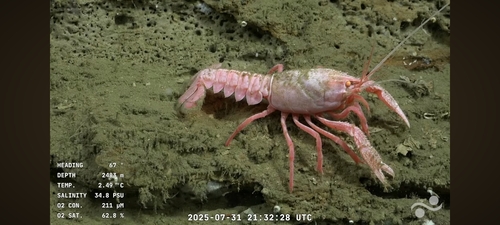
Southern Lobsterettes
genusThymops
Hoploparia
genusHoploparia
Thymopides
genusThymopides
Mitten Lobsterettes
genusNephropides
Australian Pincer Lobsters
genusThaumastochelopsis
Terrible Claw Lobsters
genusDinochelus

Pincer Lobsters
genusThaumastocheles
Where it lives
Recorded sightings
—
geo-referenced records in GBIF, from museums, herbaria and field observers.
Drag the globe to turn it. Dots are where records exist, not a range map; darker means more records.
In the stacks
Searching the stacks…
Every page naming Nephropidae in the Biodiversity Heritage Library →
This page is assembled live from iNaturalist, GBIF, Wikipedia, the Source Library and the Internet Archive. It is not yet part of the hand-edited codex. iNaturalist taxon 61385.