- Plants
- ›Vascular Plants
- ›flowering plants
- ›Dicots
- ›Mints, Plantains, Olives, and Allies
- ›Plantain Family
- ›Plantagineae
- ›Plantago
- ›Plantago
- ›Mesembrynia
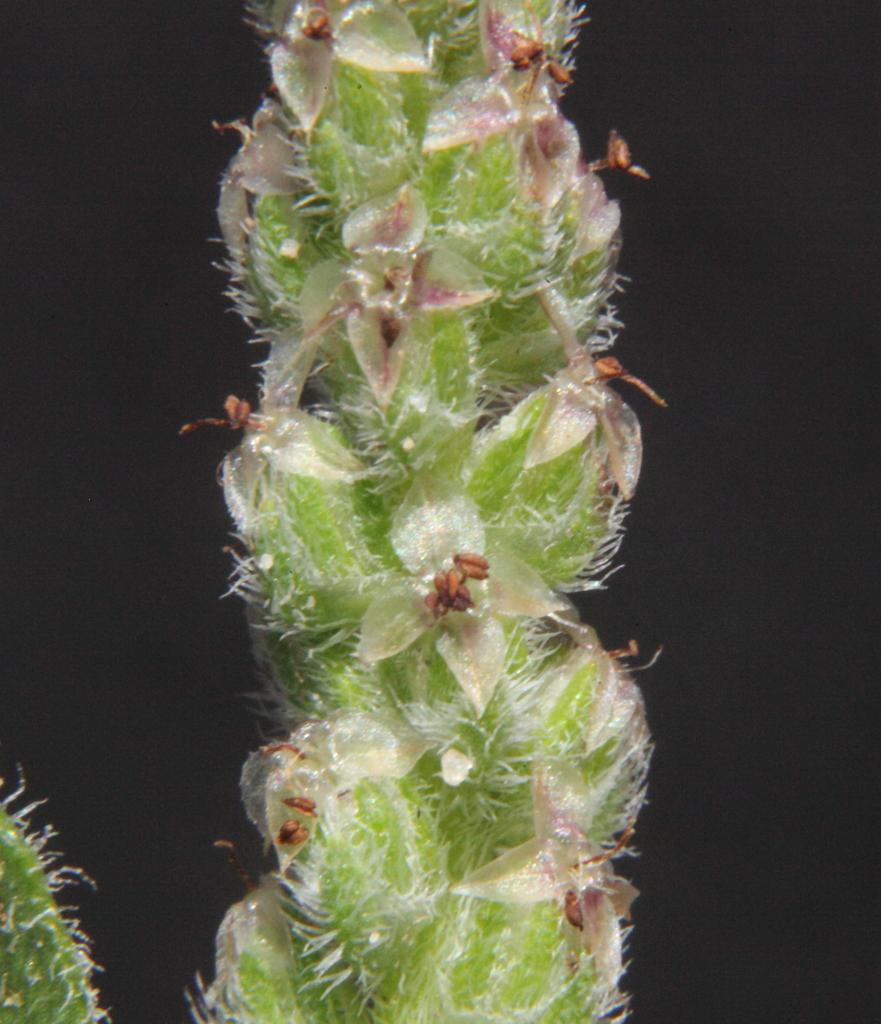
coastal plaintain
Plantago hispida
Plantago hispida, the coastal plaintain or hairy plaintain, is a low, dense, tufted herb mostly seen in crevices of rock exposures or other sites with shallow soils. Often found near the sea, but may also be seen in inland sites with low rainfall. This is one of the many plants first published by Robert Brown with the type known as "(D.M.) v.v." appearing in his Prodromus Florae Novae Hollandiae et Insulae Van Diemen in 1810. The specific epithet hispida is derived from Latin, meaning "rough", however this is misleading as it doesn't appear relevant to this plant.
== References ==
Where it lives
Recorded sightings
—
geo-referenced records in GBIF, from museums, herbaria and field observers.
Drag the globe to turn it. Dots are where records exist, not a range map; darker means more records.
In the stacks
Searching the stacks…
Every page naming Plantago hispida in the Biodiversity Heritage Library →
This page is assembled live from iNaturalist, GBIF, Wikipedia, the Source Library and the Internet Archive. It is not yet part of the hand-edited codex. iNaturalist taxon 920894.