- Plants
- ›Vascular Plants
- ›flowering plants
- ›Dicots
- ›Soapberries, Cashews, Mahoganies, and Allies
- ›Torchwoods
- ›Commiphora
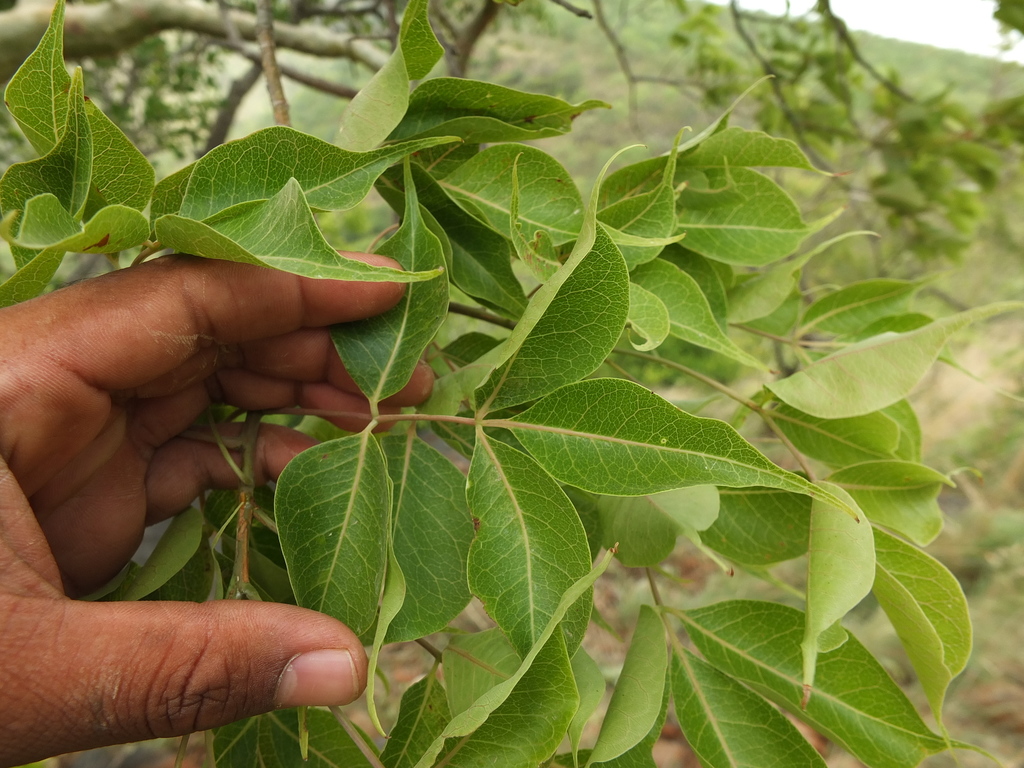
Commiphora caudata
Commiphora caudata, the hill mango or green commiphora, is the most abundant Asian species of the genus Commiphora of flowering plants in the family Burseraceae. It is native to Southern India and Sri Lanka, usually growing in the full sun on hilly granite rock outcrops in dry zone areas. It is a small to medium-sized deciduous tree which may reach a height of 10-20m, but usually less. The tree has a smooth, succulent green bark, which partly flakes off with age, giving rise to a characteristic patchwork of green and brown patches. Its sap has a strong resinous scent. The tree has medicinal properties. The fruit is a globose fleshy drupe with 2 to 6 valves and 1 seed that is black and has 4 wings. Remnants of branches can form a kind of thorns on the trunk. The flowers have a greenish to cream-yellow pedestal with pink to red petals.
== References ==
Where it lives
Recorded sightings
—
geo-referenced records in GBIF, from museums, herbaria and field observers.
Drag the globe to turn it. Dots are where records exist, not a range map; darker means more records.
In the stacks
Searching the stacks…
Every page naming Commiphora caudata in the Biodiversity Heritage Library →
This page is assembled live from iNaturalist, GBIF, Wikipedia, the Source Library and the Internet Archive. It is not yet part of the hand-edited codex. iNaturalist taxon 919406.