- Plants
- ›Vascular Plants
- ›flowering plants
- ›Dicots
- ›Soapberries, Cashews, Mahoganies, and Allies
- ›Cashew Family
- ›cashews, sumacs, and allies
- ›Semecarpus
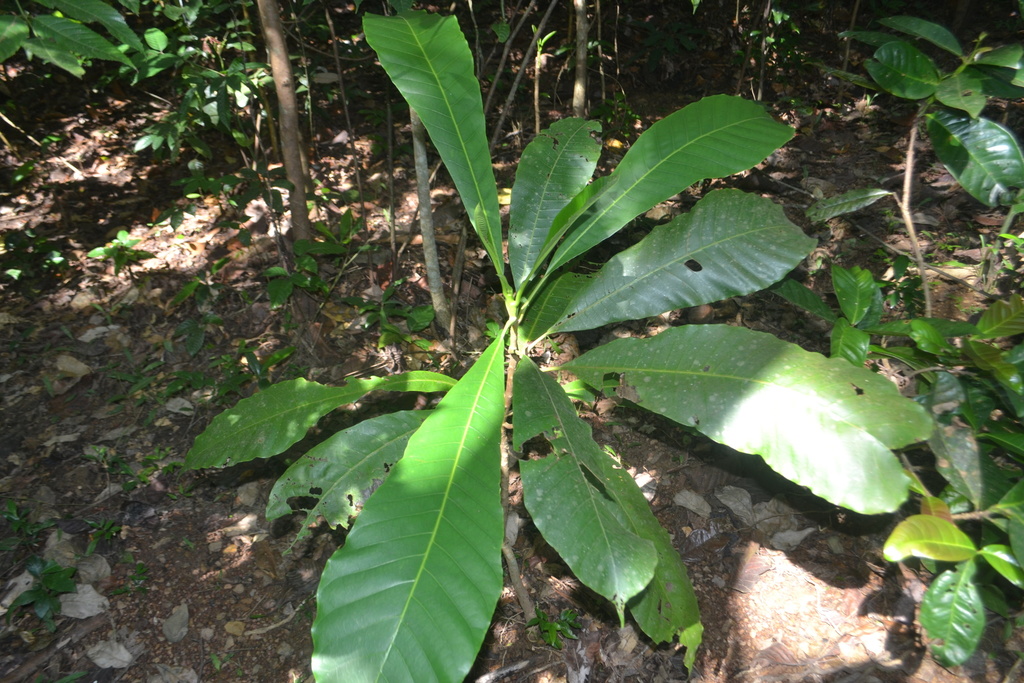
Semecarpus kathalekanensis
Semecarpus kathalekanensis is a critically endangered species of plant endemic to the Western Ghats of the states of Goa and Karnataka in India. It is also called as Kathalekan Marsh Nut.
From the article Semecarpus kathalekanensis on Wikipedia (CC BY-SA), quoted section by section
Description
The tree can grow up to 20 meters high. The bark is greyish brown. Leaves have leathery texture with oblique at the base and they are alternate with dark green in color above and pale green below. The petioles are 5-10 cm long. The flowers are mostly dioecious and unisexual with female flowers larger than the male. It usually have 4-5 sepals and petals. Flowers are green and fruit is fleshy with greyish color that turns into brown when ripened with a single kidney shaped seed inside. The flowering season is from November to May.
Range & habitat
This species of tree were found from six localities inside the Myristica swamps of the Western ghats spreading across Karnataka and Goa.
Wikipedia: “Distribution and habitat”
In human culture
This species is named after Kathalekan, a small hamlet in Siddapur taluk of Uttara Kannada district in Karnataka that has Myristica swamp where the tree was found and described.
Wikipedia: “Etymology”
Where it lives
Recorded sightings
—
geo-referenced records in GBIF, from museums, herbaria and field observers.
Drag the globe to turn it. Dots are where records exist, not a range map; darker means more records.
In the stacks
Searching the stacks…
Every page naming Semecarpus kathalekanensis in the Biodiversity Heritage Library →
This page is assembled live from iNaturalist, GBIF, Wikipedia, the Source Library and the Internet Archive. It is not yet part of the hand-edited codex. iNaturalist taxon 899450.