- Plants
- ›Vascular Plants
- ›flowering plants
- ›Dicots
- ›Soapberries, Cashews, Mahoganies, and Allies
- ›Cashew Family
- ›cashews, sumacs, and allies
- ›Searsia
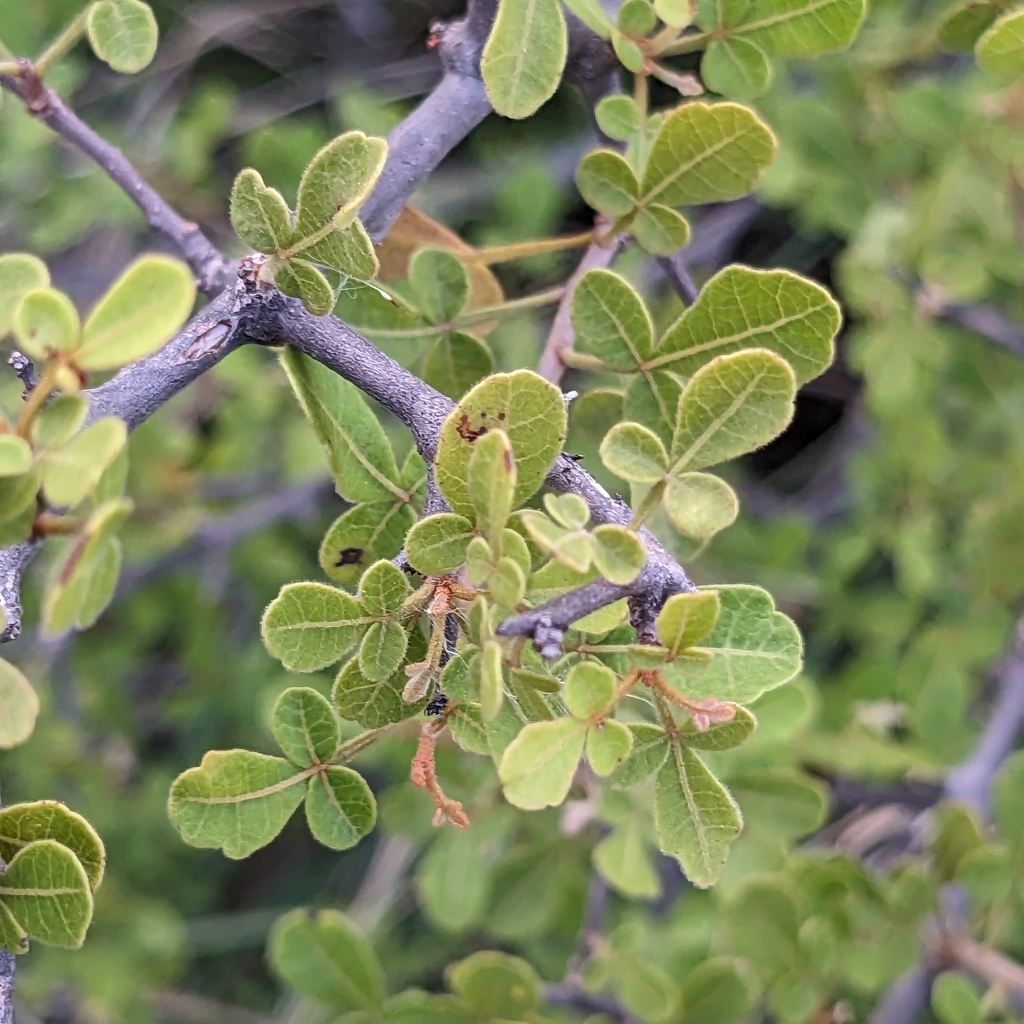
Mysore sumac
Searsia mysorensis
Searsia mysorensis (synonym Rhus mysorensis) is a species of shrub with thorny branches. It is commonly known as Mysore sumac or Indian sumac (ചിപ്പമരം in Malayalam).
From the article Searsia mysorensis on Wikipedia (CC BY-SA), quoted section by section
Description
Leaves are trifoliate or rarely 5-foliate. It flowers and fruits from August to December.
Range & habitat
It is found in hot and dry places in the Indian states of Karnataka, Andhra Pradesh, Punjab, Haryana, Rajasthan, and Gujarat and in Pakistan.
Wikipedia: “Distribution”
At the table
The fruit is used to treat dysentery, and a leaf decoction is administered for itching. Leaves are also used in managing diarrhea and stomatitis, while leaf paste is applied to relieve rashes and allergies. The root, stem, and leaves have been traditionally used to manage diabetes.
== References ==
Wikipedia: “Uses”
In medicine
Phytochemical screening of the plant has identified the presence of several chemical constituents, including cardiac glycosides, saponins, flavonoids, tannins, alkaloids, sterols, and phenols. The plant contains compounds such as limonene, sabinene, α-pinene, β-caryophyllene, as well as α- and β-eudesmol.
Wikipedia: “Phytochemistry”
Where it lives
Recorded sightings
—
geo-referenced records in GBIF, from museums, herbaria and field observers.
Drag the globe to turn it. Dots are where records exist, not a range map; darker means more records.
In the stacks
Searching the stacks…
Every page naming Searsia mysorensis in the Biodiversity Heritage Library →
This page is assembled live from iNaturalist, GBIF, Wikipedia, the Source Library and the Internet Archive. It is not yet part of the hand-edited codex. iNaturalist taxon 897884.