- Plants
- ›Vascular Plants
- ›flowering plants
- ›Dicots
- ›myrtles, evening primroses, and allies
- ›myrtle family
- ›Myrtoideae
- ›Myrteae
- ›Pliniinae
- ›Myrciaria
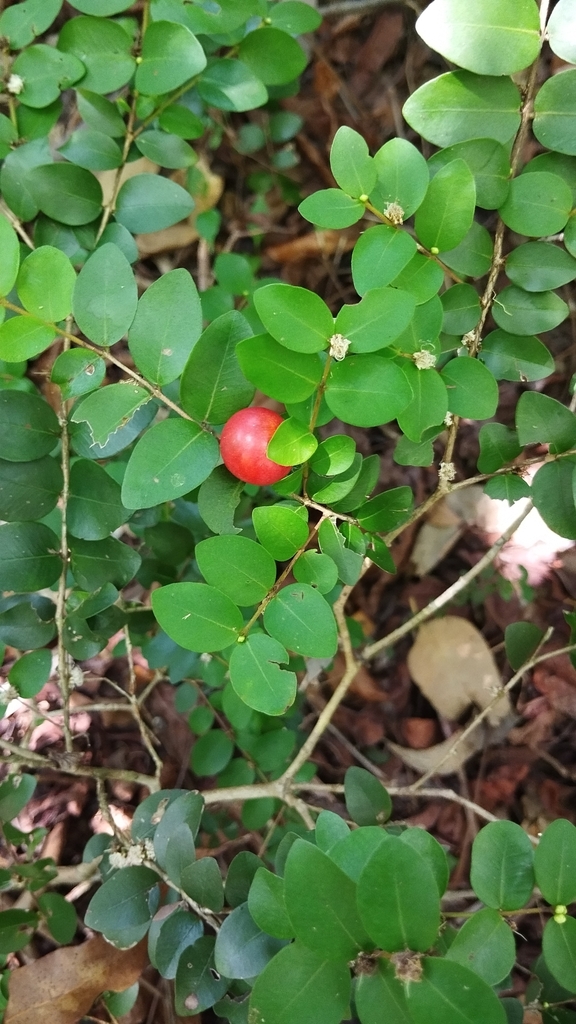
Myrciaria tenella
Myrciaria tenella, commonly known as cambuí or camboim, which are also used to describe Myrciaria cuspidata and Myrciaria delicatula; or more specifically jabuticaba-macia, and cambuí-açu, is a species of plant in the family Myrtaceae.
From the article Myrciaria tenella on Wikipedia (CC BY-SA), quoted section by section
Description
Myrciaria tenella is a semi-deciduous shrub or small tree that grows to between 1 and 6 metres (3.3 and 20 ft) tall. The red or orange fruit is edible and up to 15 mm (0.59 in) in diameter. Each fruit contains one, or sometimes two seeds.
Range & habitat
Myrciaria tenella is endemic to Argentina, Bolivia, Brazil, Dominican Republic, French Guiana, Haiti, Paraguay, Peru, Uruguay, and Venezuela.
Wikipedia: “Distribution”
At the table
Cambuí fruit is an important species in the State of Sergipe, Brazil, where the fruits are harvested and sold for fresh consumption in the local market. The fruits are also used to make juice, jelly and wine.
== References ==
Wikipedia: “Uses”
Where it lives
Recorded sightings
—
geo-referenced records in GBIF, from museums, herbaria and field observers.
Drag the globe to turn it. Dots are where records exist, not a range map; darker means more records.
In the stacks
Searching the stacks…
Every page naming Myrciaria tenella in the Biodiversity Heritage Library →
This page is assembled live from iNaturalist, GBIF, Wikipedia, the Source Library and the Internet Archive. It is not yet part of the hand-edited codex. iNaturalist taxon 868013.