- Animals
- ›Chordates
- ›Vertebrates
- ›Cartilaginous Fishes
- ›Sharks and Rays
- ›Sharks
- ›Galean Sharks
- ›Mackerel Sharks
Crocodile Sharks
Pseudocarchariidae
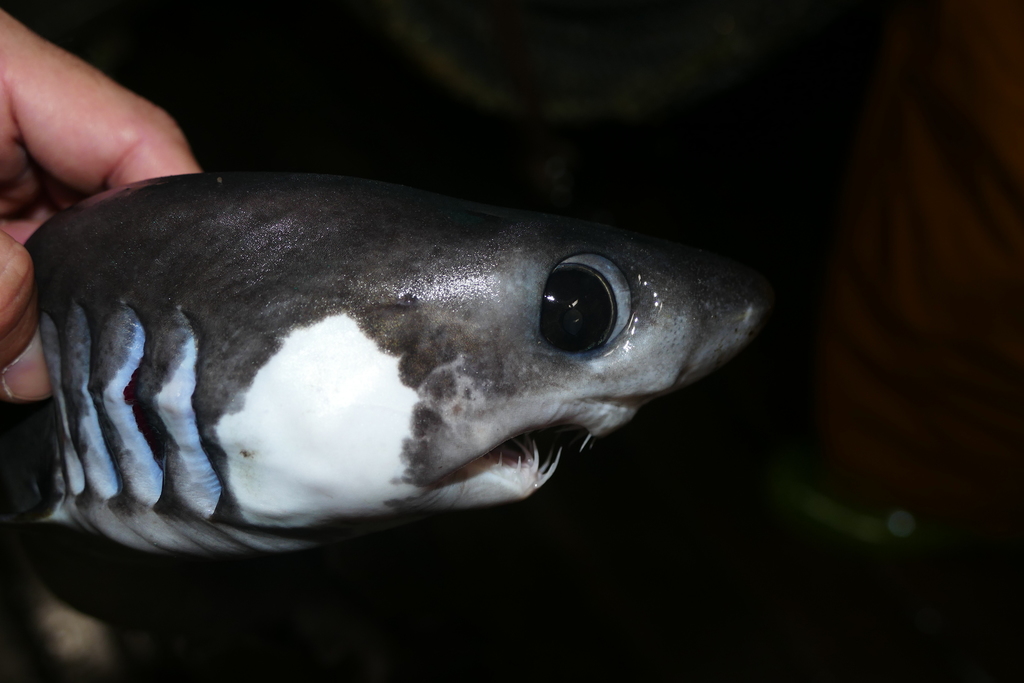
The crocodile shark (Pseudocarcharias kamoharai) is a species of mackerel shark and the only extant member of the family Pseudocarchariidae. A specialized inhabitant of the mesopelagic zone, the crocodile shark can be found worldwide in tropical waters from the surface to a depth of 590 m (1,940 ft). It performs a diel vertical migration, staying below a depth of 200 m (660 ft) during the day and ascending into shallower water at night to feed. Typically measuring only 1 m (3.3 ft) in length, the crocodile shark is the smallest living mackerel shark. It can be distinguished by its elongated cigar-shaped body, extremely large eyes, and relatively small fins.
An active-swimming predator of pelagic bony fishes, squid and shrimp, the crocodile shark has a sizable oily liver that allows it to maintain its position in the water column with minimal effort. The size and structure of its eyes suggests that it is adapted for hunting at night. The crocodile shark is aplacental viviparous, with females typically giving birth to litters of four. The fetuses are oophagous, meaning that they feed on undeveloped eggs ovulated for this purpose by their mother. Due to its small size, the crocodile shark poses little danger to humans and is of little commercial importance. This species was responsible for damaging deep sea fiberoptic cables when the technology was first deployed in 1985. In 2017, one crocodile shark was spotted on a UK beach spotted by a family walking on the beach.
1 branches of this family, most-observed first · about 1 known species
See this branch on the Wheel of Life →
Where it lives
Recorded sightings
—
geo-referenced records in GBIF, from museums, herbaria and field observers.
Drag the globe to turn it. Dots are where records exist, not a range map; darker means more records.
In the stacks
Searching the stacks…
Every page naming Pseudocarchariidae in the Biodiversity Heritage Library →
This page is assembled live from iNaturalist, GBIF, Wikipedia, the Source Library and the Internet Archive. It is not yet part of the hand-edited codex. iNaturalist taxon 86020.