- Plants
- ›Vascular Plants
- ›flowering plants
- ›Dicots
- ›Nances, Willows, and Allies
- ›St. John's wort family
- ›Cratoxyleae
- ›Cratoxylum
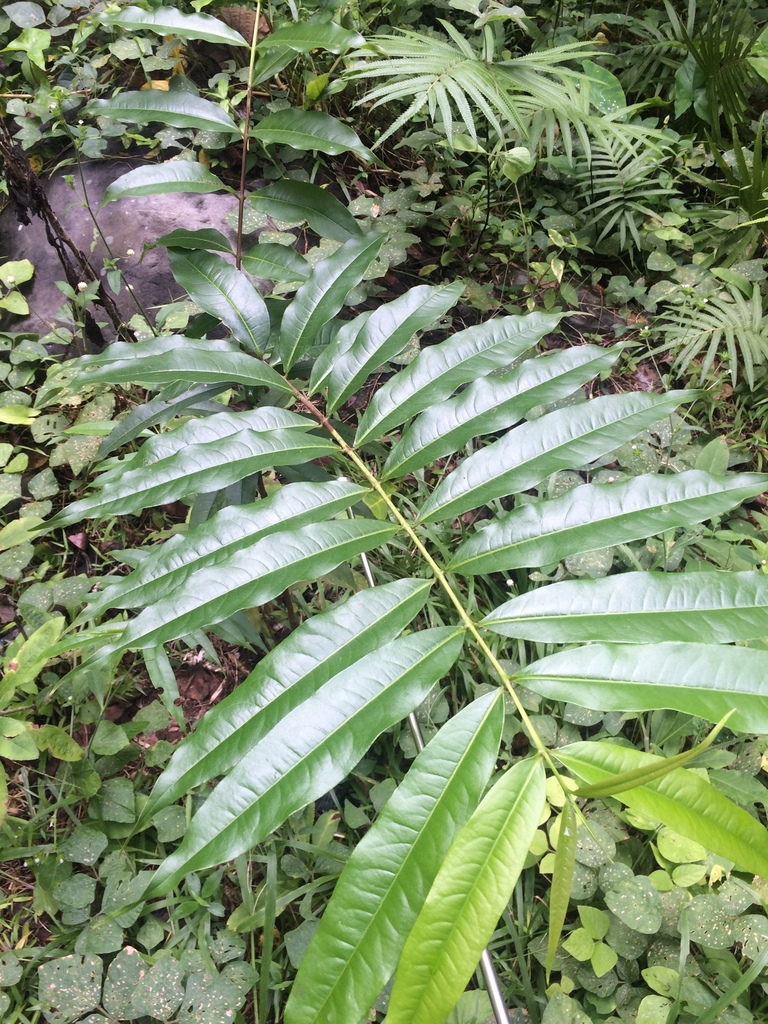
Cratoxylum sumatranum
Cratoxylum sumatranum is a species of flowering plant in the Hypericaceae family. Found in Southeast Asia, it grows up to 51 m (167 ft) tall and is harvested locally for timber and fuel.
From the article Cratoxylum sumatranum on Wikipedia (CC BY-SA), quoted section by section
Description
The tree may grow up to 51 m (167 ft) tall and 80 cm (31 in) diameter at breast height, with cracked and fissured bark. The stems produce whitish-yellowish latex. The leaves have an opposite arrangement, are simple, elliptic and a glossy rich green. Its flowers are 5-parted and clustered on terminal panicles. They are small (approximately 8mm in diameter), reddish with white linings around the petals. The fruits, which appear in July, are approximately 8mm long, yellow-brown-black capsules, filled with many small winged seeds.
Range & habitat
Cratoxylum sumatranum is indigenous to Southeast Asia, including Borneo, Malaya, and the Philippines. It is found in disturbed open areas, especially on hillsides and ridges on clay or sandy soils.
Wikipedia: “Distribution and habitat”
At the table
The plant is harvested locally and used for its timber and for fuel or charcoal. A 2021 study demonstrated that bark extracts from the species exhibited antimalarial capabilities in a laboratory setting, and could have applications as an antimalarial drug.
== References ==
Wikipedia: “Uses”
Where it lives
Recorded sightings
—
geo-referenced records in GBIF, from museums, herbaria and field observers.
Drag the globe to turn it. Dots are where records exist, not a range map; darker means more records.
In the stacks
Searching the stacks…
Every page naming Cratoxylum sumatranum in the Biodiversity Heritage Library →
This page is assembled live from iNaturalist, GBIF, Wikipedia, the Source Library and the Internet Archive. It is not yet part of the hand-edited codex. iNaturalist taxon 859306.