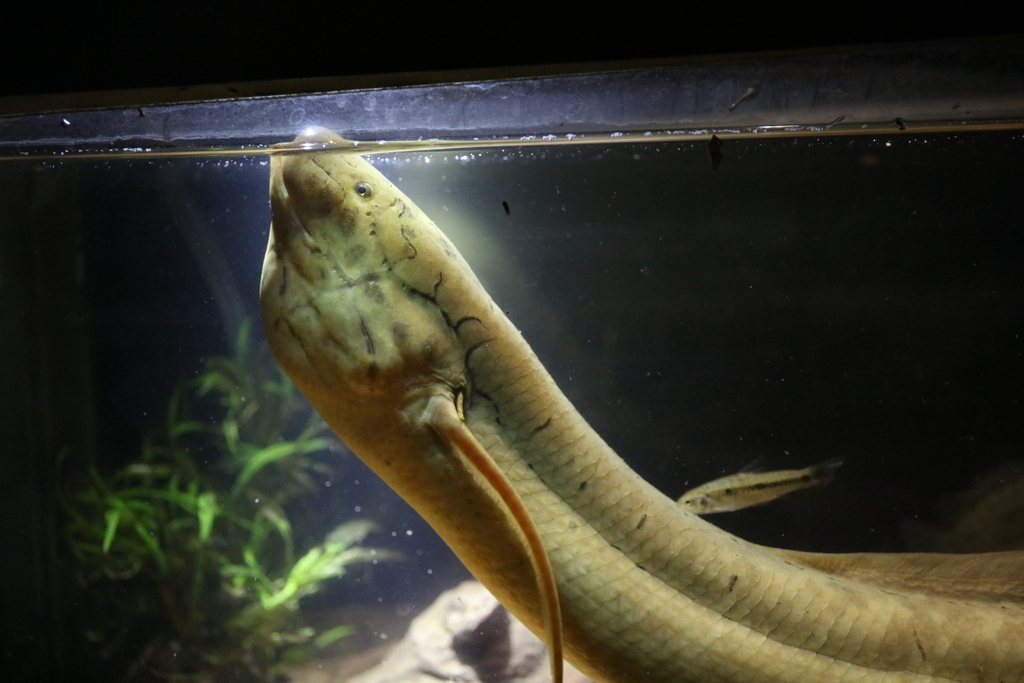
Lungfishes
Ceratodontiformes
Ceratodontiformes is the only extant order of lungfish, containing the families Neoceratodontidae, Lepidosirenidae, and Protopteridae as well as many other extinct groups. Members of this group are the only lungfish known to have survived the Permian-Triassic extinction event. Although lungfish originated in marine environments, the Ceratodontiformes have been an exclusively freshwater group since the Carboniferous. This order was formerly considered the suborder Ceratodontoidei.
All lungfish of the order can and often do estivate (except the spotted African lungfish, which can but rarely does so). All members of the order are obligatory air-breathers; only the Australian lungfish has functioning gills when adult; members of the Lepidosirenidae have gills only when they are larvae. The South American and African lungfish also all have generally small scales and two lungs as opposed to the Australian lungfish's single lung.
2 branches of this order, most-observed first · about 6 known species
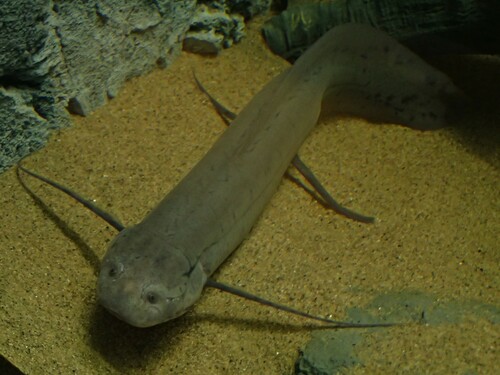
African and South American Lungfishes
suborderLepidosirenoidei
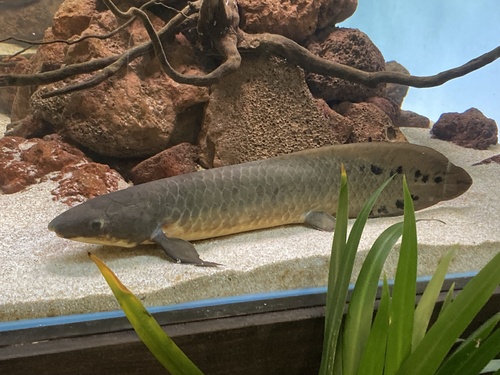
Australian Lungfishes
suborderCeratodontoidei
Where it lives
Recorded sightings
—
geo-referenced records in GBIF, from museums, herbaria and field observers.
Drag the globe to turn it. Dots are where records exist, not a range map; darker means more records.
In the stacks
Searching the stacks…
Every page naming Ceratodontiformes in the Biodiversity Heritage Library →
This page is assembled live from iNaturalist, GBIF, Wikipedia, the Source Library and the Internet Archive. It is not yet part of the hand-edited codex. iNaturalist taxon 85509.