- Plants
- ›Vascular Plants
- ›flowering plants
- ›monocots
- ›lilies, supplejacks, and allies
- ›Bellworts and allies
- ›Burchardia
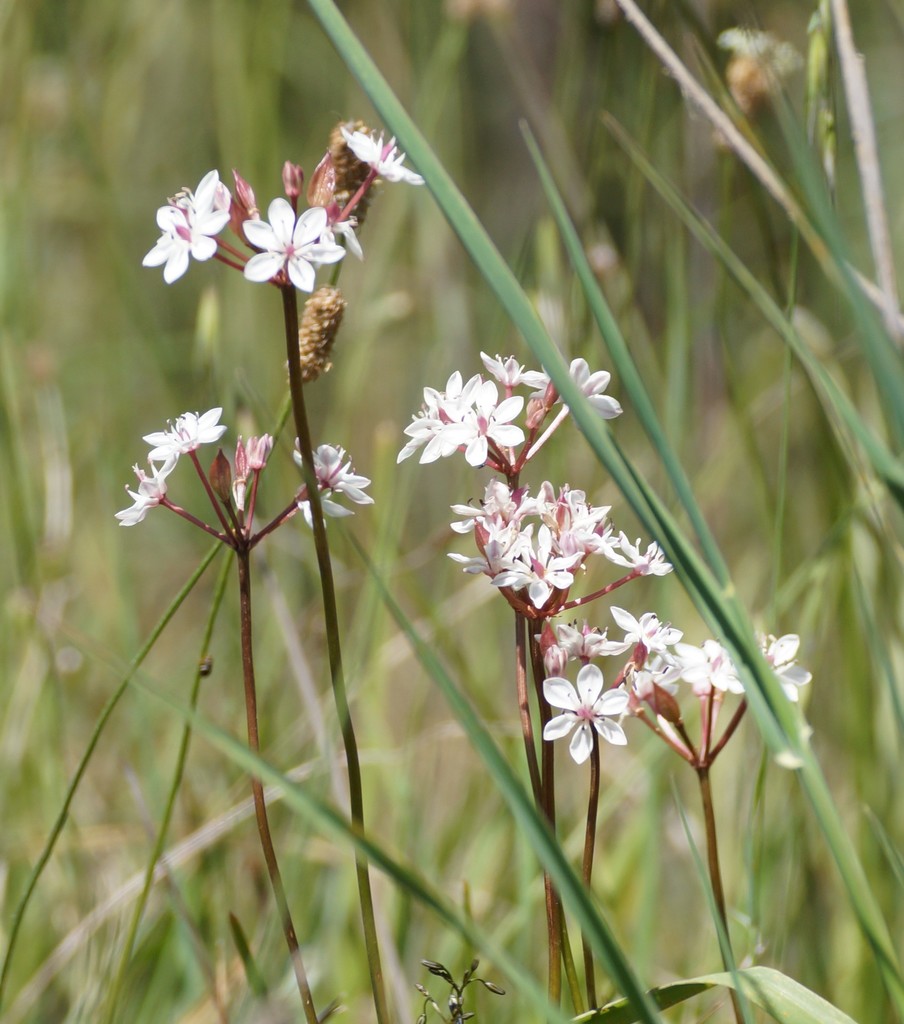
Milkmaids
Burchardia umbellata
Burchardia umbellata, known as milkmaids, is a perennial herbaceous plant native to woodlands and heath of eastern and southern Australia. It is known in all states. It typically flowers from September until November, in dry sclerophyll forests.
From the article Burchardia umbellata on Wikipedia (CC BY-SA), quoted section by section
Description
The narrow leaves of Burchardia umbellata are up to 60 cm long by 1.5 to 4 mm wide. Clusters of white or pale pink flowers with reddish centers sit atop a thin stalk that is 50 to 60 cm high. Each flower measures about 2.5 cm wide. There is a cluster of up to ten carrot-shaped tubers at the base, each about 5 mm thick.
At the table
Aboriginal Australians eat the potato-like tubers. The tubers can be eaten raw or cooked. They are white, fleshy, crisp, and starchy, with an undistinguished flavor.
Wikipedia: “Use as food”
How it is grown
Burchardia umbellata is rarely available in nurseries, but it can be propagated by seed and kept in containers. It requires moist, well-drained soils and sun or light shade.
== References ==
Wikipedia: “Cultivation”
Where it lives
Recorded sightings
—
geo-referenced records in GBIF, from museums, herbaria and field observers.
Drag the globe to turn it. Dots are where records exist, not a range map; darker means more records.
In the stacks
Searching the stacks…
Every page naming Burchardia umbellata in the Biodiversity Heritage Library →
This page is assembled live from iNaturalist, GBIF, Wikipedia, the Source Library and the Internet Archive. It is not yet part of the hand-edited codex. iNaturalist taxon 83628.